• Skip to primary navigation
  • Skip to main content

International Salsa Magazine

  • HOME
  • Previous editions
    • 2026
      • ISM / August 2026
      • ISM / July 2026
      • ISM / June 2026
      • ISM / May 2026
      • ISM / April 2026
      • ISM / March 2026
      • ISM / February 2026
      • ISM / January 2026
    • 2025
      • ISM / December 2025
      • ISM / November 2025
      • ISM / October 2025
      • ISM / September 2025
      • ISM / August 2025
      • ISM / July 2025
      • ISM / June 2025
      • ISM / May2025
      • ISM / April 2025
      • ISM / March 2025
      • ISM / February 2025
      • ISM / January 2025
    • 2024
      • ISM / December 2024
      • ISM / November 2024
      • ISM / October 2024
      • ISM / September 2024
      • ISM / August 2024
      • ISM / July 2024
      • ISM / June 2024
      • ISM / May 2024
      • ISM / April 2024
      • ISM / March 2024
      • ISM / February 2024
      • ISM / January 2024
    • 2023
      • ISM / December 2023
      • ISM / November 2023
      • ISM / October 2023
      • ISM – September 2023
      • ISM – August 2023
      • ISM July 2023
      • ISM Edition June 2023
      • ISM – May 2023
      • ISM April 2023
      • ISM March 2023
      • ISM February 2023
      • ISM January 2023
    • 2022
      • ISM December 2022
      • ISM November 2022
      • ISM October 2022
      • ISM September 2022
      • ISM August 2022
      • ISM July 2022
      • ISM June 2022
      • ISM May 2022
      • ISM February 2022
      • ISM January 2022
    • 2021
      • ISM December 2021
      • ISM November 2021
      • ISM October – 2021
      • ISM September 2021
      • ISM August 2021
      • ISM July 2021
      • ISM May 2021
      • ISM April 2021
      • ISM June 2021
      • ISM March 2021
      • ISM February 2021
      • ISM January 2021
    • 2020
      • ISM December 2020
      • ISM November 2020
      • ISM October 2020
      • ISM September 2020
      • ISM August 2020
      • ISM July 2020
      • ISM June 2020
      • ISM May 2020
      • ISM April 2020
      • ISM March 2020
      • ISM February 2020
      • ISM January 2020
    • 2019
      • ISM December 2019
      • ISM November 2019
      • ISM October 2019
      • ISM Septembre 2019
      • ISM August 2019
      • ISM July 2019
      • ISM June 2019
      • ISM May 2019
      • ISM April 2019
      • ISM March 2019
      • ISM February 2019
      • ISM January 2019
    • 2018
      • ISM December 2018
      • ISM November 2018
      • ISM October 2018
      • ISM September 2018
      • ISM August 2018
      • ISM July 2018
      • ISM June 2018
      • ISM May 2018
      • ISM April 2018
      • ISM March 2018
      • ISM February 2018
      • ISM January 2018
    • 2017
      • ISM December 2017
      • ISM November 2017
      • ISM October 2017
      • ISM September 2017
      • ISM August 2017
      • ISM July 2017
      • ISM June 2017
      • ISM May 2017
      • ISM April 2017
      • ISM March 2017
      • ISM February 2017
      • ISM January 2017
    • 2016
      • ISM December 2016
      • ISM November 2016
      • ISM October 2016
      • ISM September 2016
  • Spanish
  • Download Salsa App
    • Android
    • Apple

Search Results for: salsa in venezuela

The Art of Immortalizing Lavoe: The Cultural Bridge of a Young Designer

Through the digital book “Lavoe entre colores,” Victoria Rivas fuses editorial illustration and a passion for salsa to connect new generations with the legacy of “El Cantante de los Cantantes.”

Victoria Analig Rivas Rojas, an artist, illustrator, and graphic designer, was born in Valencia, Carabobo State, Venezuela. At just 20 years old, she holds a Bachelor of Fine Arts degree with a major in Graphic Design from the Arturo Michelena University.

Victoria Rivas Licenciada en Artes, mención Diseño Gráfico

Since she was a young girl, her passion for art and music grew, deeply influenced by her salsa-loving, dancing, and music-aficionado (melómana) family.

Her childhood was surrounded by people who loved the arts. She began painting mandalas as a hobby, and since then, she has created numerous paintings and murals both inside and outside her native country, all of which are showcased on her Instagram account, @victoriarivasart.
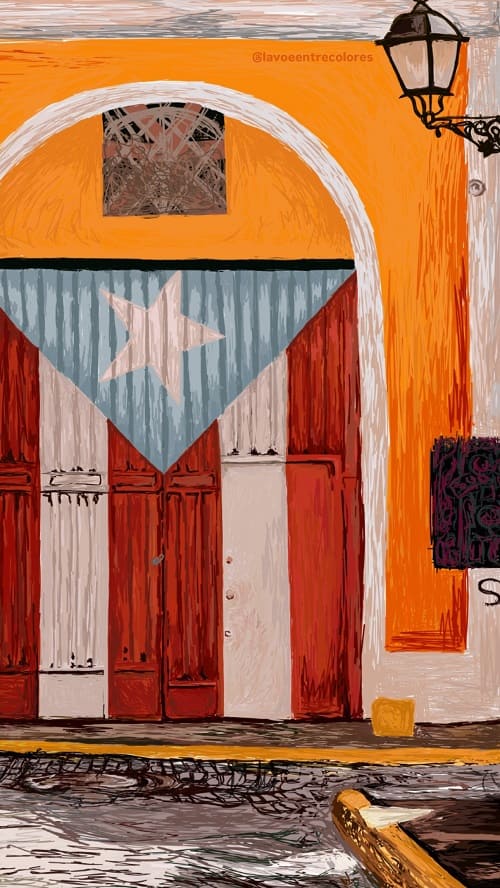
A través del libro digital Lavoe entre colores, Victoria Rivas fusiona la ilustración editorial y la pasión por la salsa

Her love for music, especially salsa, motivated Victoria to develop her Undergraduate Thesis based on the history of the genre and the biography of her idol. In doing so, she created an illustrated digital book about the life and work of the singer and musician Héctor Lavoe, one of the most prominent artists in the genre.

Concerned by the widespread lack of knowledge among youth her age regarding salsa and the figure of Héctor Lavoe, Victoria utilized the knowledge acquired throughout her degree to preserve and convey this information through illustration.

To achieve this, she employed a qualitative methodology, working with a population and sample of academic experts in the field a musicologist, a graphic designer, and a seasoned salsa connoisseurconducting in-depth interviews with them.

As a result, she successfully demonstrated that illustration is a key tool, functioning as a cultural bridge between words and emotion.

She accomplished this through a digital format that provides easy access for newer generations, people unfamiliar with the subject, and fans of both art and salsa.

This is how “Lavoe entre colores” (LEC) [Lavoe Among Colors] was born an illustrated digital book that immortalizes the life and work of “El Cantante de los Cantantes” and the history of salsa.

“Lavoe entre colores” (@lavoeentrecolores) is structured into 64 pages, which unfold across 11 sections divided into Side A and Side B, emulating the classic cassette tape format.

The book summarizes the singer’s life in chronological episodes, using the titles of his songs as chapter names. It was designed over the course of more than 250 work hours, featuring vibrant, colorful undertones that invite the reader to linger and return.

“Every stroke represents my pride in uplifting Héctor’s name.”

Victoria Rivas

(An Illustrated Digital Book on the Life and Work of Singer and Musician Héctor Lavoe)

El Arte de Inmortalizar a Lavoe El Puente Cultural de una Joven Diseñadora

Djane

Also Read: Djane Shina A Passion Turned into Reality

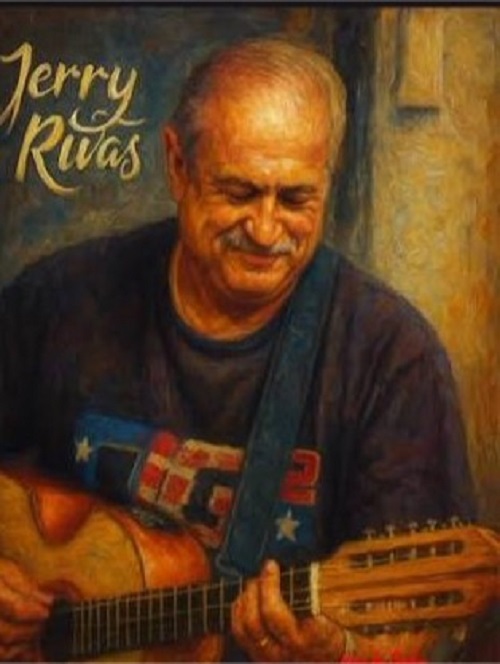
The Senior Mulato Jerry Rivas and His Half-Century Legend with El Gran Combo de Puerto Rico

From the chords of the Puerto Rican cuatro to the eternal voice of “Los Mulatos del Sabor”

Few names resonate with as much power, respect, and relevance in the salsa firmament as that of Jerry Rivas.

Born in Tampa, Florida, but with his soul deeply rooted in the heart of Orocovis through his parents’ heritage, Jerry Louis Rivas Díaz has carved his name in letters of gold into the history of Caribbean music.

El Mulato Mayor Jerry Rivas y su Leyenda de Medio Siglo con El Gran Combo de Puerto Rico

Nearing 50 years as the lead vocalist for El Gran Combo de Puerto Rico, Rivas is more than just a singer; he is a living institution of salsa, a definitive sonero of his era, and the guardian of a legacy that continues to keep the entire world dancing.

Roots, Strings, and the Making of a Self-Taught Musician

Jerry’s history with Puerto Rico formally began in 1960, when his family moved back to the “Isla del Encanto” to settle in Bayamón.

There, the young Jerry began to breathe in the folklore and rhythms that defined the Boricua identity. What many do not know is that long before commanding microphones and international stages, Jerry was deeply passionate about string instruments.

As a fundamentally self-taught musician and singer, his first great love was the guitar. Over time, his musical curiosity led him to master the Puerto Rican cuatro, the island’s national instrument par excellence.

De los acordes del cuatro puertorriqueño a la voz eterna de Los Mulatos del Sabor

Not content with just that, he decided to delve deeper into the roots of Afro-Caribbean music, learning the secrets of the Cuban tres under the tutelage of the renowned professor Carlos Seguí.

This solid foundation as an instrumentalist not only shaped his ear but also gave him an impeccable sense of rhythm and timing that would later define his unique style for soneo (improvisational singing).

The Path to the Top: From Local Bands to a Historic Recruitment

Before the spotlight of El Gran Combo fell upon him, Jerry Rivas honed his craft throughout the island’s musical circuit, leaving his mark on every project:

  • Grupo Complicación: His teenage musical battleground, where he served as a guitarist for three years.
  • Conjunto Cojoba: A group he joined in 1972, sharpening his stage presence.
  • Conjunto Chaney (1974): Jerry was part of the select group of founding musicians of this project, which years later would become a powerhouse of romantic salsa.
  • Latin Brass (1976): The definitive showcase where his voice truly began to shine on its own.

It was precisely in 1976 when destiny knocked on his door. Following the shocking departure of the iconic “Niño de Trastalleres,” Andy Montañez who left the orchestra after 14 golden years to join Venezuela’s Dimensión Latina El Gran Combo found itself facing one of the most difficult transitions in its history. Replacing a legend seemed like an impossible task.

However, the keen eye of Don Quique Lucca (founder of La Sonora Ponceña) did not fail. Don Quique recommended the young Jerry to Don Rafael Ithier. After hearing him perform, Ithier didn’t hesitate: in 1977, Jerry Rivas officially joined the “University of Salsa.”

Nacido en Tampa, Florida, pero con el alma arraigada en las entrañas de Orocovis por la herencia de sus padres, Jerry Louis Rivas Díaz

Nearly 50 Years of History at “The University of Salsa”

Joining such a demanding institution in the midst of an era-defining shift was a monumental challenge. Audiences initially viewed the new member with skepticism, but Jerry, armed with unwavering humility and immense talent, never tried to imitate his predecessor; instead, he forged his own legend.

Across nearly five decades, his voice has immortalized anthems of the global salsa songbook. Essentials on any dance floor like “Azuquita pa’ el café,” “Ojos chinos,” “Y no hago más na’,” “El menú,” “Cupido,” and “La clave” carry his unmistakable stamp.

His elegant performance style, combined with his sharp wit and deep respect for the dancer, solidified the orchestra’s golden age and ensured the transition was a resounding success.

“Joining El Gran Combo was a tremendous school and responsibility. Replacing Andy was no easy feat, but Don Rafael Ithier gave me the confidence to just be myself on stage.” Jerry Rivas, looking back on his beginnings.

Pocos nombres resuenan con tanta fuerza, respeto y vigencia en el firmamento de la salsa como el de Jerry Rivas.

The Present and Vibrant Legacy of an Eternal Sonero

Now in 2026, the tropical music landscape has changed drastically, but El Gran Combo de Puerto Rico remains unshakeable at the top.

Jerry Rivas stays incredibly active, leading the vocal front of “Los Mulatos del Sabor” alongside the orchestra’s newer generations, Anthony García and Joselito Hernández. This blend of Jerry’s veteran wisdom and the energy of the new vocalists has injected a refreshing vitality into the group.

Jerry Rivas is not just a survivor of salsa’s golden age; he is the living bridge connecting the rich traditions of the 20th century with contemporary audiences.

From his days tuning strings in Bayamón to packed stadiums across Europe, Latin America, and the United States, his journey stands as a testament to discipline, passion, and love for his culture.

We wish lifelong health, inspiration, and continued success to this eternal maestro who, besides being one of salsa’s most beloved voices, has never ceased to be, in every sense of the word, a complete musician. Long live the music of Jerry Rivas, and let the drums keep rolling!


Jerry Rivas y Papo Rosario

Also Read: The Gran Combo of Puerto Rico “Los Mulatos del Sabor”

Latin America / July 2026

Phil Robinson 7 2026”Angie Machado 7 2026Jerry Rivas a7 2026

Fernando Lavoy 07 2026DjaneBella MartinezCalibrated maracas

DIRECTORY OF NIGHTCLUBS

Argentina flag
ARGENTINA

Aruba circular flag
ARUBA

Belize circular flag
BELIZE

Bolivia circular flag
BOLIVIA

Brazil flag
BRAZIL

Chile circular flag
CHILE

Colombia
COLOMBIA

Costa Rica circular flag
COSTA RICA

Cuba circular flag
CUBA

Dominican Republic
DOMINICAN REPUBLIC

Ecuador circular flag
ECUADOR

Guatenala circular flag
GUATEMALA

Mexico Circular flag
MEXICO

Panama circular flag
PANAMA

Peru circular flag
PERU

Puerto Rico circular flag
PUERTO RICO

Venezuela circular flag
VENEZUELA


Rumbon de Caracas

Latin America / Venezuela / Caracas

“El Rumbon de Caracas” is a party that brings together a variety of genres to kick off the holiday season, starting November 12th at the Ciudad Tamanaco Shopping Center (CCCT) in Caracas, Venezuela. The lineup includes Salserin, Francisco Pacheco y su Pueblo, Jonathan Moly, Guaco, and special guest El Gran Combo de Puerto Rico. The event begins at 4:00 pm (16:00). Tickets are available through TicketMundo, with prices ranging from 15,000.01 Bs to 45,000 Bs.

El Gran Combo de Puerto Rico is a Puerto Rican salsa band that is as successful in its home country as it is one of the most well-known throughout Latin America. Unlike other salsa orchestras, particularly those that emerged in New York from the 1960s onward, this group, known as “Mulatos del Sabor,” has always protected its musical timbre from complex innovations and experiments, safeguarding the unique, simple, and rhythmic sound that has characterized it since its founding on May 26, 1962.

Rumbon de Caracas
Rumbon de Caracas

We also have “Guaco,” the Venezuelan orchestra born in the city of Maracaibo, Venezuela, which evolved to become recognized as a Super Band of Venezuela. Influenced by rhythms such as salsa, pop, funk, jazz, and gaita zuliana, its rhythm remains unique and constitutes a style in itself.

Similarly, we have “Salserin,” known as the children’s and youth salsa orchestra formed in Venezuela in 1993, where the musical genres are pop, ballad, Latin, and primarily salsa. This orchestra boasts over 7 million copies of its albums sold worldwide, as well as 11 productions, 6 novels, 1 feature film, 1 radio drama, and more than 50 gold and platinum records.

For more information about tickets, please contact:

  • http://venezuela.ticketmundo.com/Evento/Rumb%C3%B3n-de-Caracas/4574
  • http://clasesdesalsa.net/wp-content/uploads/2011/01/El-Gran-Combo.jpg


Andrés Cepeda & Mike Bahia Artists in November of HTV

North America / USA/ Miami
Andrés Cepeda & Mike Bahia

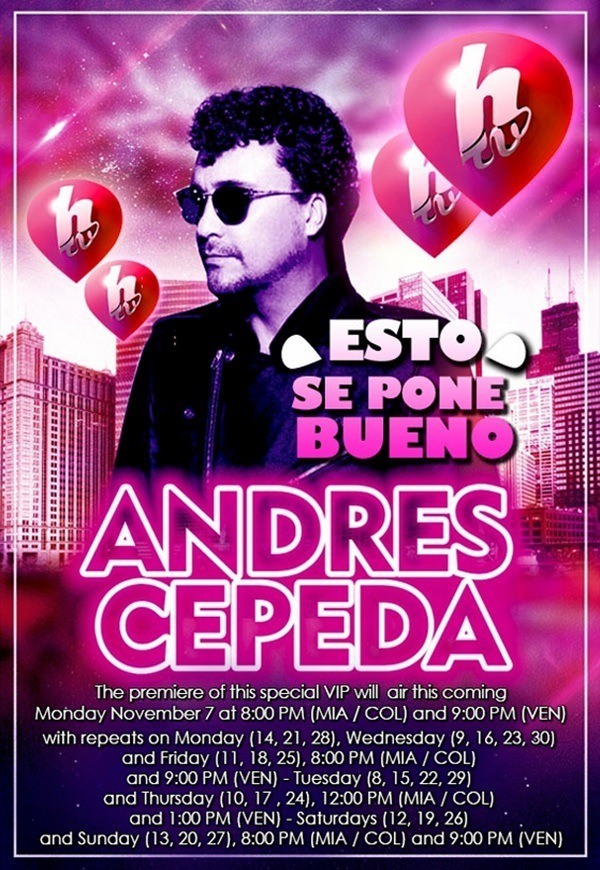
With a history of over 15 years, Colombian singer- songwriter Andrés Cepeda and Mike Bahia, representative of the urban genre, exclusively relate their experiences with each of their productions and the musical genres for which they have traveled.

Andrés Cepeda

Andrés Cepeda
Andrés Cepeda

The Colombian singer Andrés Cepeda, has been one of the most renowned artists of Latin American music scene. This Latin Grammy winner has been wowing his audience with his successes year after year since he began his career. The Colombian began his single career in 1999 releasing a first album: “Sé morir” disc in just one month received platinum status, framing in nearby rhythms like pop, bolero and the ballad.

In 2001 he released his second production, “El Carpintero”, for which he received double platinum.

In 2002 he published “Para amarte mejor”. This production was the first of that kind in Colombia. In 2005 he presented his work “To better love”. This album received platinum disc for sales in Colombia.

1- Andrés Cepeda
1- Andrés Cepeda

In 2007 he released a remake of “Para Amarte Mejor” in which two new songs he composed with master Jorge Luis Piloto included: “Pronóstico” and “Si fueras mi enemigo” songs that gave him international recognition and won him Latin Grammy nomination for Best Male Pop Album … “Día tras día” became after its launch in 2009, one of the most successful albums of his career, receiving gold and platinum discs.

This gave rein to that was nominated this year in three of the most important categories of the Latin Grammy Awards: Song of the Year, Album of the Year and Best Male Pop Vocal Album.

2- Andrés Cepeda
2- Andrés Cepeda

In 2012 Andrés Cepeda presented to the public his seventh album “Lo major que hay en mi vida.” Cepeda received four nominations for this album by The Latin Recording Academy, taking for the first time Latin Grammy in the category “Best Traditional Pop Vocal Album”.

He was joined for this award three prizes that gave the Nuestra Tierra 2013 Awards in the categories Best Album of the Year, Best New Artist and Best Pop Performance. Additionally, he received double platinum. In 2015 he released his latest production, “Mil Ciudades” album that featured the participation of leading industry figures.

Andrés Cepeda flyers

Mike Bahia

Mike Bahia
Mike Bahia

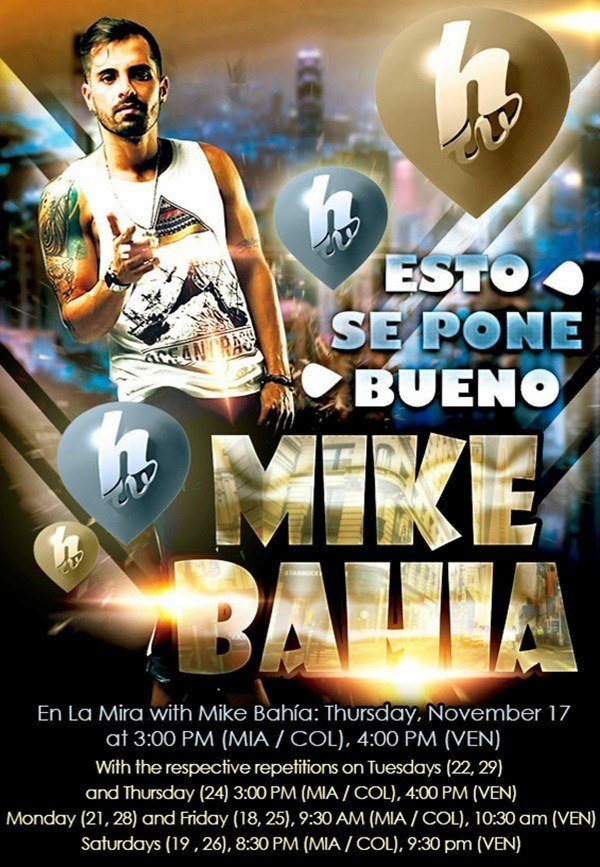
Meanwhile, in the second installment of HTV En La Mira of the month arrives on Thursday, November 17 the reggaetonero, Mike Bahia, one of the great musical promises of the moment.

1- Mike Bahia
1- Mike Bahia

Bahía had already begun his career by participating in the reality show “La Voz Colombia” (second edition), where he was a pupil of Fanny Lu. Then he debuted as a soloist in 2014 with the single ‘Buscándote’, a song produced by Montana The Producer (who worked for J Alvarez and Chris G), Juan Jhail (who collaborated on projects Kevin Roldan and alkylated) and Ronny Watts (alkylated and Hernán Saraza).


2- Mike Bahia
2- Mike Bahia

Later in his still brief career, Mike Bahía launched four singles: “Estar Contigo” (2014), ‘Buscándote (remix)’, ‘Tarde’ and ‘La Muñeca’ (all 2015). The latter will integrate the first album of Mike, which will be called ‘Soy Yo’. Mike himself wrote ‘La Muñeca’ in collaboration with Juan Jahil and Juan Gálvez, alkylated vocalist.

3- Mike Bahia
3- Mike Bahia

4- Mike Bahia
4- Mike Bahia

For his part, the director Nuno Gomez, who worked with alkylated in several videos, directed the clip in various locations in Venezuela. So you know, do not miss these two artists and enjoy their confessions in HTV because HTV it gets good!

Mike Bahia flyers
Mike Bahia flyers
  • « Go to Previous Page
  • Page 1
  • Interim pages omitted …
  • Page 24
  • Page 25
  • Page 26
  • Page 27
  • Page 28
  • Interim pages omitted …
  • Page 100
  • Go to Next Page »

International Salsa Magazine (ISM) is a monthly publication covering salsa activities around the world and has been publishing since 2007. It is a worldwide network of volunteers coordinated by ISM Magazine. Together, we work to strengthen salsa events around the world.