• Skip to primary navigation
  • Skip to main content

International Salsa Magazine

  • HOME
  • Previous editions
    • 2026
      • ISM / June 2026
      • ISM / May 2026
      • ISM / April 2026
      • ISM / March 2026
      • ISM / February 2026
      • ISM / January 2026
    • 2025
      • ISM / December 2025
      • ISM / November 2025
      • ISM / October 2025
      • ISM / September 2025
      • ISM / August 2025
      • ISM / July 2025
      • ISM / June 2025
      • ISM / May2025
      • ISM / April 2025
      • ISM / March 2025
      • ISM / February 2025
      • ISM / January 2025
    • 2024
      • ISM / December 2024
      • ISM / November 2024
      • ISM / October 2024
      • ISM / September 2024
      • ISM / August 2024
      • ISM / July 2024
      • ISM / June 2024
      • ISM / May 2024
      • ISM / April 2024
      • ISM / March 2024
      • ISM / February 2024
      • ISM / January 2024
    • 2023
      • ISM / December 2023
      • ISM / November 2023
      • ISM / October 2023
      • ISM – September 2023
      • ISM – August 2023
      • ISM July 2023
      • ISM Edition June 2023
      • ISM – May 2023
      • ISM April 2023
      • ISM March 2023
      • ISM February 2023
      • ISM January 2023
    • 2022
      • ISM December 2022
      • ISM November 2022
      • ISM October 2022
      • ISM September 2022
      • ISM August 2022
      • ISM July 2022
      • ISM June 2022
      • ISM May 2022
      • ISM February 2022
      • ISM January 2022
    • 2021
      • ISM December 2021
      • ISM November 2021
      • ISM October – 2021
      • ISM September 2021
      • ISM August 2021
      • ISM July 2021
      • ISM May 2021
      • ISM April 2021
      • ISM June 2021
      • ISM March 2021
      • ISM February 2021
      • ISM January 2021
    • 2020
      • ISM December 2020
      • ISM November 2020
      • ISM October 2020
      • ISM September 2020
      • ISM August 2020
      • ISM July 2020
      • ISM June 2020
      • ISM May 2020
      • ISM April 2020
      • ISM March 2020
      • ISM February 2020
      • ISM January 2020
    • 2019
      • ISM December 2019
      • ISM November 2019
      • ISM October 2019
      • ISM Septembre 2019
      • ISM August 2019
      • ISM July 2019
      • ISM June 2019
    • 2016
      • ISM December 2016
      • ISM November 2016
      • ISM October 2016
  • Spanish
  • Download Salsa App
    • Android
    • Apple

Search Results for: salsa

Los Melódicos

Latinoamerica / Venezuela / Caracas

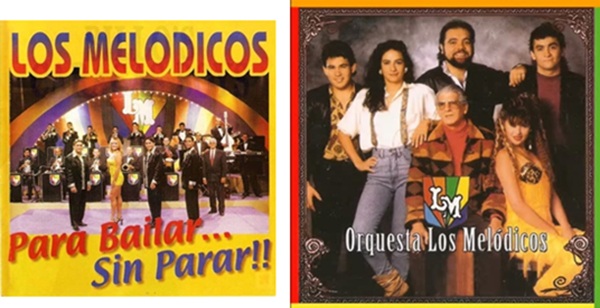
Among Venezuela’s most famous orchestras are Los Melódicos and Billo’s Caracas Boys; here, we focus on Los Melódicos, a Venezuelan dance orchestra founded on July 15, 1958, by musical director Renato Capriles (who passed away in 2014)—with the support of bandleader Billo Frómeta—in response to the temporary dissolution of the Billo’s Caracas Boys orchestra.

Los Melódicos
Los Melódicos

Los Melódicos are composed of: 4 saxophones, 3 trombones, 3 trumpets, a 5-piece rhythm section (piano, bass, drums, and minor percussion), 4 vocalists (always including a female singer), and their conductor—totaling 20 artists on stage.

Their slogan is “THE ORCHESTRA THAT SETS THE RHYTHM IN VENEZUELA,” though abroad they are also known as “LATIN AMERICA’S MOST COMPLETE ORCHESTRA,” “THE ORCHESTRA OF EVERY RHYTHM,” and “THE GIANT ORCHESTRA OF THE AMERICAS,” among other titles.

They are also the only Latin orchestra boasting such an extensive repertoire spanning a wide range of musical trends and styles, including salsa and merengue.

Their versatility is such that, during any given set, one might hear songs in Spanish, English, French, or Italian, alongside the latest popular rhythms—whether tropical, Anglo-American, classical, or modern—in all their variations.
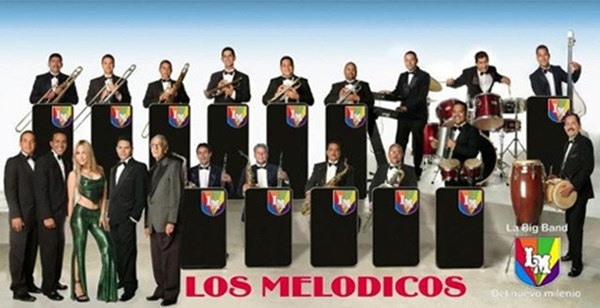
Los Melódicos - Photo
Los Melódicos – Photo

Beyond the impeccable live performances delivered by each member, the group puts on a true “show,” compelling the audience to stop dancing and form a massive semicircle in front of the stage, while actively interacting with the band throughout the performance.

Los Melódicos have garnered the most prestigious awards both within and outside Venezuela, remaining the premier musical choice for major public and private events year after year. It would be an endless task to list the awards and accolades they proudly cherish—bestowed by various entities in countries such as Ecuador, Peru, Colombia, Costa Rica, El Salvador, Curaçao, and Aruba, as well as in U.S. cities with significant Latino communities (such as Miami, Orlando, San Francisco, Los Angeles, Chicago, Boston, Tampa, Houston, Philadelphia, and—notably—New York). They continue to travel to New York to perform at top venues like the New York Hilton Hotel, where their twice-yearly dances became a must-attend, highly successful event in that major global entertainment hub.

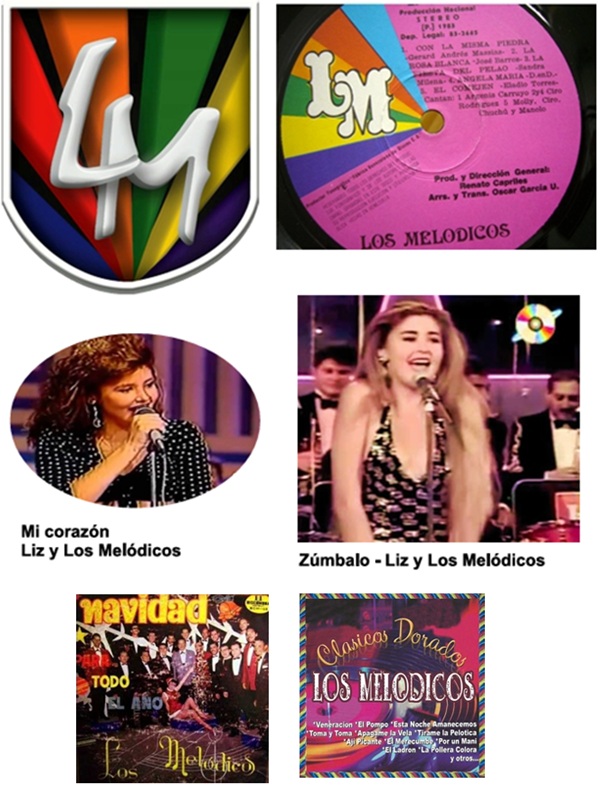
With a history spanning over 50 years, LOS MELÓDICOS boasts a discography of more than 100 albums—a milestone unmatched by any other dance orchestra in the Americas—including the following:

Hits Songs
The 1960s ·       Caballito Relinchón

·       El Ladrón

·       El Misterio

·       Veneración

·       El pastorcillo

The 1970s ·       Cayetano baila

·       Guitarra española

·       Apágame la vela

·       Al que le pique

·       Dejen de averiguá

The 1980s ·       Papachongo

·       Mi Cocha Pechocha

·       La Fiesta

·       Hot Music ¡Oh, mañana!

·       Tú (éxito original de Juan Luis Guerra)

·       Ulé-ulé

·       Fernanda

·       Mi cacerola

·       Traca que traca

The 1990s ·       Por ti amor

·       ¡Qué rico!

·       Diávolo

·       ¡Ay, Amor!

·       Sal y Menta

·       Mi locura

·       Amiga

·       No necesito más

·       Zúmbalo

·       Mi corazón

·       Amanecer

Los Melódicos CDs
Los Melódicos CDs

Los Melódicos Discography

  1. These Are Los Melódicos (1959)
  2. Fabulous Dance Hits (1963)
  3. Buy the Orchestra (1964)
  4. Great Musical Reserve (1965)
  5. The Most Complete Lineup (1966)
  6. The Orchestra of Hits (1969)
  7. The One and Only (1969)
  8. Guayabo a la Ye (1970)
  9. Catch It by the Tail (1970)
  10. The Los Melódicos Club (1972 – Discomoda)
  11. With All the Works (1974 – LM-Discomoda)
  12. In Action with Los Melódicos (1974)
  13. The Tempting Flavor (1975 LM-Discomoda)
  14. Heavy (1975 LM-Discomoda)
  15. For Whoever It Itches (1976 LM-Discomoda)
  16. Los Melódicos (1977 LM-Discomoda)
  17. And How Are You? (1977)
  18. 40 Years of Hits (with Manolo Monterrey) (1978 – LM-Discomoda)
  19. The Swing of Los Melódicos (1979)
  20. Party Night (1970)
  21. Memories 17 (1971)
  22. Congratulations (1972)
  23. I Had My Coffee Plantation (1980)
    1. Lyrics and music by the Colombian
    2. Álvaro Serrano Calderon
  24. The Musical Emblem of Venezuela (1980)
  25. Welcome (1981)
  26. Tonight (1981)
  27. We Are Sensational! (1982)
  28. The Sheikh (1982 LM-Discomoda)
  29. With Flavor! (1983)
  30. Oh! Tahiti (1984)
  31. Dismelódicos ’85 (1984 LM-Discomoda)
  32. Cada Día Mejor (1985)
  33. Es otra cosa! (1986)
  34. Juntos Los Grandes del Baile
    1. (With Billo’s, Side A)
    2. (1986 Velvet-Sonográfica)
  35. De Nuevo Juntos Los Grandes del Baile
    1. (With Billo’s, Side A) (1988 Velvet-Sonográfica)
  36. Diferentes (1989 – Velvet-Rodven)
  37. Líderes (1990 – Velvet-Rodven)
  38. La Orquesta que impresa el ritmo en América (1991 – Velvet-Rodven)
  39. Melódicos Club Mix (1991 – Velvet-Rodven)
  40. Internacional (1992 – Velvet-Rodven)
  41. Melódicos Club Mix Two (1993 – Velvet-Rodven)
  42. Innovating (1994)
  43. Incomparable (1995)
  44. Los Melódicos Hits Together (1998)
  45. To Dance Non-Stop (1999)
  46. The Boys With The Girls (2000)
  47. Los Melódicos Vs Billos (2002)
  48. Number 100 for the World (2004)
  49. Los Melódicos With Diveana (2005)
  50. These Are The Singers (2009)
  51. Micaela (2010)
  52. Tonight We’ll Wake Up Partying (2011)
  53. My Cumbia (2012)
  54. They Return With The Best And The Newest (2012)
  55. The Melódicos Renato Caprilles (2013)
  56. Christmas with Los Melódicos (2014)
  57. Golden Era (2015)
  58. Golden Classics (2016)
2- Los Melódicos CDs

Felipe Pirela The Immortal Voice of “The Bolero Singer of the Americas”

A Romantic Music Phenomenon

Few voices in the history of Latin American music have managed to convey melancholy, heartbreak, and love with the depth of Felipe Pirela.

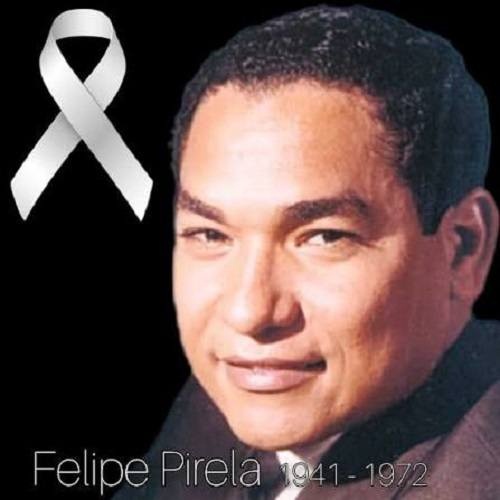
Justifiably known as “El Bolerista de América” (“The Bolero Singer of the Americas”), the Venezuelan performer not only transformed the bolero genre during the 1960s, but also became a cultural icon whose vocal legacy remains an undeniable benchmark for generations to come.

Felipe Pirela
Felipe Pirela: The Immortal Voice of the “Bolerista de América”

A Talent Born in Zulia

Felipe Antonio Pirela Morón was born on September 4, 1941, in the El Empedrado neighborhood of Maracaibo, Zulia State, Venezuela. Raised in a large, humble family, he displayed a natural talent for singing from a very young age.

During his early years, he performed on amateur radio shows in his hometown and joined local groups such as the Orquesta San José and Los Peniques.

It didn’t take long for his extraordinary vocal timbrea lyrical tenor with velvety undertones and flawless pitchto catch the attention of the leading musical directors of the era.

Big Break with the Billo’s Caracas Boys

The year 1960 marked the ultimate turning point in Pirela’s career. Dominican maestro Billo Frómeta, while reorganizing his legendary orchestra, Billo’s Caracas Boys, was searching for a fresh male voice to lead their romantic repertoire. Upon hearing Pirela, he didn’t hesitate to sign him.

Felipe Pirela 2
The Immortal Legacy of an Unforgettable Voice

At just 19 years old, Pirela became the star crooner for the most popular orchestra in Venezuela. During his tenure with Billo’s, his voice immortalized essential classics of the Latin American songbook, including:

  • Ese bolero es mío
  • Únicamente tú
  • Para qué recordar
  • Por la vuelta

The synergy between Frómeta’s orchestral arrangements and Pirela’s dramatic expression sparked a true wave of “Pirelamania” across the country.

International Stardom and Solo Career

In 1963, driven by a desire to expand his artistic horizons, Pirela embarked on a solo career. He moved to Mexico the epicenter of the recording industry at the time where he was warmly embraced by both audiences and music critics.

It was precisely abroad where he was officially dubbed “El Bolerista de América.” Albums like Un solo camino: México solidified his international success.

Felipe Pirela 4
Felipe Pirela A Musical Phenomenon

“Pirela packed venues in Santo Domingo, San Juan, New York, Bogotá, and Lima, reaching a level of popularity that rivaled legends like Lucho Gatica, Daniel Santos, and Javier Solís.” His ability to bring drama and elegance to songs by iconic composers such as Rafael Hernández, Pedro Flores, and Mario de Jesús turned him into a record-breaking phenomenon.

Lights, Shadows, and a Tragic End

Despite his overwhelming success on stage, Pirela’s personal life was plagued by controversy, heartache, and misfortune. A tumultuous, failed marriage, along with legal troubles and relentless harassment from the tabloid press of the era, eroded his personal stability and led him to settle outside his homeland.

On July 2, 1972, tragedy violently cut his life short. At the young age of 30, Felipe Pirela was murdered in San Juan, Puerto Rico. The news sent shockwaves across the Americas, leaving an irreplaceable void in romantic music.

Felipe Pirela 3
On July 2, 1972, tragedy violently cut short his life

The Immortal Legacy of an Unforgettable Voice

More than five decades after his passing, Felipe Pirela remains vibrant in the collective memory. His discography continues to be reissued, honored, and studied by musicologists and music lovers alike.

Pirela possessed not only exceptional vocal technique, but a unique ability to phrase with heartbreak, elegance, and passion. His style directly influenced subsequent stars of salsa and bolero, proving that as long as heartbreak and romance exist, the voice of “The Bolero Singer of the Americas” will continue to resonate with the exact same power.

Read Also: Vicentico Valdés: “The Elastic Voice” of Bolero in Cuba and the Caribbean

Felipe Pirela |El Bolerista de América

Hector Rivera ‘‘Riverita’’ tells the story of how he created Riverita Y Su Orquesta Noche Caliente

After several attempts, we finally managed to meet with bandleader and saxophonist Héctor Rivera, known in the industry as Riverita, and ask him all kinds of questions about his artistic career and his current group, Riverita y Su Orquesta Noche Caliente.

Here are some of the most important issues we touch with the artist during our pleasant conversation:

Riverita posing for the camera

Riverita’s inspiration to become a musician

Despite not having musicians in his family, Riverita remembers growing up in an environment where music was always very present. He was born in New York, but spent long periods living with his grandparents in Puerto Rico while his parents settled down and eventually moved to the “Island of Enchantment” to give their son greater stability.

At his grandparents’ house, he used to listen to great artists of the time performing their unforgettable hits on the radio and one of them was Mon Rivera Y Su Orquesta performing “Karakatis-ki,” a song he never forgot, along with so many other musical pieces that gradually got him interested in this world. When his parents returned to Puerto Rico and he returned to live with them, he started listening to Cheo Feliciano, Pete “El Conde” Rodríguez, Felipe Rodríguez, and many others.

All these rhythms led the boy to play a sort of percussion on the table, a biscuit tin, or anything else that served as an instrument for him at the time.

His passion for music grew to the point that he began studying music education at the Escuela Libre de Música in Ponce and, subsequently at the Inter-American University of Puerto Rico in San Germán, where he studied for only about two years. Although he did not complete his studies, this helped him to understand even more the profession and apply what he learned during those years.

Danny, Riverita, and Jose
Riverita with two maracas

Being in Puerto Rico, he played with a merengue orchestra whose name he does not remember, but with which he learned to play alto saxophone professionally. After that, he moved to the United States permanently.

Year 2013

As he moved to Virginia, he took a long break from music until 2013, which is when his cousin, Michael Valladares, asked Riverita to found an orchestra, which was not in his plans. However, he accepted the challenge and carried forward the project.

Back then, the artist worked as a mailman at a post office, making it difficult for him to reconcile his previous professional activities with the direction of an orchestra. Still, he did not allow that to discourage him and chose to give priority to this new ensemble.

It all started when Michael was looking for an orchestra to perform at a gala event to celebrate 500 years of the city of Melbourne, Florida, so he contacted Riverita and proposed him to create an orchestra in which he would serve as musical director for the sole purpose of performing there. That was when the saxophonist set about finding musicians and producing a repertoire, which was not easy, since he did not know any professional musicians and did not have any arrangements he could use.

Danny, riverita, and Jose
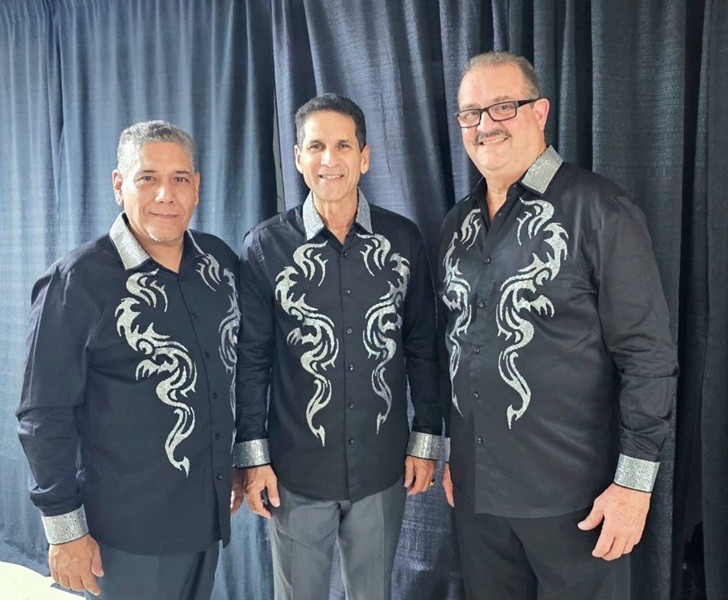
Danny Rivera Jr., Riverita, and Jose Reyes

He was so distressed that he spent sleepless nights thinking about how to proceed to complete the mission entrusted to him. With three months to go, he had no time to spare. That is when he managed to make contact with a group of musicians of different nationalities, of whom only the singer, José Reyes, continues to work with him.

Finally, he relaunched the project with a new group of musicians—since the previous ones had left and called it Orquesta Noche Caliente, a name that it still bears today.

Among the most frequently recurring members, we can mention singer José Reyes, singer Danny Rivera Jr., pianist Kevin Figueroa, and trombonist Derick Harris.

To date, they have recorded three CDs and 26 songs. Some of them are “Noche Caliente,” “En Tiempos de Bolero,” and “Mi Linda Música.” They are also preparing their Christmas song several months in advance and will name it “Rabito de Lechón.”

Read also: Cuban-American dancer and actress Jessica Pacheco presents us her own dance company Flamenco Tropical

5th International Kizomba Gala Hamburg

Europe / Germany / Hamburg
5th International Kizomba Gala Hamburg

07.-10. October 2016

Back to the Roots

Love is the Message!

One of the best Kizomba events in Germany which offers participants a highly stimulating and immersive experience of dancing with first class international instructors, who will teach you the proper way of dancing Kizomba, Zouk and other African & Latin Dance. An intensive 3 days Workshop is proposed for this purpose, starting from 9pm to 07:00 pm which will end with a Party. The Party will be thrill with Shows and Animations from the international instructors.

Line-up:

  • Nelson Campos & Vanja Mula? (G Bissau / UK / Croatia) Donny (Cameroun / UK)
  • Vitor Taveres & Ivona Szantova (Cape Verd/ Slovakis / Prague)
  • Betrand & Celine (Cameroun. Swiss / France)
  • Cazuza & Maria Sieriche (Angola / Angola / Strassbourg)
  • Mams & Anthéa (Angola / Angola / Angola / France)
  • DJ Cubanito (Angola / Manchester)
  • DJ Lindt (Surinam / Rotherdam)
  • DJ Ben (Ghana /Hamburg)
  • DJ Zezom (Anglona / Copenhagen)
  • DJ Alberto Sa (Paris / Lisbon /G Bissau)

More information at:

  • http://www.kizombagala.com/
  • https://www.facebook.com/events/574349666052350/

We’ve talked with Elizabeth Meeker Howard, one of the members of Las Sabrosas Latin Orchestra

On other occasions, we talked to all-female musical groups to promote the tremendous female talent we have in Latin music. The amazing artist we talked to this time is no exception.

We are very happy to chat with trumpeter Elizabeth Meeker Howard, who told us about her fascinating project, Sabrosas Latin Orchestra, and some other aspects of her career worth mentioning. 

Elizabeth posing for the camera
Trumpeter and music teacher Elizabeth Meeker Howard posing for the picture

How Elizabeth started her career

The artist began her story telling us that some members of her family are involved into arts as is the case of her grandmother, who was a professional musician. Similarly, her parents instilled in her a love for music, so the young girl developed an appreciation about this world from an early age to the point that she joined the school band in fourth grade. She and her classmates were given the opportunity to choose their own instrument, so she chose the drums, but she soon discovered that it was not what she wanted to play.

When she was about nine years old, she began playing the trumpet and a little piano, but she would never use the latter professionally. 

In adulthood, she began studying classical music, specifically, classical trumpet, at Yale University, but she knew she wanted to do something that would appeal much more to the public and make people dance and have fun, which is when salsa came into play. During her academic training, she experimented with other genres such as pop and its derivatives, but that was not what she was looking for her professional future. Today, she plays salsa, funk, rock, and even mariachi quite skillfully.

She also earned her bachelor of music in the área of classical trumpet from Boston University, and later earned a master’s degree in the same subject from Yale.

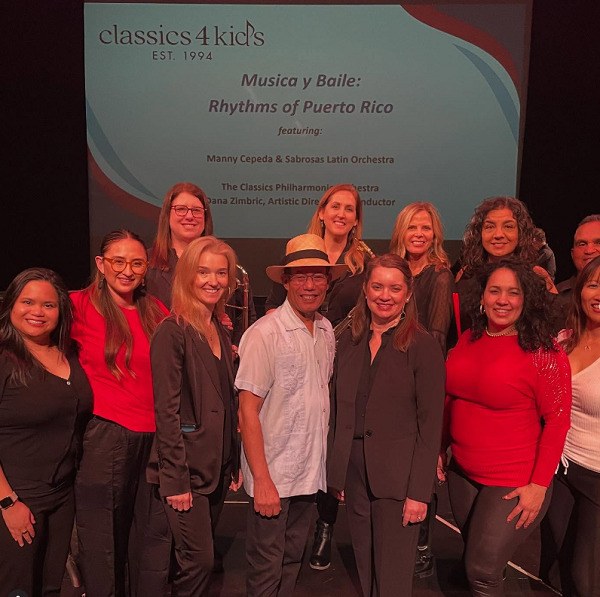
The members of Sabrosas Latin orchestra and Manny Cepeda
The members of Sabrosas Latin Orchestra with composer, percussionist, and singer Manny Cepeda

Beginning of her professional career

Elizabeth’s professional career as a musician began in high school, as she was hired for various small events. In college, she played with various bands and on projects of others, but she was not a regular member of any of them, and that situation continued even after she graduated from college. At that time, she was already working with salsa orchestras.

Once in San Diego, he learned everything he knows today about salsa, as this genre unfortunately is not taught in conservatories, as it happens with classical music and jazz. He added that “the only way to know salsa as a musician is to play in salsa bands. That’s how I learned: joining these groups.”

She does not deny that classical music offers a solid musical training to anyone who wants to study it, learn how to read music, transcribe it, and play the trumpet. If someone gives her a score, she is perfectly capable of playing that music, but it is also important for her to learn how to play that specific style. In the case of salsa, the artist says that it has some nuances that cannot be read in a score, so the attention should be paid to many details such as the joints between notes and the quality if the sound, which are only learned by listening to records and playing with musicians who are good at that style.

Elizabeth and the rest of the orchestra
From top to bottom: Elizabeth Meeker Howard, April Leslie, Shirley Coggon, Monica Saenz, Tomo Vida, Justine Dolorfino-Thieman, Mariela Contreras, Alyssa Keene, Monette Moreno, and Janet Thornton Realtor

Las Sabrosas Latin Orchestra

One of the things that spurred the creation of Las Sabrosas Latin Orchestra was the small number of women playing salsa, especially together, so she and other like-minded female artists began meeting up to rehearse and see how they sounded. At first, they were not sure enough how large or small the group would be, but eventually the girls who were already involved invited others to join, which resulted in a large salsa orchestra. Their official debut was scheduled for shortly before the pandemic, so it all got delayed a bit, but once the restrictions of that time fell, they were more than ready to start playing.

Something Elizabeth wanted to emphasize is that people have always been very supportive of them and showed much interest in the project due to the novelty of what they offered and the quality of their performance, which remains even today.

Music teaching

Besides being part of an orchestra, Elizabeth also teaches music at the university level and has led numerous student bands and ensembles, which has given her the experience needed to serve as musical director for various projects. Thanks to what she learned, she knows what can make a group succeed or fail.

Teaching and her work with Sabrosas complement each other perfectly, and one helps her be better every day at the other, which is why she speaks about both activities as a whole in her career.

Read also: Edgardo Cambon will celebrate his 40-year career at Yerba Buena Gardens

  • « Go to Previous Page
  • Page 1
  • Interim pages omitted …
  • Page 59
  • Page 60
  • Page 61
  • Page 62
  • Page 63
  • Interim pages omitted …
  • Page 418
  • Go to Next Page »

International Salsa Magazine (ISM) is a monthly publication covering salsa activities around the world and has been publishing since 2007. It is a worldwide network of volunteers coordinated by ISM Magazine. Together, we work to strengthen salsa events around the world.