








That has been a very long year waiting a new edition of the biggest Latin music event in Europe! This July, fans of our music will finally be able to enjoy the 31st edition of Tempo Latino, which is one of the largest international festivals of Afro-Cuban, Afro-Caribbean, and Latin music. During the four days of the festival, the audience can enjoy the best of salsa, Latin jazz, mambo, timba, and fused rhythms every year.
This festival is usually held in the small village of Vic-Fezensac in southwestern France, since 1994, which is when its first edition took place. Nowadays, the event is typically held during the last days of July and the first days of August.
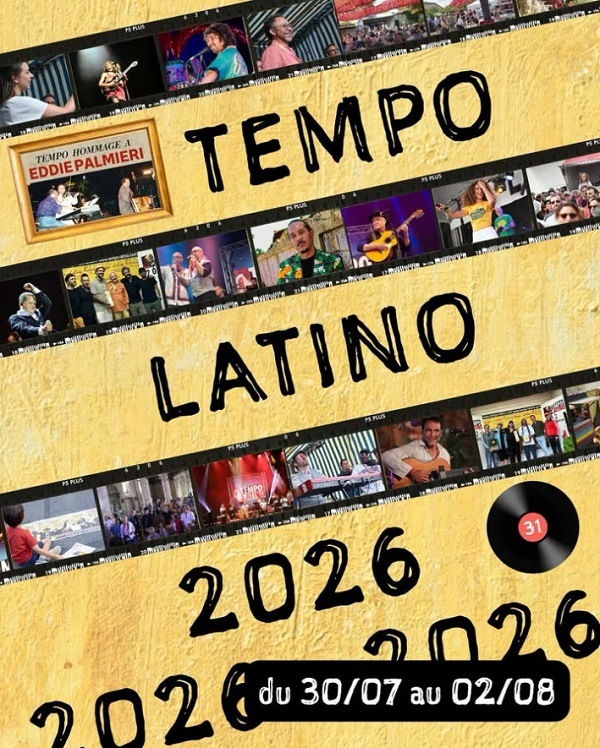
As mentioned previously, the festival began, and is still held, in Vic-Fezensac, a small village of around 3,700 inhabitants located in the Gers, which is well known for its bullfighting tradition. This association was founded in 1993 by music lover and Latin music DJ Eric Duffau, an artist who sought a different alternative to traditional commercial communities and aimed to bring traditional musical roots to the heart of Europe.
The first edition, which took place in the summer of 1994, aimed to transform the small French village into the mecca of salsa, Cuban son, and Afro-Latin jazz for four days a year.
An initiative that began as a small project has grown into one of the biggest salsa festivals of the world, which already enjoys the support of 500 local volunteers who organize into neighborhoods and homes. To this day, Tempo Latino has achieved a perfect balance between an ambitious production and a local and friendly atmosphere. It should also be stressed that it has been held on a regular basis since 1994, except for 2020 and 2021 due to the COVID-19 pandemic.
The festival expanded so much thanks to its authenticity and freshness that it has come to be known as “The One” and has established itself as a mandatory stop for the greatest Latin music glories, including Celia Cruz, Eddie Palmieri, Rubén Blades, Willie Colón, Tito Puente, Los Van Van, El Gran Combo de Puerto Rico, La Sonora Ponceña, Oscar D’León, Cheo Feliciano, Ismael Miranda, Johnny Pacheco, and many others.

Similarly, since its foundation, the festival has also served as a springboard for new musical talent, including solo artists and groups performing salsa brava, Latin hip-hop, Afro-Cuban funk, and other genres from places such as Cuba, Colombia, Venezuela, Puerto Rico, and New York.
Tempo Latino has come to a point where it is no limited only to stage performances, which are still the main attractions for attendees. They also offer dance workshops, which are designed for both amateurs and professional dancers interested in learning more about the roots and evolution of Latin rhythms.
Similarly, the festival also offers music and percussion workshops, introducing both amateur and professional musicians to important topics such as the clave, rhythm, and a bit of the history of Latin and Afro-Cuban music. In the case of percussion workshops, instructors teach students how to play the congas, timbales, bongos, and campana. As for wind instruments and musical combos, classes are given in trombone, trumpet, and saxophone.
We also cannot fail to mention the international market, where attendees can buy all sorts of things from our countries, such as instruments, clothing, traditional cuisine, handicrafts, souvenirs, and more.

Another of the great attractions of Tempo Latino is its “geo-rhythmic” network of locations, where you can find both concerts and peripheral activities that can be enjoyed simultaneously. Below are some of those that will be available for the 2026 edition:
Read also: How Artificial Intelligence changed the music biz forever
Victoria Analig Rivas Rojas, an artist, illustrator, and graphic designer, was born in Valencia, Carabobo State, Venezuela. At just 20 years old, she holds a Bachelor of Fine Arts degree with a major in Graphic Design from the Arturo Michelena University.

Since she was a young girl, her passion for art and music grew, deeply influenced by her salsa-loving, dancing, and music-aficionado (melómana) family.
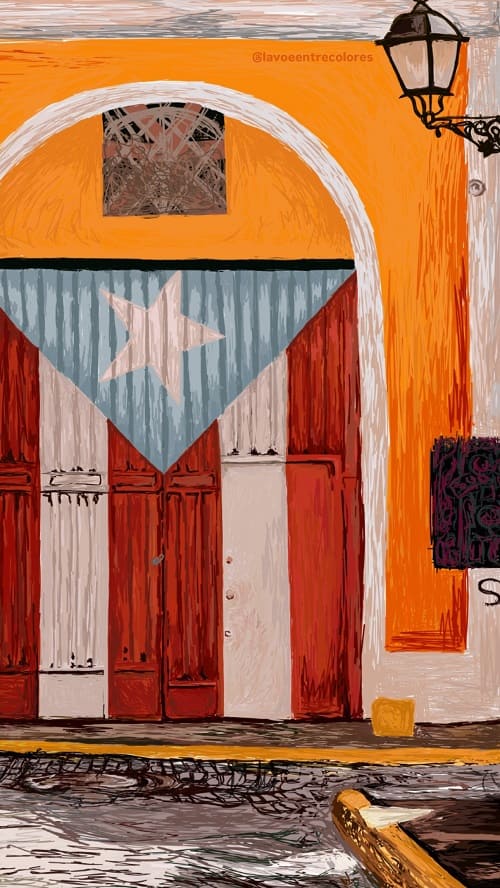
Her love for music, especially salsa, motivated Victoria to develop her Undergraduate Thesis based on the history of the genre and the biography of her idol. In doing so, she created an illustrated digital book about the life and work of the singer and musician Héctor Lavoe, one of the most prominent artists in the genre.
To achieve this, she employed a qualitative methodology, working with a population and sample of academic experts in the field a musicologist, a graphic designer, and a seasoned salsa connoisseurconducting in-depth interviews with them.
As a result, she successfully demonstrated that illustration is a key tool, functioning as a cultural bridge between words and emotion.
She accomplished this through a digital format that provides easy access for newer generations, people unfamiliar with the subject, and fans of both art and salsa.
“Lavoe entre colores” (@lavoeentrecolores) is structured into 64 pages, which unfold across 11 sections divided into Side A and Side B, emulating the classic cassette tape format.
The book summarizes the singer’s life in chronological episodes, using the titles of his songs as chapter names. It was designed over the course of more than 250 work hours, featuring vibrant, colorful undertones that invite the reader to linger and return.
“Every stroke represents my pride in uplifting Héctor’s name.”
Victoria Rivas
(An Illustrated Digital Book on the Life and Work of Singer and Musician Héctor Lavoe)


Also Read: Djane Shina A Passion Turned into Reality
From the chords of the Puerto Rican cuatro to the eternal voice of “Los Mulatos del Sabor”
Born in Tampa, Florida, but with his soul deeply rooted in the heart of Orocovis through his parents’ heritage, Jerry Louis Rivas Díaz has carved his name in letters of gold into the history of Caribbean music.

Roots, Strings, and the Making of a Self-Taught Musician
Jerry’s history with Puerto Rico formally began in 1960, when his family moved back to the “Isla del Encanto” to settle in Bayamón.
There, the young Jerry began to breathe in the folklore and rhythms that defined the Boricua identity. What many do not know is that long before commanding microphones and international stages, Jerry was deeply passionate about string instruments.
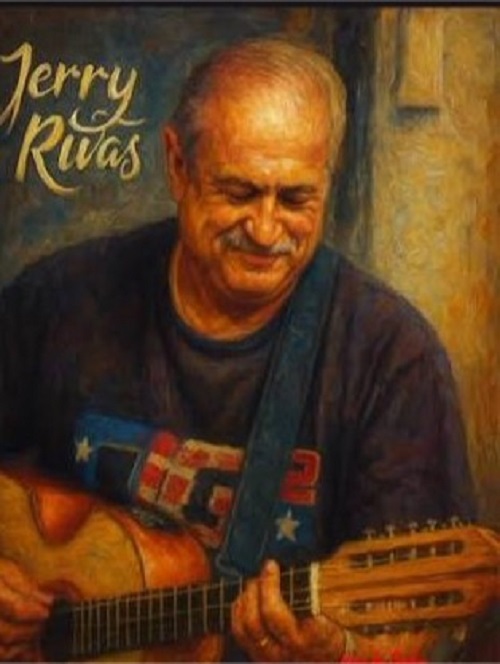
Not content with just that, he decided to delve deeper into the roots of Afro-Caribbean music, learning the secrets of the Cuban tres under the tutelage of the renowned professor Carlos Seguí.
This solid foundation as an instrumentalist not only shaped his ear but also gave him an impeccable sense of rhythm and timing that would later define his unique style for soneo (improvisational singing).
The Path to the Top: From Local Bands to a Historic Recruitment
Before the spotlight of El Gran Combo fell upon him, Jerry Rivas honed his craft throughout the island’s musical circuit, leaving his mark on every project:
It was precisely in 1976 when destiny knocked on his door. Following the shocking departure of the iconic “Niño de Trastalleres,” Andy Montañez who left the orchestra after 14 golden years to join Venezuela’s Dimensión Latina El Gran Combo found itself facing one of the most difficult transitions in its history. Replacing a legend seemed like an impossible task.

Nearly 50 Years of History at “The University of Salsa”
Joining such a demanding institution in the midst of an era-defining shift was a monumental challenge. Audiences initially viewed the new member with skepticism, but Jerry, armed with unwavering humility and immense talent, never tried to imitate his predecessor; instead, he forged his own legend.
His elegant performance style, combined with his sharp wit and deep respect for the dancer, solidified the orchestra’s golden age and ensured the transition was a resounding success.
“Joining El Gran Combo was a tremendous school and responsibility. Replacing Andy was no easy feat, but Don Rafael Ithier gave me the confidence to just be myself on stage.” Jerry Rivas, looking back on his beginnings.

The Present and Vibrant Legacy of an Eternal Sonero
Now in 2026, the tropical music landscape has changed drastically, but El Gran Combo de Puerto Rico remains unshakeable at the top.
Jerry Rivas is not just a survivor of salsa’s golden age; he is the living bridge connecting the rich traditions of the 20th century with contemporary audiences.
From his days tuning strings in Bayamón to packed stadiums across Europe, Latin America, and the United States, his journey stands as a testament to discipline, passion, and love for his culture.

Also Read: The Gran Combo of Puerto Rico “Los Mulatos del Sabor”