• Skip to primary navigation
  • Skip to main content

International Salsa Magazine

  • HOME
  • Previous editions
    • 2026
      • ISM / August 2026
      • ISM / July 2026
      • ISM / June 2026
      • ISM / May 2026
      • ISM / April 2026
      • ISM / March 2026
      • ISM / February 2026
      • ISM / January 2026
    • 2025
      • ISM / December 2025
      • ISM / November 2025
      • ISM / October 2025
      • ISM / September 2025
      • ISM / August 2025
      • ISM / July 2025
      • ISM / June 2025
      • ISM / May2025
      • ISM / April 2025
      • ISM / March 2025
      • ISM / February 2025
      • ISM / January 2025
    • 2024
      • ISM / December 2024
      • ISM / November 2024
      • ISM / October 2024
      • ISM / September 2024
      • ISM / August 2024
      • ISM / July 2024
      • ISM / June 2024
      • ISM / May 2024
      • ISM / April 2024
      • ISM / March 2024
      • ISM / February 2024
      • ISM / January 2024
    • 2023
      • ISM / December 2023
      • ISM / November 2023
      • ISM / October 2023
      • ISM – September 2023
      • ISM – August 2023
      • ISM July 2023
      • ISM Edition June 2023
      • ISM – May 2023
      • ISM April 2023
      • ISM March 2023
      • ISM February 2023
      • ISM January 2023
    • 2022
      • ISM December 2022
      • ISM November 2022
      • ISM October 2022
      • ISM September 2022
      • ISM August 2022
      • ISM July 2022
      • ISM June 2022
      • ISM May 2022
      • ISM February 2022
      • ISM January 2022
    • 2021
      • ISM December 2021
      • ISM November 2021
      • ISM October – 2021
      • ISM September 2021
      • ISM August 2021
      • ISM July 2021
      • ISM May 2021
      • ISM April 2021
      • ISM June 2021
      • ISM March 2021
      • ISM February 2021
      • ISM January 2021
    • 2020
      • ISM December 2020
      • ISM November 2020
      • ISM October 2020
      • ISM September 2020
      • ISM August 2020
      • ISM July 2020
      • ISM June 2020
      • ISM May 2020
      • ISM April 2020
      • ISM March 2020
      • ISM February 2020
      • ISM January 2020
    • 2019
      • ISM December 2019
      • ISM November 2019
      • ISM October 2019
      • ISM Septembre 2019
      • ISM August 2019
      • ISM July 2019
      • ISM June 2019
      • ISM May 2019
      • ISM April 2019
      • ISM March 2019
      • ISM February 2019
      • ISM January 2019
    • 2018
      • ISM December 2018
      • ISM November 2018
      • ISM October 2018
      • ISM September 2018
      • ISM August 2018
      • ISM July 2018
      • ISM June 2018
      • ISM May 2018
      • ISM April 2018
      • ISM March 2018
      • ISM February 2018
      • ISM January 2018
    • 2017
      • ISM December 2017
      • ISM November 2017
      • ISM October 2017
      • ISM September 2017
      • ISM August 2017
      • ISM July 2017
      • ISM June 2017
      • ISM May 2017
      • ISM April 2017
      • ISM March 2017
      • ISM February 2017
      • ISM January 2017
    • 2016
      • ISM December 2016
      • ISM November 2016
      • ISM October 2016
      • ISM September 2016
  • Spanish
  • Download Salsa App
    • Android
    • Apple

Artists

Edgardo Cambon will celebrate his 40-year career at Yerba Buena Gardens

A few years ago, we had the great honor of interviewing Uruguayan bandleader, director, composer, percussionist, and singer Edgardo Cambón, with whom we talked again about his career anniversary as a musician next month.

Obviously, we wanted to recount the most important and interesting details of his wonderful career, but we could not fail to ask him how he has been the last few years, and that is how we wanted to begin our conversation today.

One of the things he revealed is that he recently released his new album, “For Export,” under the record label Latinbaum Records during a show at a venue known as The Fright, an event in which he enjoy the opportunity to celebrate his 65 years of life in April 2025. There were about 450 people present, with whom an excellent music video was filmed and the previously mentioned CD was released. 

At the end of last year, he made about eight radio appearances, one on TV, and another one live in Bogotá, Colombia, which is one of the locations where the producer of Latinbaum Records, arranger, producer, composer, and pianist Israel Tannenbaum, is based. We have also had the opportunity to interview him on other occasions.

He says he is very happy with the five albums he has recorded so far and how active he has been over the past year due to his many promotional trips to places like Puerto Rico.

Edgardo playing
Edgardo Cambon playing live at the Cigar Bar & Grill

How has Edgardo Cambón managed to remain relevant after so many decades?

After being performed for nearly 40 years continuously, it is important to know how Edgardo has managed to remain relevant for such a long time, which in his own words, has been possible thanks to the originality of his sound and lyrics. He has never stopped writing original material, but that does not mean he has not dared to experiment with other people’s compositions, as was the case with “Imagine” by John Lennon. The artist created his own salsa version of this classic, which is an extremely risky thing due to how different salsa is from the soft rock we all remember from the original song.

More importantly, he has never been afraid of changes, and that can be seen in all the genres with which he has experimented, except for reggaeton, since he cannot support many aspects of culture that accompanies this type of music and its leading artists.

He made romantic salsa songs when that genre was very fashionable, but he always tried not to be swayed by the thing of the moment, but to seek himself in each style. Something to acknowledge Israel Tannenbaum is to be the first producer to mold him as an artist and give him so much valuable advice such as reducing the duration of a song or how to keep the message with a shorter length of time.

Another big change to which he had to adapt over the years was the fact that his understanding of the local scene could no longer be the same. One of the many things that changed was the appearance of salsa congresses where DJs, who usually played the hottest tracks of the moment, took center stage. This led Edgardo and many other artists to adapt their repertoire and include covers of much better-known songs, as that was what a whole segment of the public demanded most.
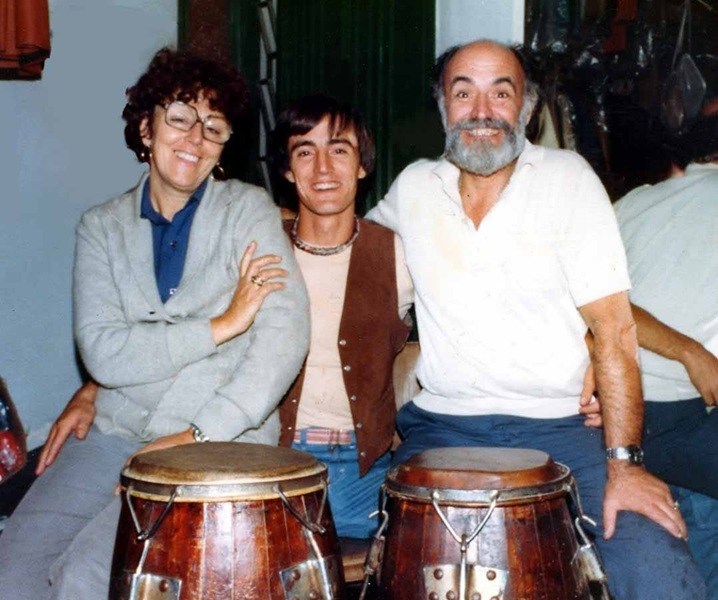
Edgardo and his parents
Edgardo Cambon with his parents Blanca Fraga and Jose Maria Cambon in 1981

Performance at the San Francisco Salsa Festival

One of the festivals he has attended was the 2026 edition of the San Francisco Salsa Festival, organized by John Narvaez and Elizabeth Rojas, who had previously hired him to offer percussion classes. Edgardo & Candela had an extremely successful performance on Thursday, March 26, which was the day of the opening.

The artist took the opportunity to remind us that he has also been performing for years at the San Jose Jazz Festival and the Monterrey Jazz Festival, the first time the organizers hired a Uruguayan bandleader, and he was one of the few to perform salsa that day. In addition, he had the honor of introducing candombe (a traditional Uruguayan rhythm) mixed with salsa and traditional drums.  

Top moments of his career

After such a long career, he has logically experienced moments that marked a watershed that forced him to adapt to the new trends. One of those changes was the replacement of the vibraphone (a very delicate instrument) by the trombone, which represented a significant sonic leap, as the musicians had to switch from a percussion instrument played with drumsticks to a brass instrument that runs on air and lip pressure.

With the arrival of Karl Perazzo, he proposed to Edgardo that they start using trombones, and he agreed to when seeing the potential of the instrument. So, that was when the group became a septet, having previously been a small ensemble in which the three percussionists played and sang simultaneously, making the band sound bigger than it really was.

Edgardo and Israel
Edgardo Cambon and Israel Tannenbaum

Some time later, Edgardo made a series of trips to Cuba that completely transformed his mind and his way of seeing and playing music, since anyone could not go on stage in that country. It was then that he felt inspired to release his album “Madre Rumba, Padre Son,” in which he gives all credit to what he learned from Cuban music and its greatest exponents. He also took the opportunity to mention some of his other biggest influences, such as the politicized lyrics of Ruben Blades in the 1970s, Los Van Van, Isaac Delgado, and many others.

Another aspect that changed over the course of his career was the way the media, radio specifically, was transforming as the years went by. However, there were always communicators willing to promote his work, such as Chuy Varela, Louis Medina, and Chata Gutiérrez, who supported him at the time despite being a local artist from Uruguay playing salsa in such a competitive environment.

Thanks to all those moments and the support he received, Edgardo managed to meet his biggest dreams such as making great music, continuing to live from music, and achieving international popularity. Although he hopes to continue reaping the fruits, he feels he has already achieved what he set out to do early in his career.

Edgardo traveled to Bogota
Edgardo Cambon during his last trip to Bogota

40 Anniversary of Edgardo Cambon’s career

Before telling us of his plans for his 40-year career, he reminded us how he celebrated his 20-year career at Yerba Buena Gardens, where he released his album “20 Años de Sabor.” The event was so successful that he will use the same venue to celebrate his 40th anniversary on August 6 this year. The concert will be completely free, suitable for all ages, and outdoor from 6:00 p.m. to 7:30 p.m.

That day, he will perform the best of his repertoire together with special guests who will make it a very special night, especially for Edgardo and his team.

And Edgardo also wanted to thank International Salsa Magazine, its editor Eduardo Guilarte and me for such a very positive interview on the occasion of celebrating the anniversary of his amazing career. The honor is all us and it is what a first-class artist deserves for leaving our heritage high. 

Read also: The Latin Ensemble enchants the United States and Spain with its talents

Rumbon de Caracas

Latin America / Venezuela / Caracas

“El Rumbon de Caracas” is a party that brings together a variety of genres to kick off the holiday season, starting November 12th at the Ciudad Tamanaco Shopping Center (CCCT) in Caracas, Venezuela. The lineup includes Salserin, Francisco Pacheco y su Pueblo, Jonathan Moly, Guaco, and special guest El Gran Combo de Puerto Rico. The event begins at 4:00 pm (16:00). Tickets are available through TicketMundo, with prices ranging from 15,000.01 Bs to 45,000 Bs.

El Gran Combo de Puerto Rico is a Puerto Rican salsa band that is as successful in its home country as it is one of the most well-known throughout Latin America. Unlike other salsa orchestras, particularly those that emerged in New York from the 1960s onward, this group, known as “Mulatos del Sabor,” has always protected its musical timbre from complex innovations and experiments, safeguarding the unique, simple, and rhythmic sound that has characterized it since its founding on May 26, 1962.

Rumbon de Caracas
Rumbon de Caracas

We also have “Guaco,” the Venezuelan orchestra born in the city of Maracaibo, Venezuela, which evolved to become recognized as a Super Band of Venezuela. Influenced by rhythms such as salsa, pop, funk, jazz, and gaita zuliana, its rhythm remains unique and constitutes a style in itself.

Similarly, we have “Salserin,” known as the children’s and youth salsa orchestra formed in Venezuela in 1993, where the musical genres are pop, ballad, Latin, and primarily salsa. This orchestra boasts over 7 million copies of its albums sold worldwide, as well as 11 productions, 6 novels, 1 feature film, 1 radio drama, and more than 50 gold and platinum records.

For more information about tickets, please contact:

  • http://venezuela.ticketmundo.com/Evento/Rumb%C3%B3n-de-Caracas/4574
  • http://clasesdesalsa.net/wp-content/uploads/2011/01/El-Gran-Combo.jpg


Andrés Cepeda & Mike Bahia Artists in November of HTV

North America / USA/ Miami
Andrés Cepeda & Mike Bahia

With a history of over 15 years, Colombian singer- songwriter Andrés Cepeda and Mike Bahia, representative of the urban genre, exclusively relate their experiences with each of their productions and the musical genres for which they have traveled.

Andrés Cepeda

Andrés Cepeda
Andrés Cepeda

The Colombian singer Andrés Cepeda, has been one of the most renowned artists of Latin American music scene. This Latin Grammy winner has been wowing his audience with his successes year after year since he began his career. The Colombian began his single career in 1999 releasing a first album: “Sé morir” disc in just one month received platinum status, framing in nearby rhythms like pop, bolero and the ballad.

In 2001 he released his second production, “El Carpintero”, for which he received double platinum.

In 2002 he published “Para amarte mejor”. This production was the first of that kind in Colombia. In 2005 he presented his work “To better love”. This album received platinum disc for sales in Colombia.

1- Andrés Cepeda
1- Andrés Cepeda

In 2007 he released a remake of “Para Amarte Mejor” in which two new songs he composed with master Jorge Luis Piloto included: “Pronóstico” and “Si fueras mi enemigo” songs that gave him international recognition and won him Latin Grammy nomination for Best Male Pop Album … “Día tras día” became after its launch in 2009, one of the most successful albums of his career, receiving gold and platinum discs.

This gave rein to that was nominated this year in three of the most important categories of the Latin Grammy Awards: Song of the Year, Album of the Year and Best Male Pop Vocal Album.

2- Andrés Cepeda
2- Andrés Cepeda

In 2012 Andrés Cepeda presented to the public his seventh album “Lo major que hay en mi vida.” Cepeda received four nominations for this album by The Latin Recording Academy, taking for the first time Latin Grammy in the category “Best Traditional Pop Vocal Album”.

He was joined for this award three prizes that gave the Nuestra Tierra 2013 Awards in the categories Best Album of the Year, Best New Artist and Best Pop Performance. Additionally, he received double platinum. In 2015 he released his latest production, “Mil Ciudades” album that featured the participation of leading industry figures.

Andrés Cepeda flyers

Mike Bahia

Mike Bahia
Mike Bahia

Meanwhile, in the second installment of HTV En La Mira of the month arrives on Thursday, November 17 the reggaetonero, Mike Bahia, one of the great musical promises of the moment.

1- Mike Bahia
1- Mike Bahia

Bahía had already begun his career by participating in the reality show “La Voz Colombia” (second edition), where he was a pupil of Fanny Lu. Then he debuted as a soloist in 2014 with the single ‘Buscándote’, a song produced by Montana The Producer (who worked for J Alvarez and Chris G), Juan Jhail (who collaborated on projects Kevin Roldan and alkylated) and Ronny Watts (alkylated and Hernán Saraza).

2- Mike Bahia
2- Mike Bahia

Later in his still brief career, Mike Bahía launched four singles: “Estar Contigo” (2014), ‘Buscándote (remix)’, ‘Tarde’ and ‘La Muñeca’ (all 2015). The latter will integrate the first album of Mike, which will be called ‘Soy Yo’. Mike himself wrote ‘La Muñeca’ in collaboration with Juan Jahil and Juan Gálvez, alkylated vocalist.

3- Mike Bahia
3- Mike Bahia

4- Mike Bahia
4- Mike Bahia

For his part, the director Nuno Gomez, who worked with alkylated in several videos, directed the clip in various locations in Venezuela. So you know, do not miss these two artists and enjoy their confessions in HTV because HTV it gets good!

Mike Bahia flyers
Mike Bahia flyers

Ismael Miranda

North America / USA / New York

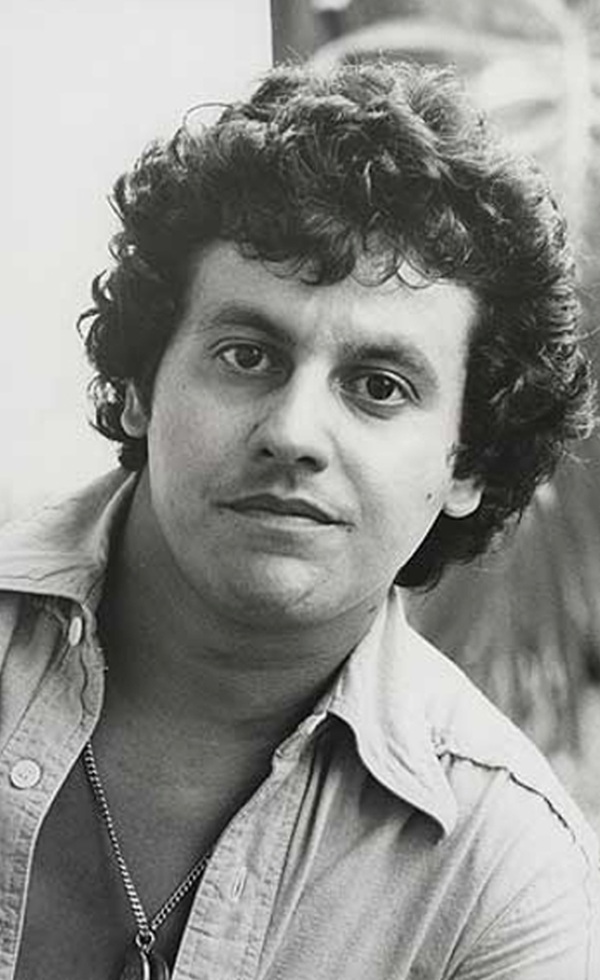
Ismael Miranda was born in the village of Aguada, Puerto Rico, on 20 February 1950. At an early age he moved to New York, where he began his passion for music. In 16, he recorded his first hit song “Rumbón melon” with Joey Pastrana. Then, he became part of the Orchestra Harlow in 1967, with which he achieved success of the song “Abran Paso”.

Ismael Miranda
Ismael Miranda

Ismael Miranda - Photo
Ismael Miranda – Photo

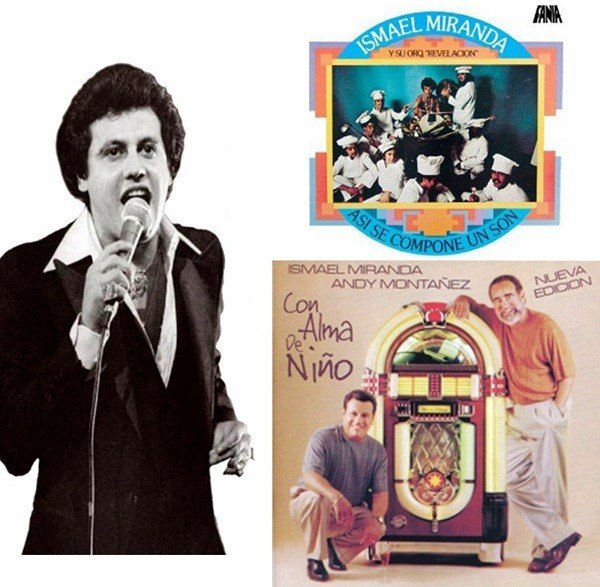
Ismael dabbled solo in 1972, with a new production called “Opportunity”. He also formed his own band called “The Revelation” and recorded another CD called “Así se compone un son”. In addition to having other notable songs, the title track was a resounding success in Latin America, the United States and Europe. The next year saw the light the album In Fa Menor, appearing again the song of the same title, “In Fa Menor”, among other successes.

Miranda continued producing hits, with songs such as “Borinquen tiene Montuno”, “La Cama Vacía”, “La Copa Rota”, “Como Mi Pueblo” y “Las Cuarentas; all were widely broadcast radio media. His compositions also achieved success with pieces like “Señor Sereno”, “Abren Paso”, “Lupe, Lupe” and “Pa ‘Bravo Yo” song made famous by the Cuban salsero, Justo Betancourt.

Ismael Miranda - Collash
Ismael Miranda – Collash

In 1974, the founders of the Fania, Jerry Masucci and Johnny Pacheco, asked Ishmael to form part of the Fania All Stars, where he was dubbed “El Niño Bonito de la Salsa” by being the youngest of all members. In the 80’s, he found success with the Fania, such as “No me digan que es muy tarde” and “Galera tres.”

Also, Ismael created his own label, under which he recorded several productions, including “Por el buen camino”, of which the theme “Careta” was a hit in 1985, plus two holiday productions. The early stage salsa enjoyed its best, and the debut of Miranda with his own band, Orquesta Revelation, could not be timelier.

Ismael Miranda - Photo 1
Ismael Miranda – Photo 1

For 2000, Ismael recorded several productions under the direction of Gilberto Santa Rosa, titled “Vengo con todo”, “Tequila and ron” (which was nominated for a Grammy in 2003), and “Special Edition”. At 2005, reached #1 on the Billboard chart, with the theme “Se fue y me dejó” with Andy Montanez and Cheka, produced by Sergio George. In 2007, he recorded his first Christian production called “Buscando el Camino” in which the theme “Como el Águila” achieved great success. In 2008, he launched the production called “De regreso al son”. For 2011, Ismael recorded his second Christian production “Aferrado a ti”, which issues “Francotirador” and “Sabes que te amo” were big hits.

Ismael Miranda - Photo 2
Ismael Miranda – Photo 2

In 2014, after a successful tour to mark its 45th anniversary in the Salsa, Ismael met with Victor Manuelle, to whom he delegated the production of his latest album “Son 45”. This production is very modern, but retains the classical influence of salsa, and has proven to have the support of the whole public salsero. From his first days on the market, this new album, started climbing positions in the lists of the prestigious music magazine Billboard, with the theme that gives the name to the album “Son 45”.

Ismael Miranda - Photo 3
Ismael Miranda – Photo 3

Entered 2015, The Pretty Boy of Salsa positioned in the first place with the same subject, under the category “Air Play” magazine, the second member of the Fania All-Star to reach the #1 position for the second time, place before conquered only by the Guarachera del Mundo, Celia Cruz. Ismael made history again when launching his second promotional theme of this production, “Bajo, piano and bongo” again ranked at #1 on the Billboard charts in the same category, becoming the most #1’s has reached among members of Fania. As if that were not enough, this production has also been nominated for a Latin Grammy in the category “Best Salsa Album”.

Ismael Miranda - Photo 4
Ismael Miranda – Photo 4

During the course of his great career, Miranda has recorded more than 20 albums and has performed with notable artists such as Nicky Marrero, Hector “Bomberito” Zarzuela, Reinaldo Jorge, Ismael Quintana, Willie Colon, Ray Barreto and Luis ‘Perico’ Ortiz.

Ismael Miranda - Flyers
Ismael Miranda – Flyers

How Artificial Intelligence changed the music biz forever

Since very recently, there has been a tool that gives machines and systems the ability to mimic many of the things humans do, such as writing texts, drawing, analyzing data, recognizing information, making decisions, among many others. Of course, we are talking about Artificial Intelligence. 

One of the areas in which artificial intelligence has definitely impacted is music, reaching the point where it may even compose entire songs, write lyrics, and generate voices so realistic that they could easily be confused with those of humans. Because of the impact this set of technologies has had on the art world, we cannot stop talking about such an important issue that, whether we like it or not, has significantly changed and will continue to change the music landscape significantly.

Imagen created by Artificial Intelligence
This is an image about AI in music created by AI

AI and Music

Even when this could cause discomfort, it is not a secret for anyone that every day there are more facilities for those who make music without having the necessary knowledge to produce something of high quality in many cases, so they ride on all possible resources to make their job easier and simpler. 

Artificial intelligence makes producing, composing, mixing, and mastering much less complex processes, and in many cases, human intervention is not necessary. Artists and all kinds of music professionals now have a much wider range of possibilities with which they can cross boundaries technology did not allow before. For this reason, it is imperative that they are trained as best as possible in these tools so they can get the most out of them, but trying to keep the human touch that every artistic product needs.

Benefits of using Artificial Intelligence in music

As we have made quite clear, artificial intelligence offers numerous advantages to all those who learn to use it, but what would be some of them?

  • Less chance of making mistakes: by limiting to the minimum human intervention, the chances of making a mistake that could harm the final result is very slim, delivering greater levels of confidence throughout any process.
  • Speed and efficiency in the processes: anyone who has had the opportunity to compose or knows someone who does understands that it can be a rather slow and arduous process, but artificial intelligence can make things easier beyond imagination. Something that usually lasts days or even weeks can suddenly happen in seconds, making this technology a huge draw for any music creator.
  • Greater creative possibilities: Because AI offers the ability to mix up styles and genres that an artist would not consider by himself, opening up a wide range of creative possibilities and helping to create unique and experimental songs.
  • Highest adaptability: another of the virtues of AI is the ability to create lyrics, adjust them, and adapt them to existing melodies. 
AI has some disadvantages
AI offers many advantages, but also some disadvantages artists take into account

Challenges facing artists with artificial intelligence

So as we mentioned some of the virtues of AI, it is needed to be honest and admit that it can bring some problems when not used correctly. For an artist, there are certain things that can be harmful if he does not have the right training and a clear idea of what he/she wants to achieve:

  • Little originality: this is one of the aspects that most concerns those who criticize excessive use of AI in music, since this technology is based on pre-existing data. While it is true that AI can generate new things, its production only comes from previously made content. 
  • Low emotional depth: one of the main criticisms against AI in the realm of artistic creation is the lack of emotional depth it sometimes offers. Music has been understood as one of the most emotional and human expressions an artist can convey, but unfortunately AI is occasionally unable to replicate it with the same intensity. These platforms cannot always grasp this emotional component, which is so necessary to create music with the level of authenticity and depth required to touch the hearts of audiences.
  • Concerns about job security of musicians: due the legal gray areas over which AI still navigates, there are many worries about job security of artists. Because this technology is capable of reproducing vocals and compositions that may well compete with those of humans, this could mean that the livelihoods of many workers of the music industry could be seriously affected. 

Copyright law in relation to Artificial Intelligence

One of the most common doubts regarding AI is how the matter of copyright is handled, especially in the music industry, where there have been more than one scandal involving this topic. According to Intellectual Property Law, any copyrightable work should be completely original and created by a natural person. Could we say that an AI-powered song is original? Well, let’s see.

Given that originality has no clear definition in the law, the courts and the legal literature have set up the term, which results in the objective approach and the subjective approach.

Cover created by AI
Cover of NostalgIA with the voices of Daddy Yankee, Bad Bunny, and Justin Bieber. The song was made by the artist prototype Flow GPT

The subjective approach holds that a work is original if it is a true reflection of its author’s personality, while the objective approach makes references to creating something that did not exist before. The predominant approach in most countries that have enacted appropriate legislation on this matter is the subjective one, making it difficult for works created using AI to be protected by law. However, companies that provide this technology generally point out that the rights to the material created by their AI belong to them.

In view of the above, the law is very clear that the author must be a natural person, making it impossible for a work created with AI to be legally protected. It is for the same reason that, even if the objective approach predominates at some point, it would still be very difficult to protect this material.

What can we conclude from all this?

It is clear that Artificial Intelligence is here to stay and change the music industry forever, so struggling against it and its use is absolutely useless. For this reason, it is important to see it as an ally in improving what was done and not as an enemy to fight. 

Although these platforms may have some disadvantages that have already been mentioned, proper training of artists can lower the chances of falling in the lack of human sensitivity and help integrate them into their work as effectively as possible, since AI is a reality with no turning back.

Read also: David Frankel pursued music and created Avenida B Band to reconnect with the memory of his father

  • « Go to Previous Page
  • Page 1
  • Interim pages omitted …
  • Page 4
  • Page 5
  • Page 6
  • Page 7
  • Page 8
  • Interim pages omitted …
  • Page 123
  • Go to Next Page »

International Salsa Magazine (ISM) is a monthly publication covering salsa activities around the world and has been publishing since 2007. It is a worldwide network of volunteers coordinated by ISM Magazine. Together, we work to strengthen salsa events around the world.