 |
 |
 |
 |
 |
|
 |
|
 |
|
 |
|
 |
|
 |
|
 |
|
 |
|
| “We are the Real Latin music world network” | |
 |
 |
When we talk about the best characteristics of Puerto Rican artists, innovation is definitely one of them, and our guest is an excellent example of this. Grammy nominee and composer William Cepeda was born and raised in Loiza, known as the heart of “Little Africa” in Puerto Rico, so we can sense that this had much to do with his later artistic inclinations. We will talk about this and other things in the next paragraphs of this gripping story.
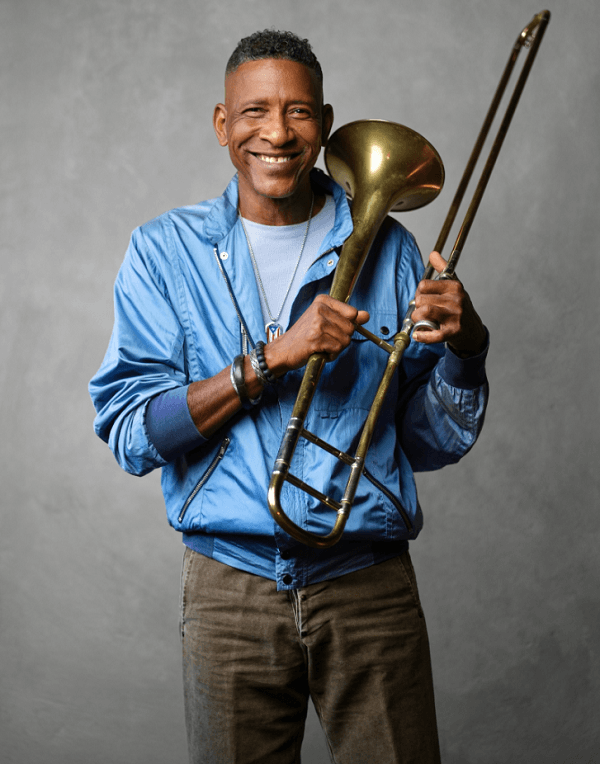
The environment in which William grew up had everything to do with his interest in music as a serious profession. In Loiza, Puerto Rican bomba was one of the most listened genres by the community, and cultural events based on it were passed down through generations. It was there that a very young William began attending the colloquially known as “bombazos” and connecting with this music from an early age.
Practically the whole town was involved in these traditions, including his family, so he could not escape all these activities carried out year after year. In fact, his grandparents and some of his uncles and cousins were musicians, so it was common for the young boy to see them play their instruments and know what that was about.
When he turned 14, he finally began seriously studying music, especially the theory part. Although one of his options to study was accounting, this career would never overcome his enormous taste for music, so he never materialized this interest.
While still an inexperienced teenage musician, William started playing percussion with some local groups, one of them being La Orquesta Zodiac, composed of a group of salsa veterans with more than 50 years of professional experience. Although these gigs were already paid, the young man still saw music as a side hobby.
However, long time later, he would completely change his mind after noticing that his skills and opportunities could take him further than he thought possible.
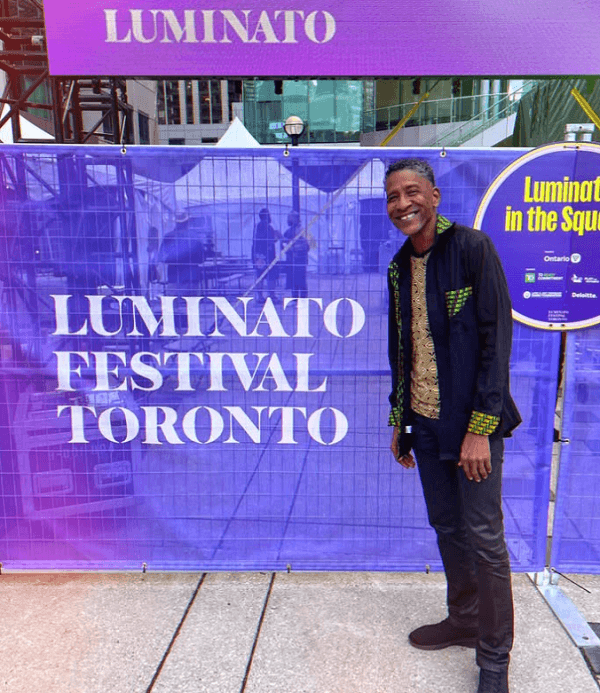
Having already a more or less consolidated career, William was part of the invention of Afro-Rican Jazz, which can be defined as a concept that celebrates Puerto Rico’s heritage and its African roots while offering a new version of the jazz that everyone knew, giving it a touch of modern flavor that was absolutely innovative for the time.
Growing up in an environment where traditional Puerto Rican music was so present and having experience only with local groups, he still had a long way to go as an artist. His outlook started to broaden by going to study at Berklee in Boston and then to do a master’s degree in New York, which in turn led him to play with American groups and musicians such as Dizzy Gillespie, James Brown, Miriam Makeba, and many other famous jazz musicians.
Gillespie became one of his biggest mentors when playing with him and his group The United Nations Orchestra, which included Cuban, Colombian, Dominican, Panamanian, and Brazilian musicians. It was precisely because of this great diversity of nationalities and influences that the orchestra received this name. However, there were no Puerto Rican musicians or music, so Gillespie gave William the opportunity to become the youngest member and create a subgenre product of a mixture of jazz and some styles from his place of origin.
William told us that many Boricuan musicians used to play Latin jazz based on Cuban music, but none of them had ever ventured to create a subgenre of jazz with a Puerto Rican base. That was when the artist realized that something had to be done about it, so he chose to fuse jazz with Puerto Rican music and later named his group Afro-Rican Jazz.
He also continued to experiment with genres until he found something he called “Plena jazz,” the name he used for one of his albums and the result of mixing plena, another traditional genre born in the neighborhoods of Puerto Rico, and jazz. He also made a symphonic rumba album at the time.
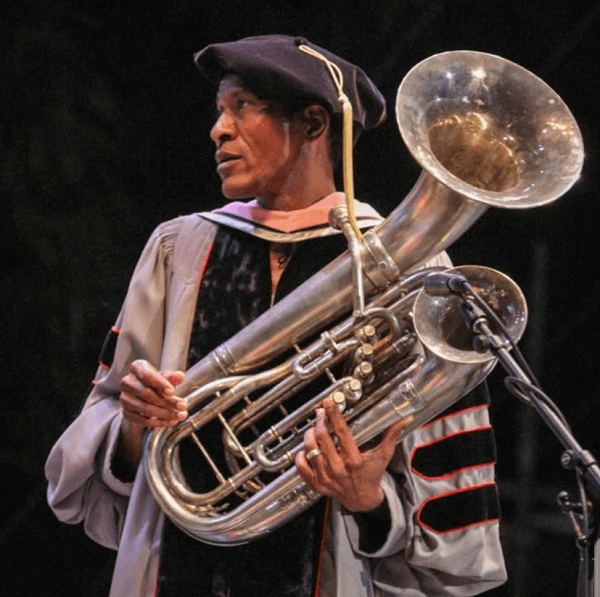
Although William was influenced by a number of artists, when we check out his story his history, there is no denying that the South Carolinian trumpeter was the greatest influence and role model for the young man.
With respect to this stage of his life, William recalls with affection that Dizzy was always very attentive to his development within the group, to the point that he came to see him as an artistic father. As we said before, he knew nothing about jazz or American music when he left Puerto Rico, but Dizzy and his musicians were “a second university” where he learned what no educational institution could teach him, something he thanks to them.
“Dizzy saw talent in me, so he always pushed me to be better every day. He encouraged me, protected me, and guided me in my development as a musician,” he said of his teacher.
William has collaborated with countless great Latin artists such as Celia Cruz, Rubén Blades, Eddie Palmieri, Tito Puente, Marc Anthony, Oscar D’León, and many others. Most of these contacts came about thanks to references of acquaintances, combined with the percussionist becoming known to the public for some time, which generated many recommendations.
All the above artists also influenced him to a certain extent, but he also says that he liked and still likes other genres such as classical music, jazz, the folklore of other countries, and many others.
Read also: Argentine tango bassist and Latin Grammy winner Pedro Giraudo returned to his roots
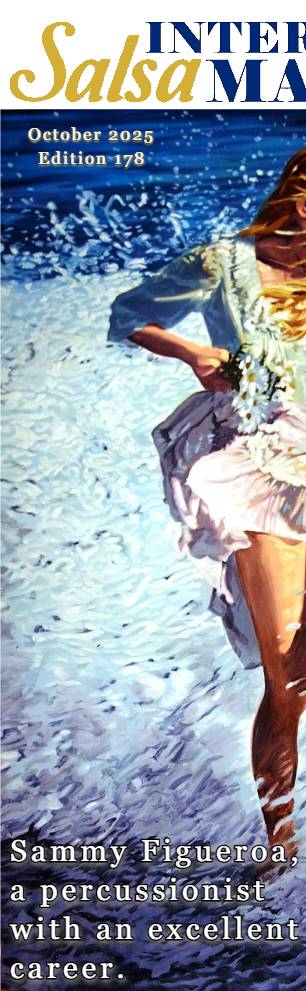
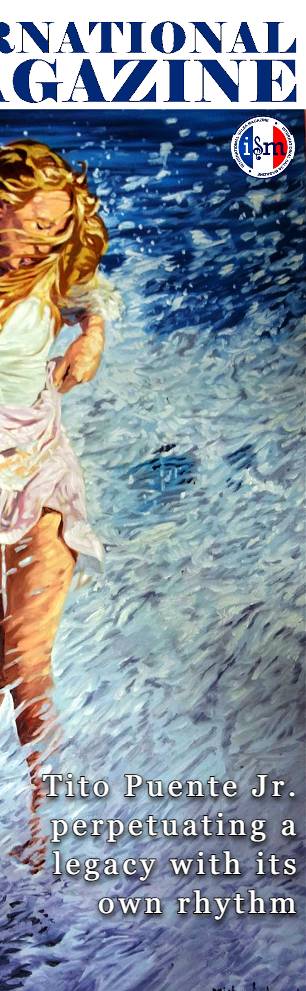
In International Salsa Magazine, we cannot contain our joy for the conversation we had with the son of one of the greatest legends of Latin music, who is now writing his own story of grandeur thanks to the education he has received practically since birth. This is none other than New York producer, composer, and percussionist Tito Puente Jr., who shared about 40 minutes of his time to answer some questions exclusively for Augusto Felibertt and yours truly, Karina Garcia.
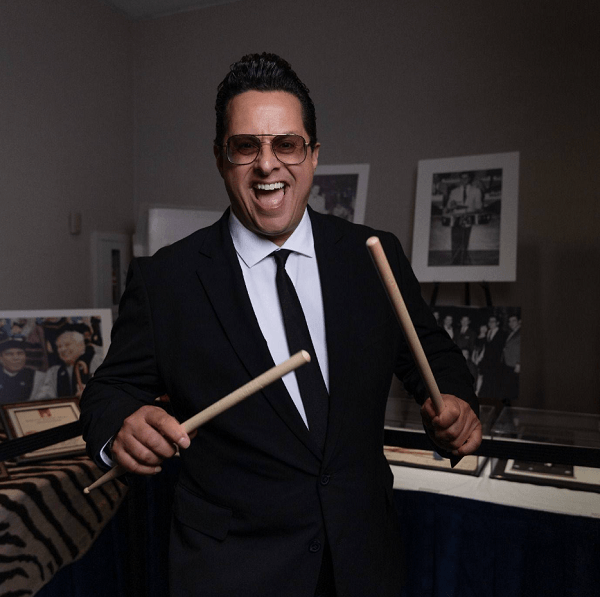
Having a successful father is a great blessing, but sometimes, it can become a veritable martyrdom for a son who wants to follow his path, as comparisons between them will always be inevitable. Being able to share with Tito Puente Jr., son of the legendary King Of Timbales Tito Puente, gives us the opportunity to get his perspective on this interesting and important subject.
Fortunately, the artist does not see this legacy as a burden, but quite the opposite. Although he admits that his father is one of the greatest masters and ambassadors Latin music and our culture in general have ever had, and that it is not easy to fill his shoes, he proudly bears his father’s surname and promotes his music.
Moreover, he sees the surname “Puente,” as well as the Spanish word implies, as a union among several generations because many young people this day do not know Tito Puente, Celia Cruz, and many other exponents of that salsa’s golden era. Tito Jr. wants to be part of that “bridge” between generations so that people of all ages can learn about these prodigies, including, of course, his father.
Regarding his childhood and adolescence, Tito emphasized that he always saw his father play all types of instruments such as timbales, marimba, saxophone, percussion, and many others, which inspired him and made him want to imitate him from the beginning. Today, his career is largely influenced by everything he saw at home, and he plays his father’s arrangements and compositions, which are divided between a total of 186 albums.
Everything learned within his family has taken him so far professionally, to the point that he now has seven Latin Grammys and 14 nominations, all thanks to the legacy he carries.
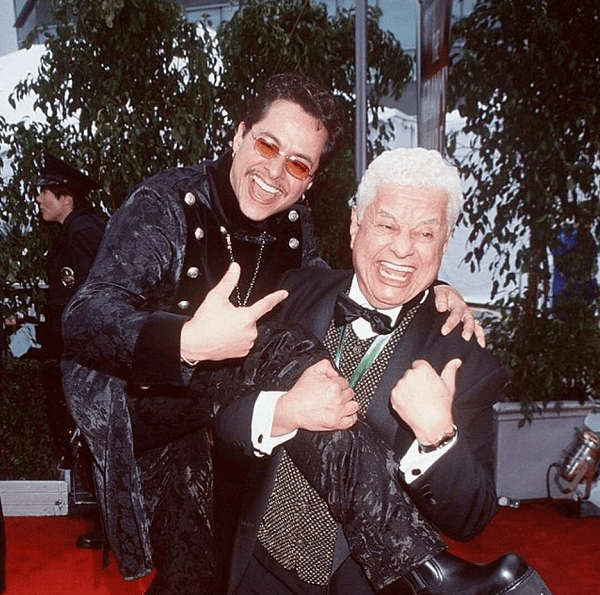
On the more personal side, Tito is the youngest of his brothers, among whom he is the only one who works on music as a profession. To some extent, this has made him take upon his shoulders Tito Puente’s legacy through his own art.
The musician currently resides in southern Florida, specifically in Miami, although he works with orchestras from different cities and countries. He is married and has two children who are Miranda, 18, and Tito Puente Jr. Jr., 17. Miranda studies marine biology at university, while her younger brother is in high school but travels constantly with his father and enjoys composing and playing the guitar.
He also told us a little about his wife, who loves salsa but is not in music. On the other hand, he spoke lovingly of “the boss,” his mother Margarita Puente, who is currently in charge of royalties, record labels, publicity, and the documentary on Tito Puente’s life.
He also has two siblings: Audrey Puente, 55, who is a television meteorologist, and Rony Puente, 77, who is also a musician like his father and younger brother.
In addition to salsa, mambo, and guaguancó, Tito really enjoys English rock and several bands such as Metallica, Slayer, Iron Maiden, Black Sabbath, and others into this style. These tastes of his have led him to the idea of, at some point, blending heavy metal with mambo to see which result he gets.
As well as he can really enjoy the music of Bon Jovi and Ozzy Osbourne, he is also fascinated by El Gran Combo de Puerto Rico, which he finds to be a very interesting mixture of genres that he would like to experiment with someday.
He also said laughing that his father did not share his musical tastes and that the only rock band he liked was Santana, and that was because they did their own version of the hit “Oye Cómo Va” in psychedelic rock and Latin rock.
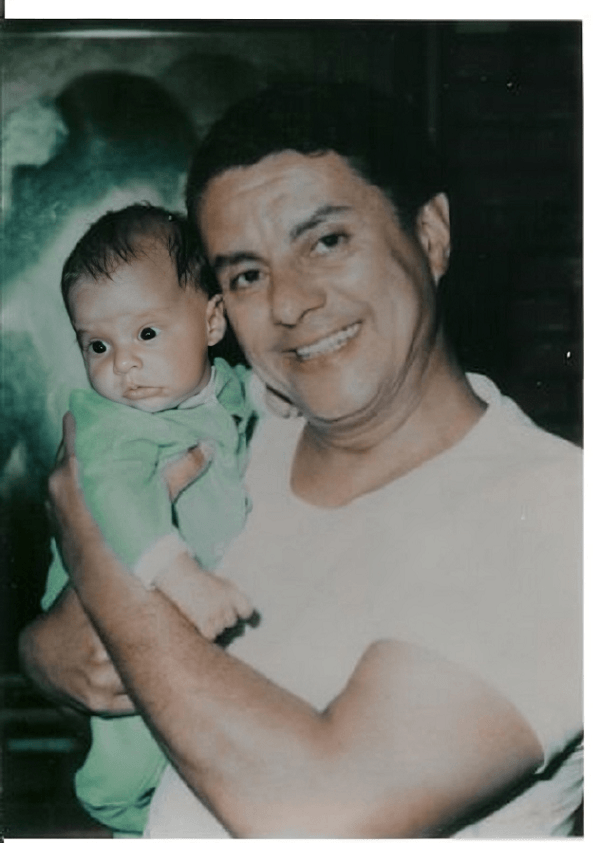
Today, Tito works with various singers, including Aymee Nuviola, Lucrecia, Yolanda Duque, and his great friend, “La Princesa de La Salsa” La India. His father worked with great vocalists such as Tony Vega, Michael Stuart, Oscar D’León, José Alberto “El Canario,” Miguel Ángel Barcasnegras Díaz “Meñique,” and many more.
Tito’s latest album, “The King And I,” also features other big voices such as Domingo Quiñones, Frankie Negrón, José Alberto “El Canario,” Tony Vega, Sheila E., Pete Escovedo, and many other salsa superstars of today and yesterday.
The timbalero has worked with many figures who also worked with his father in the past, so it is clear that they see him and respect him as the continuation of his musical legacy.
On the important issue of academic training in music, Tito pointed out that there are not enough educational programs aimed at teaching Afro-Cuban music in schools and universities, which in his view needs to change as soon as possible.
In fact, he noted the importance of promoting programs in educational institutions around the world so that their students learn much more than just symphonic music and become more rounded professionals. Although he recognizes the importance of knowing Beethoven and Tchaikovsky, he also believes that aspiring musicians should know about Eddie Palmieri, Charlie Palmieri, Larry Harlow, Pupi Campo, and other artists in this style.
The artist believes that the above mentioned artists and many others related to jazz and salsa are part of a very important era of music in the world, which is why he believes that teachers must take them into account during their classes. For him, it is a mission to promote both his father’s music and that of other exponents of his kind in the academic field.
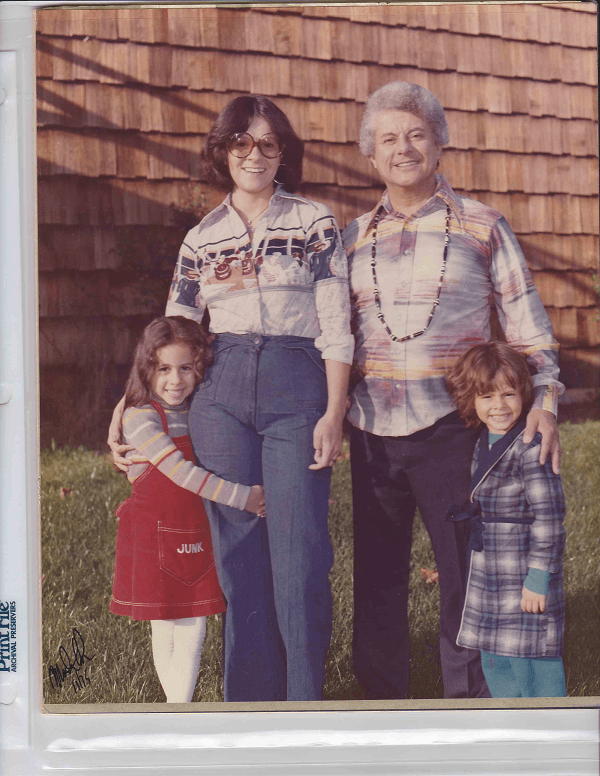
For our research, we could notice that Tito has several performances and tours scheduled for the rest of the year, more specifically for November. In this regard, he told us that in the first week of September, he went to play his father’s music on his weekly show Mambo Mondays, which is held to delight dancers eager to keep enjoying Tito Puente’s music.
About international tours, he plans to go to Germany in February next year and Spain next summer. He is also close to release a documentary in 2026 and a new album with the Los Angeles Symphony Orchestra, which has 77 musicians and instruments such as violins, violas, harps, bagpipes, flutes, French horns, among others.
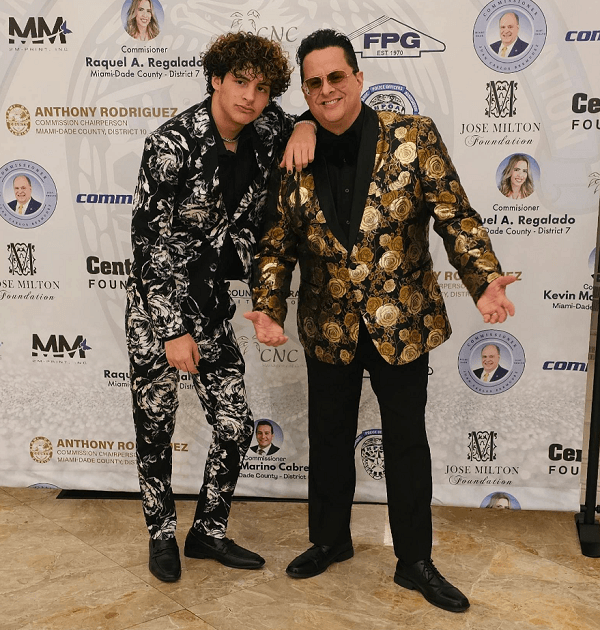
We still cannot believe we had this great conversation with the talented Tito Puente Jr. and it has been a great pleasure to share this time with him. Those who wish to contact him can do so through his social media channels, which are as follows:
Facebook: https://www.facebook.com/TitoPuenteJr/
Instagram: https://www.instagram.com/titopuentejr/
X: https://twitter.com/titopuentejr
Tik Tok: https://www.tiktok.com/tag/titopuentejr
Spotify: https://open.spotify.com/intl-es/artist/2ROkqvVDXj5JgmN6z2uFrM
Read also: Venezuela violinist and former musician in El Sistema Ali Bello has many interesting things to say





Directory of Asian nightclubs |
||
 HONG KONG |
||
 Graffiti LKF Graffiti LKFG/F, 17-18 Lan Kwai Fong, Central Central, Hong Kong |
 SOLAR LKF SOLAR LKFCentral 2nd Floor, Ho Lee Commercial Building, 38-44 D’Aguilqr Street, Lang Kwai Fong Central HKI Hong Kong |
 Sole Mio Sole MioUpper Ground Floor, 51 Elgin Street, Soho Central Hong Kong, Hong Kong |
|
|
||
|
|
||
|
|
||
|
|
 Bar Mirage Bar Mirage5F VORT Roppongi Briller, 3-14-14 Roppongi, Minato-ku Tokyo 106-0032, Japan +03-5860-6946 |
 Fiesta Latin Spot Bar Fiesta Latin Spot Bar3F, 1 Chome-14-6 Kabukicho, Shinjuku City Tokyo 160-0021, Japan +81 90-1086-2878 |
 El Cafe Latino El Cafe Latino3 Chome-15-24 Roppongi, Minato City |
|
|
|
|
||
|
|
|
|
|
|
||
 2F Thi Sach Ho Chi Minh City, Vietnam 70000 +84 799 741 261
|
|
|

|
|||||||||||||||||