• Skip to primary navigation
  • Skip to main content

International Salsa Magazine

  • HOME
  • Previous editions
    • 2026
      • ISM / May 2026
      • ISM / April 2026
      • ISM / March 2026
      • ISM / February 2026
      • ISM / January 2026
    • 2025
      • ISM / December 2025
      • ISM / November 2025
      • ISM / October 2025
      • ISM / September 2025
      • ISM / August 2025
      • ISM / July 2025
      • ISM / June 2025
      • ISM / May2025
      • ISM / April 2025
      • ISM / March 2025
      • ISM / February 2025
      • ISM / January 2025
    • 2024
      • ISM / December 2024
      • ISM / November 2024
      • ISM / October 2024
      • ISM / September 2024
      • ISM / August 2024
      • ISM / July 2024
      • ISM / June 2024
      • ISM / May 2024
      • ISM / April 2024
      • ISM / March 2024
      • ISM / February 2024
      • ISM / January 2024
    • 2023
      • ISM / December 2023
      • ISM / November 2023
      • ISM / October 2023
      • ISM – September 2023
      • ISM – August 2023
      • ISM July 2023
      • ISM Edition June 2023
      • ISM – May 2023
      • ISM April 2023
      • ISM March 2023
      • ISM February 2023
      • ISM January 2023
    • 2022
      • ISM December 2022
      • ISM November 2022
      • ISM October 2022
      • ISM September 2022
      • ISM August 2022
      • ISM July 2022
      • ISM June 2022
      • ISM May 2022
      • ISM February 2022
      • ISM January 2022
    • 2021
      • ISM December 2021
      • ISM November 2021
      • ISM October – 2021
      • ISM September 2021
      • ISM August 2021
      • ISM July 2021
      • ISM May 2021
      • ISM April 2021
      • ISM June 2021
      • ISM March 2021
      • ISM February 2021
      • ISM January 2021
    • 2020
      • ISM December 2020
      • ISM November 2020
      • ISM October 2020
      • ISM September 2020
      • ISM August 2020
      • ISM July 2020
      • ISM June 2020
      • ISM May 2020
      • ISM April 2020
      • ISM March 2020
      • ISM February 2020
      • ISM January 2020
    • 2019
      • ISM December 2019
      • ISM November 2019
      • ISM October 2019
      • ISM Septembre 2019
      • ISM August 2019
      • ISM July 2019
      • ISM June 2019
    • 2016
      • ISM December 2016
      • ISM November 2016
  • Spanish
  • Download Salsa App
    • Android
    • Apple

Search Results for: live music

San Clemente Salsa Congress

Salsa San Clemente 2020 Congress online starts today:

The month of December 2020 has already begun, a very difficult year for everyone worldwide due to the covid-19 pandemic that hit us all at the end of 2019 and others in 2020; despite the fact that our lifestyle has changed at all levels (social, economic and political); However, this did not stop our activities but with more caution when doing them, including the use of the Internet to do work at home in most jobs.

Already adapting and looking for a way to try to make these quarantine times more pleasant and not monotonous of routine life at home, many events have been carried out with great success online since people enjoy recreational activities and there is nothing better than an event especially if it is musical that one can attend without putting oneself in danger of being infected.

Among the events that will be held in December 2020, one will be held in Argentina, from December four (4) to eight (8), the San Clemente Salsa Congress 2020 Online, where the Workshops will be held every day, music live, shows, presentation of live DJs, interaction with the public and raffles.

San Clemente Salsa Congress 2020 Online
San Clemente Salsa Congress – Artists

Its name derives from the Argentine seaside resort and tourist city of La Costa in the province of Buenos Aires, called San Clemente del Tuyú, which is located on the northern coast of the Argentine Sea. Its organizer is Mr. Gerardo Osvaldo Russo who was born on July 3, 1984 who lives in the beautiful city of San Clemente del Tuyu, who in turn is the director of the Salsa y Sentimiento Academy and has extensive experience in the tropical musical genre already performed by the Caribbean Rhythms faculty in the “SAOCO” study.

It would be this year the seventh (7th) International Congress of Salsa, Bachata and Caribbean Rhythms and in turn known as the most important congress of the Atlantic Coast, Argentina, only this time due to the Covid-19 pandemic situation it will be held Online for the safety of your guests

The schedule of activities would be as follows:

  • Friday 4: the presentation of the congress will be held, live music with Cuban singer Elena Guarner and DJ Charlie Ayestaran, shows and talks will be held with the subscribed guests.
  • Saturday 5:
    • 14:00 hrs: musicality with Mauro Álvarez
    • 15:00 hrs: Rumba / Guaguanco with Adriel and Malena.
    • 16:00 hrs: Mambo in two / free steps with Martin Ayrala.
    • 17:00 hrs: Musical Interpretation with Carlos Aragón and Gustavo Pinat.
    • At night there will be live music with Mariano Ávila (Argentine singer), then choreographic shows, talks, raffles and DJ Caramelo will be playing.
  • Sunday 6:
    • 15:00 hrs: Bachata / shines and figures with Paula Urquiza and Gabriel Zamora.
    • 16:00 hrs: Cha cha cha / free steps with Sole Martino and Diego Castro.
    • 17:00 hrs: Salsa on 1 / Shines and figures with Carine Moraes and Rafael Barros.
    • At night there will be live music with Aye Soto, Argentine bachata singer, then choreographic shows, talks, raffles and DJ John Moon will be playing.
  • Monday 7:
    • 14:00 hrs: Timba with Tati Barbosa and Dani Escobar.
    • 15:00 hrs: Salsa On 2 with the Timbaleros
    • 16:00 hrs: Latin Training with Gabriela Mancini
    • 17:00 hrs: Dominican Bachata with Leticia Beltran and Gabriel Salgado.
    • At night there will be live music with the Chasumadre Orchestra, talks, shows, choreography and raffles.
  • Tuesday 8:
    • 15:00 hrs: Casino wheel with Adrian Doblas.
    • 16:00 hrs: Bachata / shines and figures with Mauricio and Natalia
    • 17:00 hrs: Timba with Celina and Lucho.

Subscription is 100% free and live a healthy and safe adventure inside your home, just by having your computer and internet access, do not miss this great opportunity.

For more information:

WebSite para subscribirte:

Facebook: https://www.facebook.com/San-Clemente-Salsa-Congress-1384904591761235

Instagram: @ sanclementesalsacongress

Correo: [email protected]

Teléfono: +54 2252 40-8486 (Whatsapp) / +54 9 11 6838-6589

Home

Azúcar Club Cubano – Brazil

Meet the “ Azúcar Club Cubano ” of Sao Paulo, Brazil:

Since the Salsa boom in the sixties, “60” invaded the ears of many Latinos and North Americans, later Europeans, Africans and Asians in restaurants, Academies, clubs, parties and events since they were the novelty of the moment and they had something that made his guests dance with seasoning and fun and for future talents (artists) a new style and / or musical genre.

Brazil is the largest country in South America and is one of the countries with the most energy and positivity. The good humor of its people and its constant party atmosphere make this Brazilian culture one of the pillars of world dance. Among the dances that exist in Brazil, the “Samba” stands out, which is danced during festivals and popular celebrations such as the Carnival, some of the most popular versions include “carioca”, “a baion”, “conga”, “mesemba”, “a batucado” and “carnivale”.

Outside of the carnival there is the Carimbó, Capoeira, Lundu, Baião and “Xote” (typical type of lining dance that is incredibly versatile and has several variations throughout the country, it is a dance that has a mixture of European and African influences, it also incorporates elements of salsa, mambo and rumba, depending on the region of Brazil).

Night Club
Azucar Club Cubano is open

Despite everything in Brazil other musical rhythms are also danced but in less quantity such as salsa and bachata in nightclubs and in Brazil there are a great variety of Latin academies, restaurants and clubs where you can enjoy pleasant music and if what You want to dance Merengue, Salsa and Cumbia, you can go visit the “Azúcar Club Cubano” which is a disco and nightclub that is located at Rua Dr. Mário Ferraz, 423 Itaim – Bibi, São Paulo, Brazil.

Which was inaugurated in August 2000; being the first Latin house in Sao Paulo at that time thanks to the Latin inspiration with its flirty and great Caribbean music. Currently it is recognized for being very cheerful and with excellent service where it had great successes and that until today it opens its doors to all people who like Latin rhythms, both music played by DJs and live music are also performed. events, concerts, festivities (birthdays, anniversaries, celebrations, among others).

Azucar Club Cubano working
In the Azucar Club Cubano

They also have a bar where the most requested alcoholic beverages are Rum and Tequila and among their cocktails are ” El Margarita “, ” El margarita con Tequila ” and ” Mojito “, the latter known as the best in all of Sao Paulo, Brazil; They also have a varied menu so that people can taste good food and the music that they are playing at that time.

The Club opens its doors to the public from Tuesday to Friday from 7:00 p.m. (7:00 p.m.) and on Saturdays from 8:00 p.m. (8:00 p.m.) and there one can pay with any credit card or debit.

Cocktails
cocktails are “El Margarita”, “El margarita con Tequila” and “Mojito”,

For more information you can search through:

WebSite:

Facebook: @ azucarclubcubano

Instagram: @ azucarclubcubano

Correo: azucar@ azucar.com.br

Teléfono: +55  11 3074 3737

Tripadvisor:


Home

Héctor “Tempo” Alomar: The Scorching Voice and the Rhythm Blessed by “El Cantante de los Cantantes”

The Invaluable Legacy of an Afro-Antillean Percussion and Vocal Giant

Héctor “Tempo” Alomar was born on December 28, 1950, in Parada 19 of Santurce, Puerto Rico. A singer, percussionist, and true pedigree sonero, he became an essential figure in salsa music thanks to his outstanding contributions to world-class bands.

His resume included Orquesta La Conspiración, La Diferente, Conjunto Libre, La Charanga Afrocubana, La Charanga América, Orquesta Broadway, Charanga la Tapa, Casanova y su Montuno, Batacumbele, El Combo de Siempre, Zaperoco, Nacho Sanabria’s Orchestra, Grupo ABC, and, in a career-defining run, Roberto Roena’s Apollo Sound. He also led his own musical ensemble under the name Sexteto La 51, his last recording with the legendary and living legend of Fania All Stars Eddie Montalvo.

Héctor Tempo Alomar la Voz Candente y el Ritmo

The remembered former member of Apollo Sound passed away at the age of 70 in his native Puerto Rico on May 9, 2021, leaving a profound void in the world of music collecting and salsa culture.

A Rhythm That Ran Through His Veins

The son of Doña Isabel Román and Don Luis Alomar, young Héctor showed an innate connection with the clave from a very early age. His mother used to recall that the boy would strike the rhythm with any kitchen utensil he could get his hands on, even breaking several glass cups while trying to draw sound from them with silverware.

He made his first professional recording as a minor, at just 15 years old. It happened when producer Joe Blanco invited him to record percussion with Chacón y sus Batirrítmicos, capturing his talent on tracks like “Ahorita va a llover” and “Mi guajira.”

In 1968, he moved to New York City, and by 1970, he reunited with his great childhood friend, maestro Ángel “Cachete” Maldonado. Maldonado introduced him to the city’s music circles, providing the decisive push for him to develop as a lead singer.

Héctor Tempo Alomar nació el 28 de

Blessed by “El Cantante de los Cantantes”

“Tempo” Alomar joined Orquesta La Conspiración as a timbalero, staying with the band for about three years. Later, thanks to a recommendation from trumpeter and arranger José Febres, bandleader Rafy Val recruited him for La Diferente. This gave him his first opportunity to formally record salsa on the album Fuerza Bruta, produced by Larry Harlow.

During his time with La Conspiración, a legendary anecdote took place at New York’s El Hipocampo club, right after a Fania All-Stars concert. Héctor Lavoe, who was scheduled to sing at the club that night, was running late, and the band couldn’t start. “Cachete” Maldonado assured José Mangual Jr. that “Tempo” knew the repertoire and recommended him to step up to the stage.

Out of deep respect for Lavoe, Alomar hesitated but ultimately took the stage to perform “Juana Peña,” winning the applause of the demanding crowd. Halfway through the second song, “No me llores más,” he spotted Héctor Lavoe walking into the venue, and out of sheer awe, he stopped singing. It was Lavoe himself who, from the audience, gestured for him to keep going.

When the performance ended, “El Cantante de los Cantantes” went up to the stage, congratulated him warmly, and encouraged him to keep pursuing his singing career.

Setting the Big Apple Ablaze

Around 1973, once again recommended by “Cachete” Maldonado, he auditioned for maestro Manny Oquendo, who was looking for a lead vocalist for Conjunto Libre. He was accepted immediately. After six months of intense daily rehearsals, the group chained together memorable hits driven by “Tempo’s” voice, such as “No critiques,” “Tú no me quieres,” “Bamboleate,” and “El Changó de María.”

Tempo Alomar El legado incalculable de un gigante de la percusión y el canto afroantillano

These were five golden years with El Libre, a period during which he also recorded an album with Néstor Torres’ La Charanga Afrocubana.

As the 1980s arrived, he joined Charanga América. His versatility and high demand in the New York scene led him to collaborate and record with stellar figures, including Alfredo de la Fe, Johnny Rodríguez, Víctor Paz, Jorge Dalto, and the Latin Percussion label. He also worked with Orquesta Broadway and Casanova y su Montuno, played congas for Pete “Conde” Rodríguez, and played timbales for maestro Eddie Palmieri.

In 1985, he decided to return to Puerto Rico. On the Isla del Encanto, he contributed his talent to flagship ensembles like Batacumbele, Zaperoco, and Héctor Santos’ El Combo de Siempre, sharing the stage in the latter with Ismael Rivera Jr. (Maelito). Additionally, alongside Felo Barrios, he completed a prestigious one-month US tour with the legendary double bassist Israel López “Cachao.”

The Golden Era with Roberto Roena and Apollo Sound

In 1993, while rehearsing with Grupo ABC (where he worked alongside Nacho Sanabria and Roberto Angleró), the legendary Aníbal Vázquez Roberto Roena’s uncle invited him to participate as a vocalist in a special local television recording with Apollo Sound.

Roberto Roena y Tempo Alomar

Roena was captivated by “Tempo’s” style and cadence, even though the vocalist hadn’t fully memorized the lyrics to some of the songs for that TV show. With his characteristic wit, Roena himself wrote the lyrics on large cue cards beneath the TV cameras and instructed the cameraman to avoid close-ups of Alomar, preventing the audience from noticing he was reading.

That chemistry sparked 16 uninterrupted years of back-to-back hits with Apollo Sound and a close, lifelong friendship between Roena and Alomar.

Together, they immortalized musical gems such as “Dale como es,” “El pueblo pide que toque,” “Atrévete conmigo,” “Sr. Bongó,” “Baila y goza,” “Mi mambo pide campana,” and the international smash hit “Cómo te hago entender”—a track that became a salsa anthem and took them to massive venues across Colombia, Panama, Peru, Venezuela, and all of Europe.

During his fruitful tenure with Apollo Sound, “Tempo” also took an active role in selecting session musicians and backing various artists. One of his most remembered cross-genre collaborations was with urban music icon Tego Calderón on his landmark album El Abayarde, where Alomar joined his voice to sing the classic “Planté bandera.”

Héctor “Tempo” Alomar lives on in the memory of music lovers worldwide as a bastion of syncopation, a street-corner sonero, and a true gentleman of rhythm.

Collaboration:

Historia Salsera

Augusto Felibertt

Also Read: It is indisputable that the most popular orchestra in Puerto Rico and South America during the 1970s was Roberto Roena’s Apollo Sound

The Latin Ensemble enchants the United States and Spain with its talents

Luis Manuel Rondón is a bandleader and composer with whom we have been able to talk about the most important details of his career in a conversation of a little more than half an hour. Rondón currently leads the group The Latin Ensemble, of which he spoke along with other important issues.

Lead singer Luis Manuel
Director and lead singer of The Latin Ensemble Luis Manuel Rondón

How Luis Manuel got into Music

Luis Manuel began in music as young as 12 years old, which means that he has more than 50 years of artistic career. His first job in the arts was as a percussionist for a Venezuelan gaita group known as Los Monumentales, when he served as a bongo player and bucket drummer. His role as a singer came about by accident, as it was not something he was looking for.

It turns out that the group had a singer nicknamed “El Cabeza” who had an amazing voice, but he had a big and unforgivable flaw. He was a drunk with misconduct who used to disappear and skip rehearsals and the most important performances. Luis Manuel recalls that they had a very important rehearsal in the days prior to a major event that weekend, so the band members tried to contact “El Cabeza” by all possible means, but they could not talk to him.

After several days of no news from him, they decided to test the vocal skills of the members to see who could “save the day” and fill the place of singer. That was when Luis Manuel started singing the famous song “La Grey Zuliana” and convinced his bandmates to make him the replacement. From there, he sang for various groups until, upon coming of age, he managed to join a fully professional group and began to be contacted to perform at dances.

He also played with Expresión Gaitera and Grupo Sancoson, from which Grupo Jarana originated. Many of the members of the latter ended being part of Guaco. The members of Sancoson attended the Liceo Aplicación, where Luis Manuel went to high school alongside the famous bassist Carlos Puche.

Some time later, he joined Grupo Cóctel Y Canela and became the owner of Grupo Cactus, which was very famous at the time. He was also a member of Dalila Show La Orquesta, La Orquesta Sibari, and La Billo Caracas Boys. 

Luis Manuel and Ray
Luis Manuel Rondón and Ray Barretto

Move to the United States

In 1999, Luis Manuel moved to the United States and settled in New Jersey, where he recorded an album which had some success in the New York music scene and won the Association of Latin Entertainment Critics in 2007, also known as the ACE Award. After that, many important things happened in his career, such as signing with Sony Music, which released and distributed his work.

He lived a very good time until the famous economic crisis of 2008, which led many orchestras to lay off some of their staff and hurt him to some extent. However, that did not stop him from continuing to open up new paths to the music, and his persistence led him to collaborate with Oscar D’León, Gilberto Santa Rosa, Tito Nieves, José Alberto “El Canario,” Johnny Pacheco, Ray Barretto, and many others. 

Listening to those artists as a child made him feel completely out of their league, so having collaborated with them was a dream come true for him. 

How He came to start his own project

Until that point in his career, Luis Manuel got great professional and personal satisfaction, but there was something very important missing in his list of successes: having his own project. He gave shape to this idea when he began his relationship with the woman who is his wife today, Gabriela Caraballo, an economist by profession with an entrepreneurial mindset. Some day talking about it, she proposed him to create an organization, which they later named The Latin Ensemble.

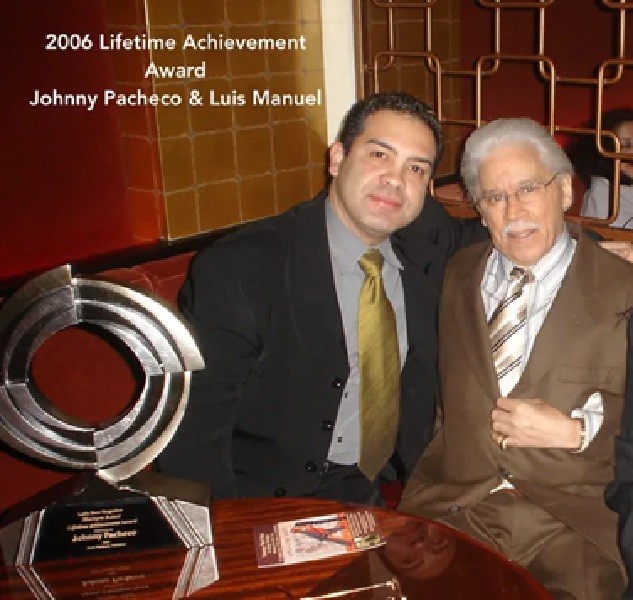
Luis and Johnny
Luis Manuel Rondón and Johnny Pacheco

From that moment on, they began to be hired for private parties and corporate events of all kinds, to the point that they even performed at a Dolce & Gabbana event for the grand opening of one of their stores. They also performed for Donald Trump at Mar-a-Lago and put on big shows at important people and places.

He has also received important awards, such as the Estrella Music Award at the James L. Knight Center in Miami, alongside the likes of José José and Grupo Niche. He also received the Ángeles de Amor Award, which honors individuals who contribute to supporting Latinos in the United States.

We must also mention the Latino Magazine Award, which he won in 2019 and 2022.

Time in Spain

For about six years now, Luis Manuel and the group have also been based in Spain. It all began when they were hired to perform at the Carnival of Tenerife in October 2019, so he, his wife, and their young daughter traveled first and rented an Airbnb. They had a contract to perform at the party of the Candlemas’s Virgin, but the point is that the event was scheduled for March 2020, when the COVID-19 pandemic had already started.

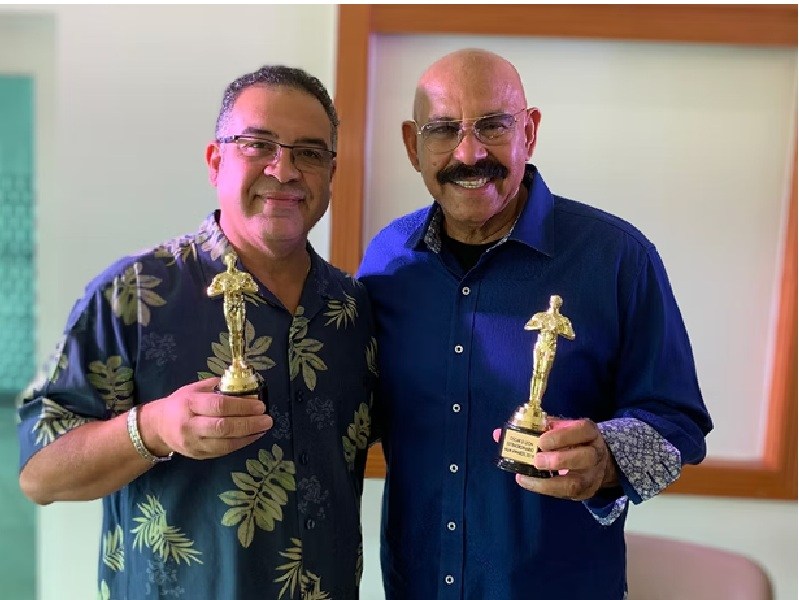
Luis and Oscar
Luis Manuel Rondón and Oscar D’ León

Because they could not leave, Luis Manuel and his family rented an apartment where they had to stay until early 2021, which is when restrictive sanitary measures were finally relaxed and they could leave Tenerife. Fortunately, this was not a waste of time for them, as they saw the potential of what they could accomplish in Spain, so they moved to Madrid and tried their luck there. 

Throughout this time in Europe, Luis Manuel and his group have performed throughout Spain, Portugal, France, and most recently in Belgium. In Belgium, The Latin Ensemble was hired to perform at a royalty party, and the group has done such a fantastic job that they will perform at another event for the same family, making it clear how talented the members are and how hard they have worked to make a name for themselves in the industry.

Unfortunately, because it is a royal family, they were not allowed to take pictures or record videos, but it is still a great event in the career of Luis Manuel and his bandmates.

Read also: John and Liz reveal details of the 16th annual SF Salsa Festival

“Choco Orta” Celebrates with New Single ‘Ahí na má’

The Puerto Rican sonera, percussionist, and producer “Choco Orta” is riding high with the release of her latest single.

“Choco Orta” de celebración con su nuevo sencillo ‘Ahí na má’

With this rendition of ‘Ahí na má’ penned by Cuban composer Zenón Abdón Suárez and arranged by Venezuelan pianist David Silva—“Choco” reaffirms her artistic identity, her interpretive power, and her enduring place in contemporary salsa.

In Puerto Rico, fans still fondly remember the triumphant concert celebrating the multi-talented artist’s three decades in salsa, held on April 6, 2019, at the Santurce Fine Arts Center (Centro de Bellas Artes). Throughout her impeccable career, the dancer and theater professor has earned numerous prestigious accolades.

In this latest recording, “Choco Orta” delivers a performance deeply rooted in the essence of salsa. The track has a storied history, previously recorded by legends such as Ismael Rivera with Cortijo y Su Combo, Frankie Vázquez with Los Soneros del Barrio, and Rico Walker with La Puertorriqueña, among others. According to the press release accompanying the release: “’Ahí na má’ captures the authentic language of the barrio, where the soneo becomes a narrative and a genuine connection with the audience.”

La sonera, percusionista y productora puertorriqueña, “Choco Orta”

This release was crafted specifically with the dancer in mind. The vocal tracking for the single took place at Willie González’s studio, under the expert engineering of Ceferino Cabán, while mixing and mastering were handled by José Guerrero at JosMastering in Venezuela. The cover art is the work of International Disseny.

Since her early days in Santurce, the seasoned soloist has carved out her own space in a historically male-dominated industry by focusing on her craft and growth. In an interview with Tele Once, “Choco” highlighted how her environment—steeped in a powerful salsa tradition—was instrumental in shaping her musical identity.

“Choco” dice reafirmar su identidad artística

“Choco Orta” stands as an exceptional example of the importance of soneo and improvisation as vital tools for communication and maintaining high-octane energy on stage.

Bella Martinez Puerto Rico

Read Also: Choco Orta, The Queen of Flavor

  • « Go to Previous Page
  • Page 1
  • Interim pages omitted …
  • Page 40
  • Page 41
  • Page 42
  • Page 43
  • Page 44
  • Interim pages omitted …
  • Page 149
  • Go to Next Page »

International Salsa Magazine (ISM) is a monthly publication about Salsa activities around the world, that has been publishing since 2007. It is a world network of volunteers coordinated by ISM Magazine. We are working to strengthen all the events by working together.