• Skip to primary navigation
  • Skip to main content

International Salsa Magazine

  • HOME
  • Previous editions
    • 2026
      • ISM / May 2026
      • ISM / April 2026
      • ISM / March 2026
      • ISM / February 2026
      • ISM / January 2026
    • 2025
      • ISM / December 2025
      • ISM / November 2025
      • ISM / October 2025
      • ISM / September 2025
      • ISM / August 2025
      • ISM / July 2025
      • ISM / June 2025
      • ISM / May2025
      • ISM / April 2025
      • ISM / March 2025
      • ISM / February 2025
      • ISM / January 2025
    • 2024
      • ISM / December 2024
      • ISM / November 2024
      • ISM / October 2024
      • ISM / September 2024
      • ISM / August 2024
      • ISM / July 2024
      • ISM / June 2024
      • ISM / May 2024
      • ISM / April 2024
      • ISM / March 2024
      • ISM / February 2024
      • ISM / January 2024
    • 2023
      • ISM / December 2023
      • ISM / November 2023
      • ISM / October 2023
      • ISM – September 2023
      • ISM – August 2023
      • ISM July 2023
      • ISM Edition June 2023
      • ISM – May 2023
      • ISM April 2023
      • ISM March 2023
      • ISM February 2023
      • ISM January 2023
    • 2022
      • ISM December 2022
      • ISM November 2022
      • ISM October 2022
      • ISM September 2022
      • ISM August 2022
      • ISM July 2022
      • ISM June 2022
      • ISM May 2022
      • ISM February 2022
      • ISM January 2022
    • 2021
      • ISM December 2021
      • ISM November 2021
      • ISM October – 2021
      • ISM September 2021
      • ISM August 2021
      • ISM July 2021
      • ISM May 2021
      • ISM April 2021
      • ISM June 2021
      • ISM March 2021
      • ISM February 2021
      • ISM January 2021
    • 2020
      • ISM December 2020
      • ISM November 2020
      • ISM October 2020
      • ISM September 2020
      • ISM August 2020
      • ISM July 2020
      • ISM June 2020
      • ISM May 2020
      • ISM April 2020
      • ISM March 2020
      • ISM February 2020
      • ISM January 2020
    • 2019
      • ISM December 2019
      • ISM November 2019
      • ISM October 2019
      • ISM Septembre 2019
      • ISM August 2019
      • ISM July 2019
      • ISM June 2019
    • 2016
      • ISM December 2016
  • Spanish
  • Download Salsa App
    • Android
    • Apple

Search Results for: Van+Van

News “En Clave”

Latest News of the Salsa Movement in Spain

artist dressed in light blue suit and white hat playing the trumpet
News “En Clave”! The most recent ISM section in 2022

This 2022 we come with more strength, new ideas, and recharged. In this first edition, we released a new section titled News “En Clave”. A space dedicated to the collection and promotion of the best shows, concerts, books, and the latest news from the Salsero environment & Latin rhythms in Europe and Asia.

Spain is one of the old-world countries that begin January 2022 with the best Salseros and Bachateros events. Here we will tell you each one En Clave so that you don’t miss out on going to one.

News “En Clave” In Spain

Luis Alberto Díaz "El Negri" playing the piano in the sound rehearsal
Cuban Pianist – Luis Alberto Díaz “El Negri”

We open the section to the northeast of Spain with La casa de Cuba in Barcelona, ​​El Sabor Cubano BCN. This Nightclub offers live music, Cuban Salsa, International Salsa, Bachata, and urban rhythms with DJs, it also has Salsa and Bachata instructors who give free lessons for beginners at 9:30 PM every Thursday and Sunday. The virtuous pianist Luis Alberto Díaz “El Negri” together with singer “Changui” will be playing the best songs of traditional Cuban music this Thursday, January 6th, and Sunday, January 9th, for two and a half hours. This will be one of the first live Salsa evenings that you can enjoy starting the New Year. El Sabor Cubano BCN opens its doors from 7:00 PM to 12:30 AM at Francisco Giner 32 Street, 08012, Barcelona. Have a memorable moment in this nightclub with a good atmosphere, friendly and impeccable service, and an authentic Cuban mojito. You find more details on their official social network.

We are still in Barcelona, and this time we walk through the Diobar Restaurant / Nightclub. This Greek restaurant has enabled a musical space every Thursday for Salsa and Rueda Casino classes. The duration of Salsa Thursdays is almost five continuous hours organized as follows: one hour of Cuban Salsa class and the next one in Rueda Casino, followed by the AfroCuban Jam Sessions live (open to all musicians). Starting at 9:15 PM there is a class for dancers of Intermediate / Advanced level with which they will acquire new skills for mastering individual steps, the couple turns, and Rueda figures. The cost does not exceed € 5, and the closest date is Thursday, January 6, 2022. A novel proposal to enjoy Salsa in the musical space of the Dionisos Born restaurant located at Marqués de la Argentera, 27 (ground floor) 08003 Barcelona, Spain.

colorful Cuban Party art at Matisse Club
Cuban Party begins January 12th at Matisse Club

We now jump to the east coast towards Valencia, and we run into the Matisse Club. We tell you that in this place of exhibition of events and culture they offer every Sunday the Cuban Party event, live Cuban music with AR-Latin (directly from the Caribbean island) playing Salsa, Latin Jazz, Son, and Bachata. This one-hour live show begins at 8:30 PM. Then you will enjoy six hours of Latin Quarter Session with DJ Sergio Falomir. Admission is € 10 and begins on Sunday, January 12th at the Sala Matisse. Enjoy a Latin music atmosphere with the Cuban Party event every Sunday of the month at Matisse Club located at Campoamor Street, 60, 46022, Valencia.

And the last News “En Clave” that I bring you is the Latin Dance classes in Salason in the northwest of the country at Lirio Street, 30 Cangas Do Morrazo, 36940, Galicia. This culture platform is designed for the reception of musical performances with exceptional acoustics and cutting-edge technology. Salason is a building structured in three independent but complementary environments at the same time. Salsa and Bachata classes will begin on Tuesday, January 25th, from 7:30 PM to 11:00 PM.

The Objectives of these Cuban-style Salsa and Rueda Casino classes, as well as the traditional Bachata lessons, are fun and disconnection to the routine with the rhythm of Latin music. Also, it improves coordination and body expression coupled with the new relationships that are established between people with similar pleasures.

On Tuesdays, there are two groups for intermediate students: The Salsa class starts at 8 PM while the Bachata group starts at 8:30 PM.

Thursdays are classes for beginners and have two times of choice: 8 PM and 9:30 PM. For more information, venture to visit its official website

  • You Can Also Read: Everything You Always Wanted To Know About La Macumba

We continue with Bachata…

group of people dancing at the Bachata Sensual World Congress
Bachata Sensual World Congress 2022 will be held in Girona

We start with one of the main congresses to be held the second weekend of this month (Friday 7th – Monday 10th) in Girona, a city located in the region of Catalonia, mainly known for its exuberant architecture of medieval origin and the historic Barri Vell neighborhood.

The Bachata Sensual World Congress (BSWC) brings great quality Bachata Sensual workshops with more than 16 qualified instructors of this Dominican rhythm and leading Salsa professionals worldwide. There will be live shows with more than 16 couples on stage and famous night parties during the three days of the event.

Girona becomes the international city of the Dominican melody with Bachata Sensual World Congress 2022

BSWC will take place at the Evenia Olympic Palace Hotel, Avinguda Del Rieral, 55 17310 Lloret De Mar, Girona. Tickets (Full Pass) range from € 140 and the event begins the first day at two in the afternoon ending on Monday, January 10th at five in the morning.

We continue, and it is the turn of the Winter Bachata Festival 2022. The particularity of this festival is that it will have night workshops with social dances, the instructors are mostly local, more than one continuous hour of shows, and a closing party. The musicalization throughout the weekend will be in charge of DJ Miguelón, DJ Salva, and DJ Yago in a shared room with the rhythms of Bachata and Salsa. Obtaining Full Pass tickets (€ 40) can be obtained through teachers or promoters and different payment methods by clicking here.  Remember that Winter Bachata Festival begins on Friday, January 21st, and ends on Sunday, 23rd, also returns for the fifth time to the Spanish municipality of Cullera at the Hotel Cullera Holiday, at Av. el Racó, 27 Cullera, Valencia.

Now we finish our trip in the center of the country, specifically in Madrid. During the first weekend of the month, the Magic Bachata Weekend event will take place with all the established biosafety measures: temperature measurement, Hydro-alcoholic Gel, and Mask (during the three days). Magic Bachata Weekend will begin on Friday, January 7th, and will end on Sunday, 9th. This weekend full of Bachata will feature 18 pairs of instructors of the genre conducting workshops, shows, and late-night Latin parties. You can get tickets online at La Salsa del Baile and the price at the door ranges from € 60. The venue will be the Hotel Eurostars Madrid Foro, Ronda de Europa, 1, 28760 Tres Cantos.

Noticias Con Sabor with Luis Medina

Noticias Con Sabor in the month of January

We leave this year with the loss of giants in the Latin Music who have joined the ancestors that include the recent loss of the legendary Mexican star Vicente Fernandez, Panamanian powerhouse sonero Meñique and Paquito Guzman who was known for both his boleros and Salsa tunes.  This year we have also lost legends and great musicians such as Johnny Pacheco, Roberto Roena, Chick Corea, Larry Harlow, Adalberto Alvarez, Johnny Ventura, Ralph Irrizary, Tommy Villariny and at the end of 2020, Tito Rojas.  We are lucky that these artists have left us with their legacies of music that will continue to entertain people for years to come.  Rest in Power!

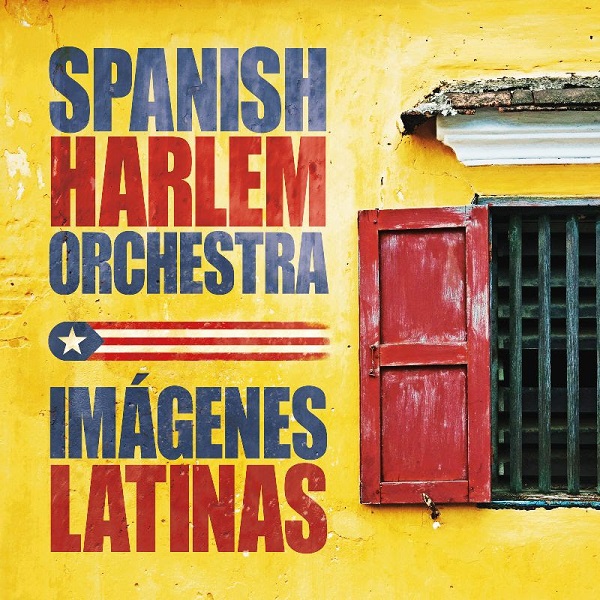
Spanish Harlem Orchestra conquered Monterey with two explosive sets at a special show this past Saturday, Dec. 11th at the Monterey Conference Center. SHO played a few new tunes from their upcoming 2022 release, their repertoire of hits and Christmas salsa music much to the crowd’s delight. I had the pleasure of emceeing the show as well as playing music as the event’s DJ. SHO who were on fire all night and the dance floor was packed all night long. The crowd roared their approval with a standing ovation at the end of the night.  SHO responded with an infectious danceable Christmas song with a crowd sing-a-long which ended the festive evening. Thanks to producer Luis Mendoza and Montuno Productions for inviting me to be a part of this event. Thanks to the great crowd in Monterey who are salseros all the way!

Oscar Hernández playing the piano
Oscar Hernández from Spanish Harlem Orchestra performing at The Monterrey Conference Center

During the COVID19 pandemic, it seemed that all live music stopped being played in public.  However, there were a few places, mostly outdoor cafes, farmer’s markets and restaurants with outdoor dining that offered live Latin Jazz during these dark times.  One of the unsung heroes who continued to play when the pandemic was at its height is veteran pianist-bandleader Gary Flores who formed Salsa Caliente in SF in 1976.  The group has had a lot of prominent musicians including vocalists Paquito Acosta and Angelo Pagan who continued to see their careers thrive in Puerto Rico and Los Angeles.  He disbanded Salsa Caliente in the late 90’s to concentrate on a smaller Latin Jazz group.  Flores along with ex Franco Brothers bassist/vocalist Carlitos Franco and a revolving lineup of all-star percussionists including Santana timbalero Karl Perazo and former Avance bongocero Oscar Soltero kept the live music going during the pandemic at different venues.  Flores was able to continue to play Latin Jazz and Salsa in stripped down format as a trio due to rearranging Salsa tunes as all the members sang coros and vocalized horn lines behind Franco,   Now that live music has made a comeback of sorts and some venues are now booking bigger bands, Flores is revitalizing a bigger version of Salsa Caliente featuring Franco and Perazo.  Flores has been writing new music and plans to record new music with the group.  His last recording “Descarga Caliente: A New Beginning” came out in 2005.  Gary Flores is a veteran and a survivor of the San Francisco Salsa Scene who deserves a big shout out for keeping Latin music alive in the age of COVID!  Pa’lante Gary!!

Reopening will be later

Some scenes are not reopening for 2022 until February or later.  One of those venues affected is Space 550 at 550 Barneveld St. in San Francisco who will reopen in February due to concerns regarding the current surge in COVID cases and the situation with the new variant of the disease.  I also spoke with Adrian Goddard of Jaffe Events who told me that he will continue to book events but later in the first quarter of 2022,  For some event producers, January isn’t a good month to book Latin Music.

People at Space 550
Some people dancing at Space 550

However that’s not stopping Grammy Award winners Pacific Mambo Orchestra who will play their annual January dates at Yoshi’s, Jack London Square on Friday, January 7 and Saturday, January 8th.  Get ready to enjoy and dance to swinging Mambo, Salsa and Latin Jazz from this awesome all-star 20 piece band led by pianist Christian Tumalan and trumpeter Steffen Kuehn. This SF based band is scheduled to play at Europe’s prestigious Tempo Latino Festival in late July. Tickets are now available for these upcoming January dates at Yoshi’s. For more information,  visit www.yoshis.com.

The Cigar Bar, 850 Montgomery St. in SF is starting 2022 with a calendar of great acts coming to this fine venue where you can dine, dance and smoke a fine cigar if you choose to do so. The schedule includes Orquesta La Original w/Alexis Jan 7, Josh Jones Latin Jazz Ensemble Jan 8, The Latin Rhythm Boys Jan 14, Edgardo y Candela Jan 15, N’Rumba Jan 21, La Clave Del Blanco Jan 22, Julio Bravo Y Salsabor Jan 28 and Manteca Jan 29

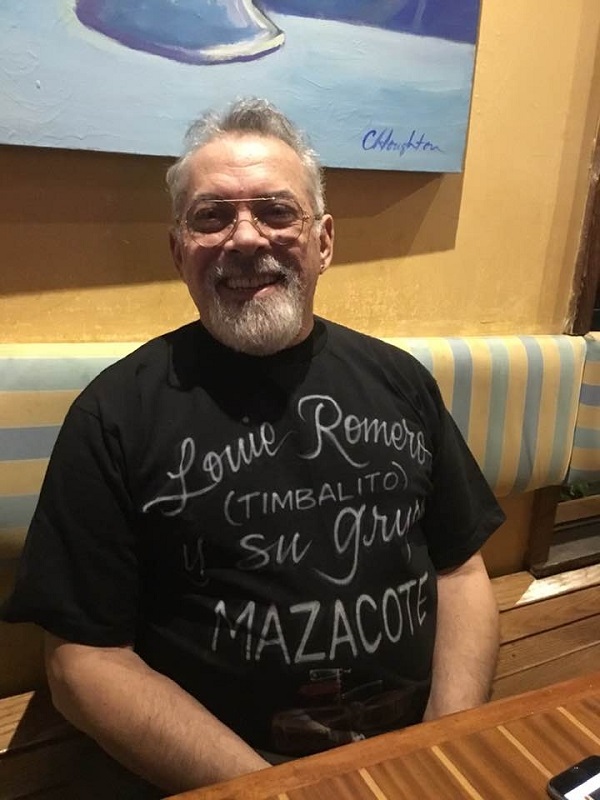
The Seahorse in Sausalito continues to feature explosive music from the following acts in January on Saturday and Sunday including La Clave Del Blanco Jan 2, Gary Flores and Salsa Caliente featuring Karl Perazo of Santana Jan 8, Edgardo Cambon y Candela Jan 9, Carlos Xavier Salsa Band Jan. 15, Louie Romero and Mazacote Jan 16, Braulio Barrera and Somos El Son, Jan 22,  Orquesta Bembe featuring Christian Pepin on Jan. 23 and Rumbache on Jan. 29.  DJ Jose Ruiz from KPOO/KPFA Radio will also be behind the decks for your dancing pleasure. Check out their fine Italian cuisine and selection of beer and wine.

Seahorse at night
Beautiful decoration of Seahorse at night

The Ramp, 855 Terry Francois in SF continues to offer Salsa under their all-weather tent during the month of January.  Their line up includes N’Rumba Jan 8, Louie Romero & Mazacote Jan. 15, Manny Martinez y La Rebeldia, Jan 22 and Orquesta Borinquen on January 29th. DJ Mendy is providing the music in-between sets and from 9 to 11 pm.  The music starts at 5 pm on Saturdays.

Cascal, 400 Castro in Mountain View will be featuring the explosive sounds of Edgardo Cambon and LaTiDo on Fridays, January 7th and 21st starting at 7:30 pm. There is no cover. Cascal continues to offer their tasty menu of Spanish cuisine, Tapas and fine drinks.

The following recordings kept me going during the second year of COVID19: Ruben Blades “Salswing”, El Gran Combo “En Cuarentena” and their Xmas cd “De Trulla Con El Combo”, Gilberto Santa Rosa’s all-star studded “Colegas”, Sonora Ponceña “Hegemonia Musical”, Mel Martinez “Asi Escribe Un Sonero”, Los Generales De La Salsa featuring Van Lester, a 1996 all-star session finally seeing the light of day, Tromboranga “Salsa Terapia”, Los Van Van “Mi Songo”, Various Artists “El Son De Caballero-Homenaje A Adalberto Alvarez and “Son Para Un Sonero”, Sounds Of Cuba “Los Titanes De La Timba”, Alexander Abreu/Havana d’Primera, Various Artists “En Barranquilla Me Quedo-Homenaje a Joe Arroyo, Dorance Lorza’s Sexteto Cafe “20 Aniversario”,  Luis Perico Ortiz “Sigo Entre Amigos”, Charlie Donato’s Son Ideal “De Vuelta Al Barrio, Eduardo Zayas Y Su EZ La Banda “Huerto De Soneros” and his latest “Sabor Y Sandunga”, Alain Perez, Issac Delgado & Orquesta Aragon “Cha Cha Cha: Homenaje A Lo Tradicional”  and Orquesta Failde “Joyas Ineditas”.  There are a flood of singles that did the job as well from Julito Alvarado’s maxi single “Lo Que No Se Escucha (Descarga De Soneros), Don Pergiñon Y La Puertorriqueña, Marc Anthony, Wilito Otero, Josean Rivera, Monsi Y Su Salsa , Mariana Y Su Makynaria, Julito Albino y Secreto De Voces and VibraSON.  These recordings are some of my picks for the Best of 2021.

And…if that wasn’t enough, my program Con Sabor, Saturday nights 9 to 11 PM PST on KPFA 94.1 FM will be celebrating its 25th Anniversary year on January 1, 2022!  Time flies when you’re having fun!!  I’m also on “Sabiduria Con Tumbao” every Wednesday night 5 to 7 PM PST on WorldSalsaRadio.com.

That’s it for this time.  Ciao 4 now!!

The tent at The Ramp!
Inside the tent at The Ramp

This is the report last month: Noticias con Sabor by Luis Medina

BY LUIS MEDINA, PRODUCER AND HOST OF CON SABOR ON KPFA 94.1 FM AND SABIDURIA CON TUMBAO ON WORLD SALSA RADIO.COM

Not-so-well-known Latin percussion instruments

Some lesser-known percussion instruments

After so many centuries of history, Latin music has undergone any number of transformations and mixes that have made it into the wonder that it is today. In the result, percussion instruments play a critical role and many of them are widely known by fans of Latin rhythms, including those who do not have a great deal of expertise on the issue. The thing is that many of these implements are not so well known to people, so let us mention a few of them with their main characteristics.  

Arará 

The Arará drums are named after a Cuban ethnic group that is mainly based in Havana and the province of Matanzas. In turn, they descend from other ethnic groups that had similar practices and today almost all their temples are located in Matanzas. 

At present, these drums are still used in the rituals of these cults. They are of various sizes and types, but a common characteristic they share is that they are all unimenbranophone and open without exception. One of the things that most identifies them is the presence of ritual marks made to differentiate them.  

This is an arará drum
One of the many types of arará drum

Rain stick 

This percussion instrument consists of a long tube inside which you can find seeds and bamboo sticks, which form a helicoid extended throughout the whole instrument. When this stick is moved, the seeds hit its walls and the sound produced is very similar to that of the falling rain, a characteristic of which it receives its name. 

It is believed that it originated during the age of indigenous peoples in South America such as the Panatahuas, the Quitos, the Mexicas, among many others. On the other hand, it is worth noting the appearance of evidence to suggest that they may have come from pre-Inca cultures originating in the Peruvian coast and the Andes Mountain Range. 

Although the tools used in its manufacture vary from one cultural tradition to another, the most common material is cactus, whose spines must be dried, ground and reintroduced.  

This is a rain stick
A wooden rain stick


Güira 

This is a Dominican percussion instrument that is part of the idiophones. Although it has come to be popular in other places, it is in the Dominican Republic where it originated and became so famous that it is even considered as a national heritage. For many, it has a strong resemblance to the bangaño, but it is very different from this one, since it has a manufacturing process in which metal predominates. 

In these times, it is very common to see it being used as an important part of musical genres such as bachata and merengue, although it is most likely fans have no idea about its existence.  

This is a güira
Here is a güira

Marimbula 

The marimbula consists of a set of metal plates that attach to a resonance box and whose main purpose is to produce sounds. It is an idiophone instrument that holds a striking resemblance to the sanza, which originated in Africa many centuries ago and arrived to the American continent from the hand of the slaves, who already brought their own traditions from their places of origin. 

As to its current use, it serves as an accompaniment to all kinds of musical groups in their shows, whether we are talking about rural or urban environments. However, it should be noted that its use has also spread to religious ceremonies and cults of various kinds. 

This is a marimbula
A marimbula

If you want more info about this topic: The seeds of capacho give the sound to maracas

Julio Bravo Y Su Orquesta Salsabor conquer the SF Bay Area

Julio Bravo and his amazing orchestra

The San Francisco Bay Area is fortunate to have many musical talents who have made left this corner of the United States of America at the top. Acclaimed Julio Bravo is one of them and there are many reasons for stating that. Julio Bravo is a famous singer and musician who has been performing with his orchestra in many nightclubs and salsa festivals for quite some time now. He is the leader of the Orquesta Salsabor, which is composed of 12 members whose place of residence is the East Bay. 

This Peruvian says that they are a hard-working group with many decades of experience. He has also said at times that playing with the same people for so long makes a huge difference in terms of sound. In that sense, Salsabor is not unlike other orchestras of its type and time. 

As a child, Bravo already showed a big vocation by the world of music and this is reflected in his appearance on children’s television programmes, school plays and some more formal projects. At the end of the 80s, he came to the United States and it would not be long before he started walking the path still to be followed today. One of his first projects was his incorporation into the Trio Los Chalanes, which led him to become more and more known in the Latin community of his new country of residence. 

One of the events that projected the most his image as an artist was his brilliant participation on the TV show Buscando Estrellas, a contest in which he reached the final and became much more recognized than he already was thanks to his hard work. With the amount of fame he had earned so far, he started taking part in La Orquesta Internacional, with which he performed on countless occasions in various venues in California and had a heavy demand from places that wanted him to perform there. 

A few years later, he made the difficult decision to create his own orchestra which he named Salsabor and with which he remains active to this day. All this time, both Julio and his musicians have earned a reputation for professionalism and quality that would guarantee them the confidence of many festival organizers in night clubs and private events. 

His hard work has made his orchestra one of the most important salsa groups in the San Francisco Bay Area.   

Julio and his orchestra
Julio Bravo Y Su Orquesta Salsabor

Interview 

We are talking with Julio Bravo, Peruvian artist and leader of Orquesta Salsabor. Good afternoon, Julio. How are you?  

Very good afternoon, Karina. I am delighted to be here. Thank you for the invitation. 

Julio, you had your first contact with music when you were very young in your country. At what age did you know you wanted to dedicate yourself to the musical world?  

I think you are born with that. I think it all started when I was in school. In elementary school, I was always involved in the performances or the school theater. That’s how I think it all started. 

So, from schooling age, you already expressed this interest in the world of music and the arts.   

Exactly. I did not necessarily sing, but we acted and did skits. In my neighborhood, musical manifestations were very frequent. My parents always organized meetings at home and my friends came, and they loved to bring their guitars and the acoustic cajón. There were always meetings at my house or at a neighbor’s. 

Do you think there was something that inspired you?  

In Peru, we have the Creole music genre. Since I was a small child I listened to it at home with my parents. In order to play it, you only need the cajón accompanied by a guitar. In neighborhoods, when there are no guitarists, children have a cajon or they make one in wood. In the 70s and 80s, there was a strong influence from Creole music on radio and television in my country, plus my parents and neighbors liked it. So, seeing all that up close was one of the things that inspired me. 

Julio Bravo smiling
Peruvian bandleader, singer and musician Julio Bravo

In 1991, you were on the TV show Buscando Estrellas, since your career took off in many ways. Do you consider that this project changed your professional future?  

That helped me a lot, but it happened when I had barely two years here. When I came from Peru, I did not want to be a great musician or look for work in that field. I came to seek a future in whatever God put in my way and I was fortunate to have music as an instrument to generate work. When I started singing here, on my first week here, I went to sing at a restaurant because some friends took me over there. It was called ”El Chalán” and that’s where I met a group that performed that night and started playing with them, but I would recently arrived, so I had to get a revenue-generating job to pay the rent. I worked construction for about 10 years, but I was finally starting to work in music only on weekends. In 1994, I formed my orchestra after singing in several groups. I did not have such a plan, but the conditions were right and doing what you love does not take much effort because the thing leaves naturally. 

You mean, when you arrived in the United States, you were ready to do other activities and the music thing just came naturally.   

Exactly, I did not come with the desire to become an artist. I studied journalism at university in Peru, but I knew that it would be tough to practice my profession here because of language and immigration status. There were many obstacles that, like every immigrant, I had to learn how to overcome. I came with a degree in Communication Sciences, but I worked construction and did it with pride. 30 years later everything I worked in construction also helped me become a real estate and loan officer. However, I have not been able to leave music as a passion. I can quit jobs that have come my way, but music never. 

Never got to practice journalism in the United States?  

I could never practice journalism, but there were a couple of magazines run by some friends from the Peruvian community and I collaborated with them writing about show business. I also got to interview a couple of artists at that time. When La Orquesta de La Luz came to the San Francisco Bay Area, I interviewed them for that newspaper. I have not worked as a journalist, but I have done many things related to that environment. I have worked in radio and looked for a job at a television channel in my youth. Unfortunately, I did not have migration documents, the Green Card as people call it here. 

Julio looking at the camera
Julio Bravo posing for the camera

How do you think language made things difficult for you at the beginning?  

I always liked English, although I did not know how to speak it. Whenever I listened to songs in my country. We tried to imitate what artists said, but we could not (laugh). Before coming to this country, I decided to have as a priority booking intensive English classes a year before. I mean, every day, I had a two-hour class during the year my departure. That helped me a lot. When I came here, there were some barriers and I did not understand what people were saying, but I managed to learn a lot of vocabulary. Here, each working branch has its own vocabulary. If you work cleaning houses, you are not going to use the same vocabulary as if you work construction or in a store. I do not feel that language was an obstacle for me. I met people who discriminate in the early years, but that has not stopped me from moving forward. I do not think it is a barrier that prevents you from growing. 

What were your favorite bands in English?  

The Bee Gees and I also liked the Beatles. When the Bee Gees and the ”Saturday Night Fever” movie with John Travolta came out, I was about 13 years old and was working on a children’s television programme. On Wednesdays, we sang Peruvian music and played the cajón, but on Fridays, we did dance shows in the clothes of that time with large collars. I worked there for five years and that helped me a lot in my artistic training because it was a wonderful experience. The programme was called ”Villa Juguete”, which had music and dance. That helped me a lot to overcome stage fright. 

What makes Orquesta Salsabor different from other groups in the San Francisco Bay Area?  

I do not know what the main difference is. I think I like to play my original music, but I also know the importance of playing what people want to hear. You can’t just play my original music because I am no longer famous enough for people to know my numbers from beginning to end. For example, Oscar D’ León has more than 50 years in the artistic life and still plays ”Llorarás” every time he comes to the Bay. When people listen to one of those songs, they come out to dance immediately. I think I have the good sense to know when to play the hit songs that I have chosen over the years. I think that is what has differentiated me from other orchestras. 

Julio Bravo and his musicians
Julio Bravo, Martin Villamizar, Evelio Llamas and Alberto Palomino (three of his musicians)

What do you think has been your best professional decision in your career?  

The best decision I have made was to form my orchestra and it has taught me many things. I was taught to be a manager, a soundman, among other things. If someone new in this world wants to know what steps to take, I can gladly say what not to do to not make any mistakes. I do not think we have made mistakes as an orchestra, since we have always tried to do our best. We have had to travel in a van, in a plane or each in his own vehicle to go to play. The musician moves by the desire and motivation to show the gift which the Lord gave us. The restaurant and record label owners move by the economic benefit, but the case of the musician is different. I think the best decision I have made was to form my orchestra. I think that, if you talk to the musicians I have worked with, they know that, as the leader of the orchestra, I have done the best I could to offer them a good, fun and healthy working environment. 

And the worst one?  

When I started with the orchestra, I wanted to make studio recordings here and I lost a lot of money because the musicians I called to record did not arrive after I paid for the studio. The desire to to record here made me lose a lot of money. And by the way, this was money I was saving for the project, but it was gone away soon enough. That’s where I was recommended to talk to a producer and musician named Oscar Pitín Sanchez. I only knew him by his music, but I struck up a friendship with him. He helped me produce two of my salsa records. Sadly he passed away last year. Then I started getting some experience in the recording studios because experience is needed for everything. In the studios, the thing is cooler because there is no audience to applaud you. On the contrary, you do not want to make any mistakes because everything will be recorded. After being wrong in producing my own album without the required experience, I found a light on the way after a very long tunnel (laugh).  

Your website and social networks to follow you  

Website: juliobravo.com  

Instagram: @juliobravo_oficial  

Facebook: Julio Bravo Y Su Orquesta Salsabor 

Bravissimo
Cover of the album Bravissimo, one of his most recent records

“Extravagante” is the ninth record production by Orquesta Mulenze

Edwin “Mulenze” Morales was born on 9 April.

Orquesta Mulenze came out in 1976 due to the motivation of Edwin Morales. At that time, he was a young rocker who decided to change his guitar for a bass and in turn become part of Orquesta Yambo, often accompanyng artists such as Hector Lavoe, Celia Cruz, Cheo Feliciano, Ismael Miranda among others arriving in Puerto Rico without an orchestra; then it was later identified and we would know as MULENZE.

The Orchestra began at a time when salsa was booming, and was fortunate to have musicians, composers and singers
The Mulenze orchestra was founded in 1976, motivated by Edwin Morales

The Orchestra was created in the era where salsa was booming and was fortunate to have musicians, composers and singers of great stature who are now recognized. These include Cano Estremera (R.I.P), (El albino de la Salsa) who would later join Bobby Valentín’s band as a vocalist; in the choir singer-songwriter Pedro Arroyo who has brought several of his compositions to Mulenze, in the piano Andy Guzmán and Eric Figueroa. The latter would be one of the influencers in the style which would be adopted by the orchestra, practicing a little sophisticated and revolutionary rhythm for the public that follows popular music.

Mulenze was one of the first orchestras to use synthesizers within salsa, working rhythmically out of the beat in which the clave pattern is set, giving some jazz variations to their music; it was an innovation that was not very accepted by the groups that were already established at that time, though later this would give respect and an its own identity to the orchestra with its brilliant arrangements.

The ninth record production “Extravagante”

In the voices of Pedro Brull and Rafy Andino, excellent album and Edwin "Mulenze" Morales as director of the group with a first-class team of musicians and arrangers surprises us with this release.
“Extravagante” is the ninth record production by Orquesta Mulenze

This ninth record production “Extravagante” is impossible to get since 1990 as the company under which it was released has ceased to exist and it is one of those many lost records.

In the voices of Pedro Brull and Rafy Andino, excellent album and Edwin “Mulenze” Morales as director of the group with a first-class team of musicians and arrangers surprises us with this release.

Orquesta Mulenze – Extravagante 1990.

Record label: Hitt Makers

Quédate: Written-By – Pedro Arroyo

Ese Loco De La Vida: Written-By – Juan Bautista

Es Al Amor Que Llega: Written-By – Jose Luis Perales*

No Hay Preguntas: Written-By – Jose Luis Perales*

Contra Viento Y Marea: Written-By – Gloria Gonzalez

Zumba Con Mi Rumba: Written-By – Poldo Castro

Mi Tremendo Caso: Written-By – Tite Curet Alonso

A Dormir Afuera: Written-By Fabio Espinoza, Joaquin Galan, Lucia Galan

Arrangers:

Eric Figueroa (2) (tracks: B3),

Julio Alvarado (tracks: A2, B1),

Luis Garcia (5) (tracks: B2),

Ricky Rodriguez (3) (tracks: A1, A3, A4, B4).

Talent:

Bongos, Cowbell – Charlie Sierra

Congas – Jimmy Garcia (3)

Choir – Alex Castro (3), Cheo Andújar

Guest Musician, Congas – Giovanni Hidalgo, Johnny Rivero

Guest Musician, Keyboards – Jose Pujales

Guest Musician], Maracas – Cusy Castillo

Guest Musician, Timbales – Chago Martinez

Guest Musician, Trombone – José Berrios

Guest Musician, Trumpet – Carlos Martinez (3), Mario Ortiz Jr.

Güiro – Ricardo Salgado

Leader, Bass, Producer, Directed By – Edwin Morales

Mixed By – Papo Sánchez (2)

Piano, Keyboards – Ricky Rodriguez (3)

Producer – Antonio Rodríguez

Technician – Andrés Reyes, George Kamarinos

Technician, Mixed By – Ricky Martínez

Timbales – Roberto Whatts

Trombone – Eliut Cintron, Rafy Torres

Trumpet – Angie Machado, Roberto Santiago (2)

Vocals – Pedro Brull, Rafy Andino

Vocals, Choir – Jose L. Ramos

Extravagante 1990

#SalsaIsCulture

Article of Interest: Mulenze The Orchestra of Eternal Youth

Sources: Julio Vázquez Productions

  • « Go to Previous Page
  • Page 1
  • Interim pages omitted …
  • Page 108
  • Page 109
  • Page 110
  • Page 111
  • Page 112
  • Interim pages omitted …
  • Page 137
  • Go to Next Page »

International Salsa Magazine (ISM) is a monthly publication about Salsa activities around the world, that has been publishing since 2007. It is a world network of volunteers coordinated by ISM Magazine. We are working to strengthen all the events by working together.