
| DIRECTORY OF NIGHTCLUBS | ||
|
|
|
|
|
|
|
|
|
|
|
|
|
|
|
|
|
|
|
|
|
|
|
|



| DIRECTORY OF NIGHTCLUBS | ||
|
|
|
|
|
|
|
|
|
|
|
|
|
|
|
|
|
|
|
|
|
|
|
|
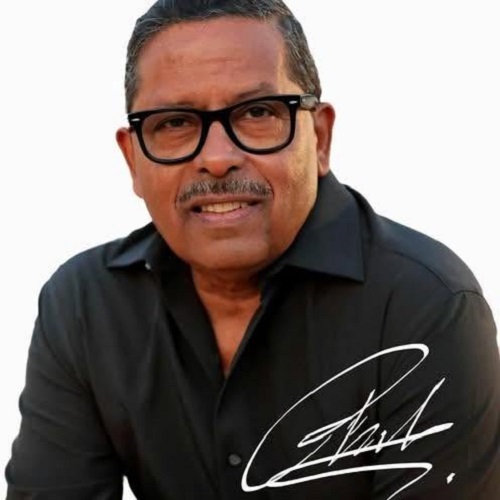
Romantic salsa adds a new gem to its repertoire with the release of “Allí Me Enamoré” (“There, I Fell in Love”), the latest single by Phil Robinson.

It is a track filled with sensitivity, nostalgia, and emotion that aims to reconnect the audience with the genre’s narrative essence.
From its opening verses “Hola amiga, ahora que al fin puedo mirarte a los ojos…” (“Hello my friend, now that I can finally look into your eyes…”) the track draws us into an intimate, almost confessional conversation, where the protagonist opens the pages of his soul to reveal a long-held feeling.
The lyrics journey through memories, silences, glances, and restrained emotions, building a narrative that many listeners will easily identify with: that exact moment when friendship is no longer enough because love has already taken root.
Phil Robinson delivers a warm and honest performance, anchoring every phrase with an emotional weight that highlights the depth of the lyrics. His voice successfully balances tenderness and passion, turning the song into an intimate, almost cinematic experience where every word feels lived in real time.
The chorus “En las páginas de tu alma, amiga, allí me enamoré” (“In the pages of your soul, my friend, there I fell in love”) stands as the poetic centerpiece of the composition: a delicate metaphor that transforms the human soul into an open book, an intimate territory where true love is born. This imagery gives the track its own unique identity, making it a memorable piece within today’s romantic repertoire.
Musically, the single is built upon an elegant melodic foundation, remaining faithful to the core DNA of romantic salsa, with arrangements designed to embrace the lyrics without stealing the spotlight.
The instrumentation subtly accompanies the emotional development of the story, allowing both the vocals and the message to breathe naturally.
THE MUSICAL CAREER OF PHIL ROBINSON
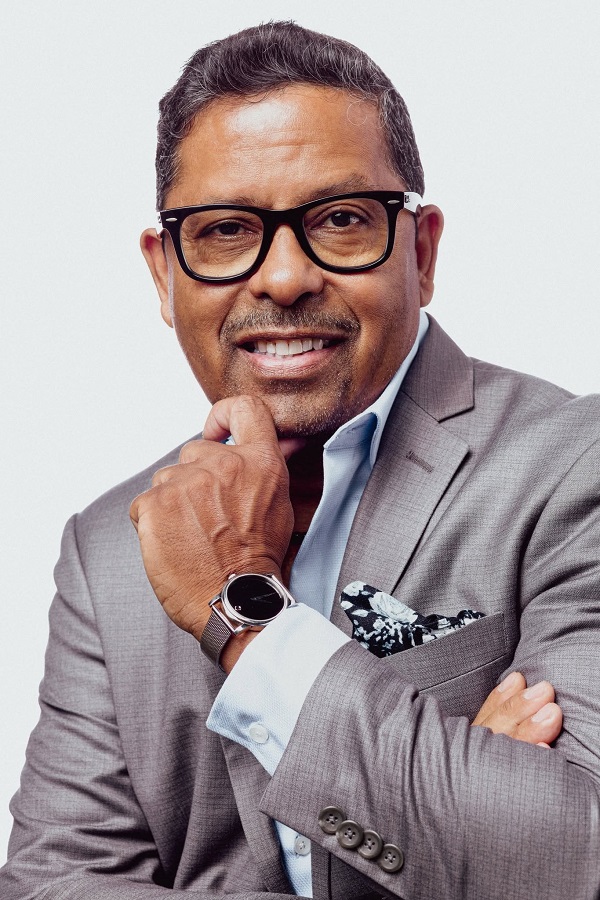
Phil Robinson is a sonero, songwriter, performer, and director of his own orchestra. His charisma and his entrepreneurial, creative, and positive attitude allow everyone who speaks with him to enter his world, captivated by his love for music and his passion for learning, evolving, and improving every day. Robinson has loved the arts from a very young age.
Orquesta Yaré was the dream of a young man who, like Phil, wanted to make it big in the world of Latin music. It was founded and directed by Leroy Gutiérrez (conguero, timbalero, and bongosero), featuring original tracks alongside his brothers Johnny (bongosero) and Loui (trumpeter).
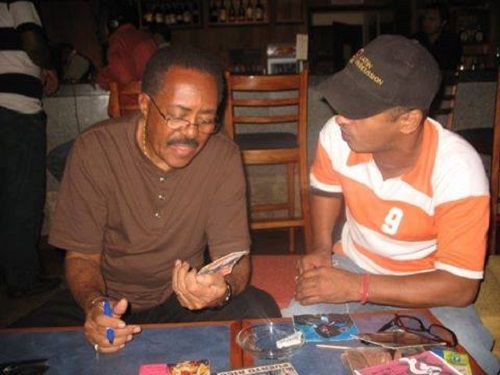
During a performance at Landis Park in Vineland, New Jersey, Orquesta Yaré backed the legendary Néstor Sánchez and Larry Harlow, the “Judío Maravilloso” (The Marvelous Jew) of the Fania All-Stars, who attended as guest artists. For Phil, it was a dream come true to share the stage with icons he so deeply admired. Years after that historic performance, Robinson reunited with Larry Harlow in Los Angeles and was able to share a photograph of that very first experience together.
As his musical journey evolved, he became the lead vocalist for Henry Mora and the All Star Salsa Orchestra of Los Angeles, while also collaborating with various local bands.
From there, he went on to become the lead voice for Eric Matos and Orquesta La Caliente, as well as Papo Rodríguez y La Sorpresa.
With the latter group, he recorded two original songs composed by Puerto Rican pianist Nelson Montalvo: “Fantasía” and “Mi Regalo,” which were included in the 2005 album titled Oye Salsa Sabor y Clave.
During Phil’s tenure with Papo Rodríguez, the renowned Panamanian singer Camilo Azuquita arrived in the city, and the band transformed into Azuquita y su Melao.
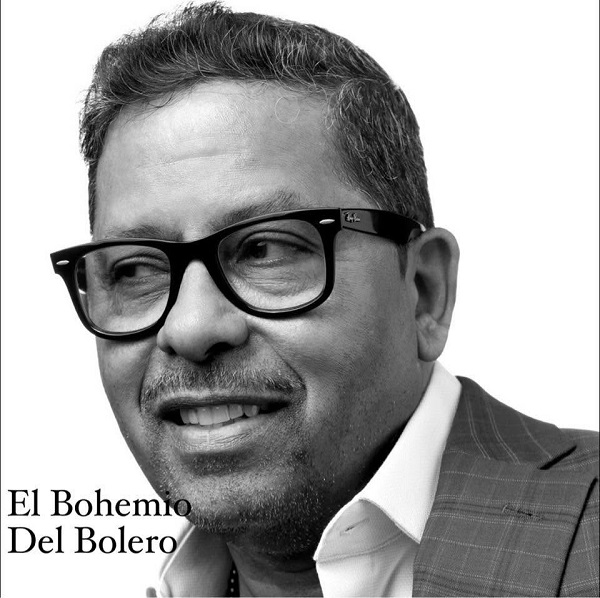
Throughout his career, Phil has shared the stage with legends of the stature of Adalberto Santiago, Tony Vega, Herman Olivera, Yolanda Rivera, Meñique, Luigi Texidor, Wichy Camacho, Cuban singer Franco, Willie Chirino, and Celia Cruz, among many others.
After seven years of dedicated work, Phil completed and released his latest musical project titled Entre Dos Mundos (Between Two Worlds), produced by Arturo Solar.
This production features classic compositions from renowned authors such as Armando Manzanero, Ted Koehler, Harold Arlen, Virgilio and Homero Expósito, Enrique Benítez, Vicente Garrido Calderón, and Jesús Alejandro, alongside original tracks penned by Phil himself.

Here at Malanga Radio, we celebrate this premiere as proof that romantic salsa remains alive, evolving with new voices, new pens, and new emotions.
Allí Me Enamoré” is now available on all digital platforms.
Chechy Rosado
Public Relations
+57 301 685 2655
Barranquilla – Colombia
Also Read: Phil Robinson Sonero, composer and performer bandleader
A few years ago, we had the great honor of interviewing Uruguayan bandleader, director, composer, percussionist, and singer Edgardo Cambón, with whom we talked again about his career anniversary as a musician next month.
Obviously, we wanted to recount the most important and interesting details of his wonderful career, but we could not fail to ask him how he has been the last few years, and that is how we wanted to begin our conversation today.
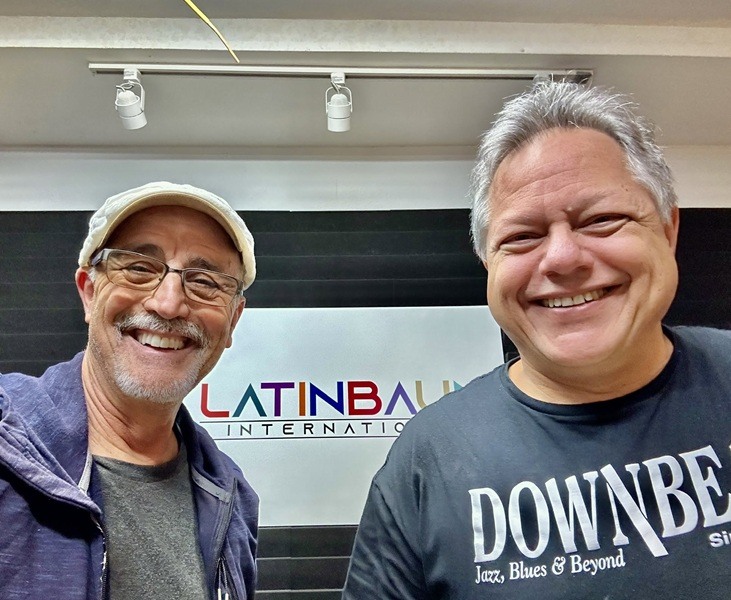
One of the things he revealed is that he recently released his new album, “For Export,” under the record label Latinbaum Records during a show at a venue known as The Fright, an event in which he enjoy the opportunity to celebrate his 65 years of life in April 2025. There were about 450 people present, with whom an excellent music video was filmed and the previously mentioned CD was released.
At the end of last year, he made about eight radio appearances, one on TV, and another one live in Bogotá, Colombia, which is one of the locations where the producer of Latinbaum Records, arranger, producer, composer, and pianist Israel Tannenbaum, is based. We have also had the opportunity to interview him on other occasions.
He says he is very happy with the five albums he has recorded so far and how active he has been over the past year due to his many promotional trips to places like Puerto Rico.

After being performed for nearly 40 years continuously, it is important to know how Edgardo has managed to remain relevant for such a long time, which in his own words, has been possible thanks to the originality of his sound and lyrics. He has never stopped writing original material, but that does not mean he has not dared to experiment with other people’s compositions, as was the case with “Imagine” by John Lennon. The artist created his own salsa version of this classic, which is an extremely risky thing due to how different salsa is from the soft rock we all remember from the original song.
More importantly, he has never been afraid of changes, and that can be seen in all the genres with which he has experimented, except for reggaeton, since he cannot support many aspects of culture that accompanies this type of music and its leading artists.
He made romantic salsa songs when that genre was very fashionable, but he always tried not to be swayed by the thing of the moment, but to seek himself in each style. Something to acknowledge Israel Tannenbaum is to be the first producer to mold him as an artist and give him so much valuable advice such as reducing the duration of a song or how to keep the message with a shorter length of time.
Another big change to which he had to adapt over the years was the fact that his understanding of the local scene could no longer be the same. One of the many things that changed was the appearance of salsa congresses where DJs, who usually played the hottest tracks of the moment, took center stage. This led Edgardo and many other artists to adapt their repertoire and include covers of much better-known songs, as that was what a whole segment of the public demanded most.
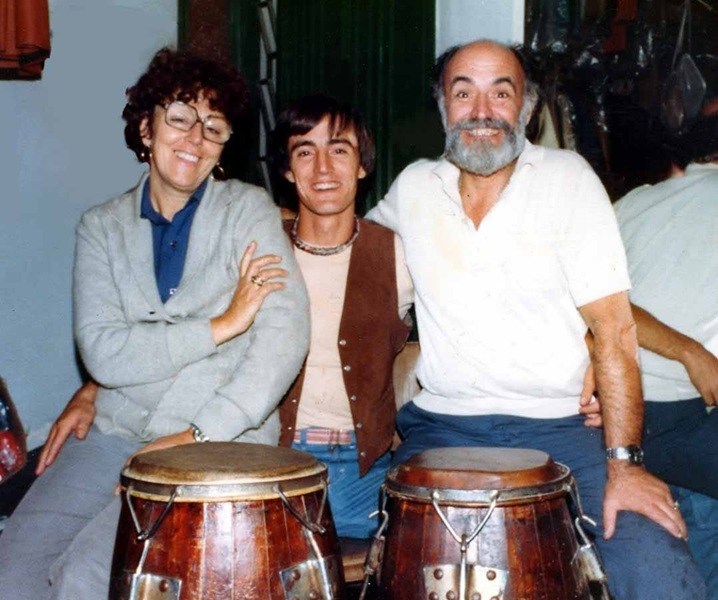
One of the festivals he has attended was the 2026 edition of the San Francisco Salsa Festival, organized by John Narvaez and Elizabeth Rojas, who had previously hired him to offer percussion classes. Edgardo & Candela had an extremely successful performance on Thursday, March 26, which was the day of the opening.
The artist took the opportunity to remind us that he has also been performing for years at the San Jose Jazz Festival and the Monterrey Jazz Festival, the first time the organizers hired a Uruguayan bandleader, and he was one of the few to perform salsa that day. In addition, he had the honor of introducing candombe (a traditional Uruguayan rhythm) mixed with salsa and traditional drums.
After such a long career, he has logically experienced moments that marked a watershed that forced him to adapt to the new trends. One of those changes was the replacement of the vibraphone (a very delicate instrument) by the trombone, which represented a significant sonic leap, as the musicians had to switch from a percussion instrument played with drumsticks to a brass instrument that runs on air and lip pressure.
With the arrival of Karl Perazzo, he proposed to Edgardo that they start using trombones, and he agreed to when seeing the potential of the instrument. So, that was when the group became a septet, having previously been a small ensemble in which the three percussionists played and sang simultaneously, making the band sound bigger than it really was.
Some time later, Edgardo made a series of trips to Cuba that completely transformed his mind and his way of seeing and playing music, since anyone could not go on stage in that country. It was then that he felt inspired to release his album “Madre Rumba, Padre Son,” in which he gives all credit to what he learned from Cuban music and its greatest exponents. He also took the opportunity to mention some of his other biggest influences, such as the politicized lyrics of Ruben Blades in the 1970s, Los Van Van, Isaac Delgado, and many others.
Another aspect that changed over the course of his career was the way the media, radio specifically, was transforming as the years went by. However, there were always communicators willing to promote his work, such as Chuy Varela, Louis Medina, and Chata Gutiérrez, who supported him at the time despite being a local artist from Uruguay playing salsa in such a competitive environment.
Thanks to all those moments and the support he received, Edgardo managed to meet his biggest dreams such as making great music, continuing to live from music, and achieving international popularity. Although he hopes to continue reaping the fruits, he feels he has already achieved what he set out to do early in his career.

Before telling us of his plans for his 40-year career, he reminded us how he celebrated his 20-year career at Yerba Buena Gardens, where he released his album “20 Años de Sabor.” The event was so successful that he will use the same venue to celebrate his 40th anniversary on August 6 this year. The concert will be completely free, suitable for all ages, and outdoor from 6:00 p.m. to 7:30 p.m.
That day, he will perform the best of his repertoire together with special guests who will make it a very special night, especially for Edgardo and his team.
And Edgardo also wanted to thank International Salsa Magazine, its editor Eduardo Guilarte and me for such a very positive interview on the occasion of celebrating the anniversary of his amazing career. The honor is all us and it is what a first-class artist deserves for leaving our heritage high.
Read also: The Latin Ensemble enchants the United States and Spain with its talents
North America / USA/ Miami

With a history of over 15 years, Colombian singer- songwriter Andrés Cepeda and Mike Bahia, representative of the urban genre, exclusively relate their experiences with each of their productions and the musical genres for which they have traveled.

The Colombian singer Andrés Cepeda, has been one of the most renowned artists of Latin American music scene. This Latin Grammy winner has been wowing his audience with his successes year after year since he began his career. The Colombian began his single career in 1999 releasing a first album: “Sé morir” disc in just one month received platinum status, framing in nearby rhythms like pop, bolero and the ballad.
In 2001 he released his second production, “El Carpintero”, for which he received double platinum.
In 2002 he published “Para amarte mejor”. This production was the first of that kind in Colombia. In 2005 he presented his work “To better love”. This album received platinum disc for sales in Colombia.

In 2007 he released a remake of “Para Amarte Mejor” in which two new songs he composed with master Jorge Luis Piloto included: “Pronóstico” and “Si fueras mi enemigo” songs that gave him international recognition and won him Latin Grammy nomination for Best Male Pop Album … “Día tras día” became after its launch in 2009, one of the most successful albums of his career, receiving gold and platinum discs.
This gave rein to that was nominated this year in three of the most important categories of the Latin Grammy Awards: Song of the Year, Album of the Year and Best Male Pop Vocal Album.
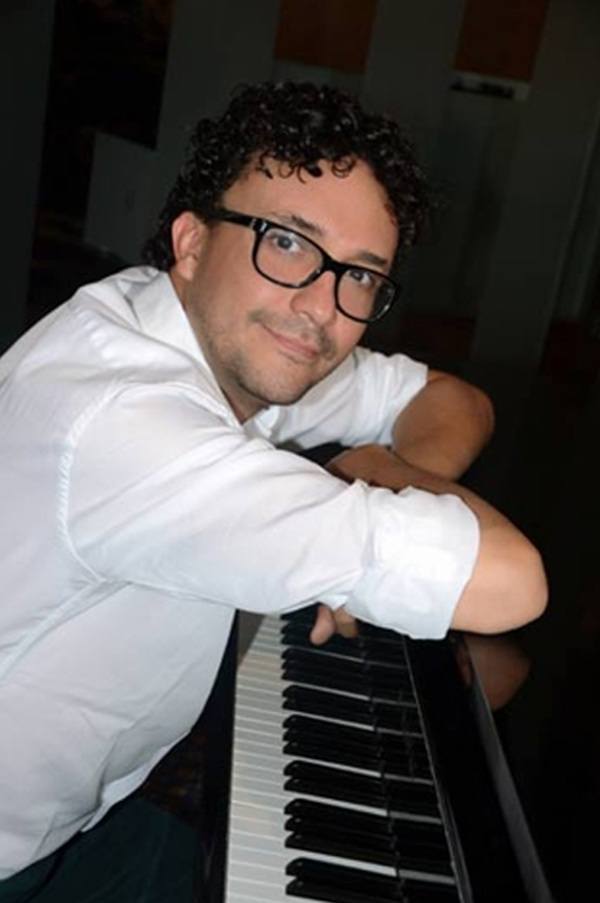
In 2012 Andrés Cepeda presented to the public his seventh album “Lo major que hay en mi vida.” Cepeda received four nominations for this album by The Latin Recording Academy, taking for the first time Latin Grammy in the category “Best Traditional Pop Vocal Album”.
He was joined for this award three prizes that gave the Nuestra Tierra 2013 Awards in the categories Best Album of the Year, Best New Artist and Best Pop Performance. Additionally, he received double platinum. In 2015 he released his latest production, “Mil Ciudades” album that featured the participation of leading industry figures.
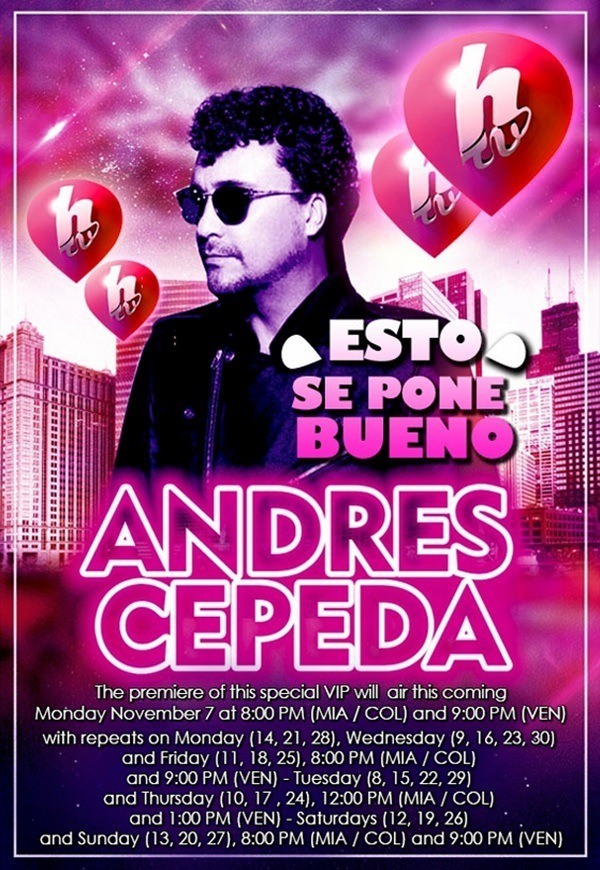

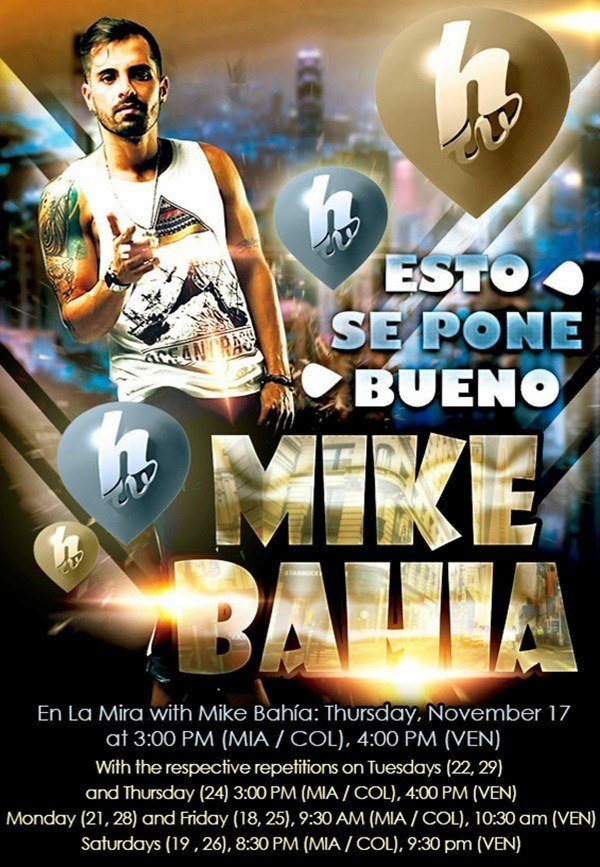
Meanwhile, in the second installment of HTV En La Mira of the month arrives on Thursday, November 17 the reggaetonero, Mike Bahia, one of the great musical promises of the moment.

Bahía had already begun his career by participating in the reality show “La Voz Colombia” (second edition), where he was a pupil of Fanny Lu. Then he debuted as a soloist in 2014 with the single ‘Buscándote’, a song produced by Montana The Producer (who worked for J Alvarez and Chris G), Juan Jhail (who collaborated on projects Kevin Roldan and alkylated) and Ronny Watts (alkylated and Hernán Saraza).
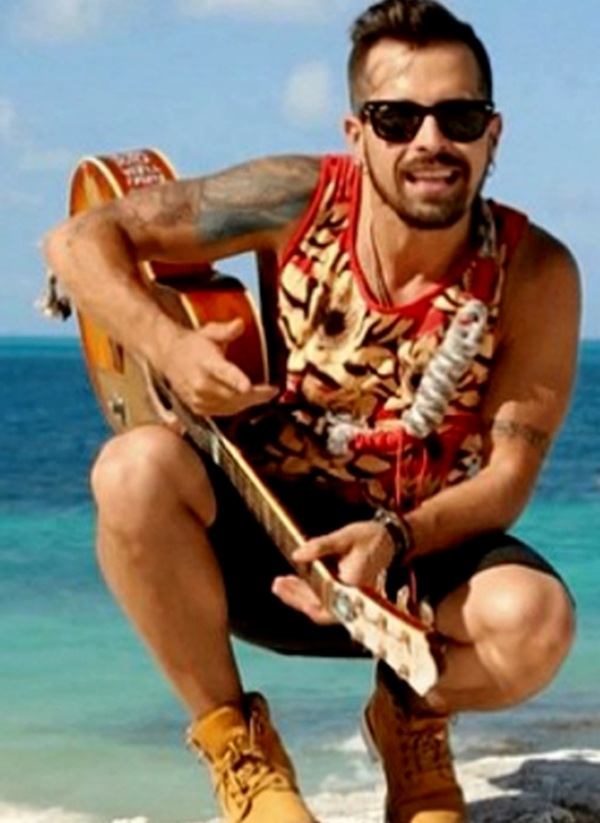
Later in his still brief career, Mike Bahía launched four singles: “Estar Contigo” (2014), ‘Buscándote (remix)’, ‘Tarde’ and ‘La Muñeca’ (all 2015). The latter will integrate the first album of Mike, which will be called ‘Soy Yo’. Mike himself wrote ‘La Muñeca’ in collaboration with Juan Jahil and Juan Gálvez, alkylated vocalist.
|
|
|
For his part, the director Nuno Gomez, who worked with alkylated in several videos, directed the clip in various locations in Venezuela. So you know, do not miss these two artists and enjoy their confessions in HTV because HTV it gets good!
Born on May 1, 1946, in the iconic neighborhood of Santurce, Puerto Rico, this pillar of salsa has left an indelible mark on the history of Latin music throughout a career spanning over four decades of artistic excellence.
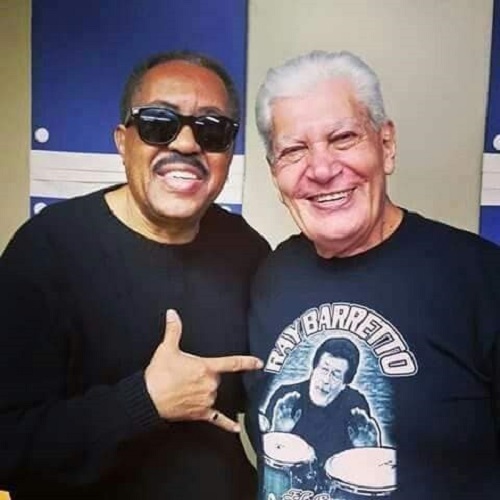
The Origin of a Name with Tumbao
The stage name of this renowned sonero holds a curious history split into two parts. The first part, “Tito,” stems from a deeply rooted custom in Puerto Rican slang: the double diminutive. From Roberto, people began calling him “Robertito,” a nickname that over time affectionately evolved into “Tito.”
The Beginnings of a Multifaceted Star
Tito Allen’s musical journey formally began in 1962, when he was just a 16-year-old teenager. In his early days, the young Roberto showed a strong inclination toward rock and roll, a genre that was causing a frenzy among the youth of the 1960s.
During this formative period, Allen stood out as a bassist and guitarist, forming part of various musical trios that emulated the great bands of the era. These groups even enjoyed successful appearances on Puerto Rico’s Channel 4 television.
Fortunately for lovers of Caribbean rhythms, destiny guided him toward tropical music. His powerful voice, characterized by impeccable tuning and elegant phrasing, quickly made him a highly sought-after singer.
Conquering New York and the Big Leagues of Salsa
Determined to take his career international, Tito Allen traveled to New York in 1972. Although he initially tried to join the orchestra of the “King of the Timbal,” Tito Puente, Puente had no vacancies at the time. Far from discouraged, Allen joined forces with the prominent Colombian pianist Eddie Martínez to form a quintet that performed successfully in Big Apple nightclubs.
Allen rose to the challenge masterfully, recording the acclaimed album Indestructible (1973), a work that instantly enshrined him in the pantheon of salsa royalty.
A Legendary Journey: Following his successful run with the Ray Barretto Orchestra, Tito Allen fulfilled his dream of working alongside Tito Puente. Later, he joined the ranks of the legendary Típica 73 before launching a solid solo career.
The Golden Backup Singer of the Latino Neighborhood
Beyond his brilliance as a soloist and bandleader, Tito Allen’s career stands out for his generosity and professionalism in the recording studio.
His trained, melodious voice graced countless productions for artists of the stature of Pupi Legarreta, Ralphy Santi, and Conjunto Clásico, among many other representatives of “the ultimate expression of the Latino neighborhood.” His work as a backup vocalist was essential in defining the sound of New York and Caribbean salsa during the ’70s and ’80s, solidifying his status as a complete artist and a gentleman of music who today, more than ever, deserves the applause of his audience.