• Skip to primary navigation
  • Skip to main content

International Salsa Magazine

  • HOME
  • Previous editions
    • 2026
      • ISM / June 2026
      • ISM / May 2026
      • ISM / April 2026
      • ISM / March 2026
      • ISM / February 2026
      • ISM / January 2026
    • 2025
      • ISM / December 2025
      • ISM / November 2025
      • ISM / October 2025
      • ISM / September 2025
      • ISM / August 2025
      • ISM / July 2025
      • ISM / June 2025
      • ISM / May2025
      • ISM / April 2025
      • ISM / March 2025
      • ISM / February 2025
      • ISM / January 2025
    • 2024
      • ISM / December 2024
      • ISM / November 2024
      • ISM / October 2024
      • ISM / September 2024
      • ISM / August 2024
      • ISM / July 2024
      • ISM / June 2024
      • ISM / May 2024
      • ISM / April 2024
      • ISM / March 2024
      • ISM / February 2024
      • ISM / January 2024
    • 2023
      • ISM / December 2023
      • ISM / November 2023
      • ISM / October 2023
      • ISM – September 2023
      • ISM – August 2023
      • ISM July 2023
      • ISM Edition June 2023
      • ISM – May 2023
      • ISM April 2023
      • ISM March 2023
      • ISM February 2023
      • ISM January 2023
    • 2022
      • ISM December 2022
      • ISM November 2022
      • ISM October 2022
      • ISM September 2022
      • ISM August 2022
      • ISM July 2022
      • ISM June 2022
      • ISM May 2022
      • ISM February 2022
      • ISM January 2022
    • 2021
      • ISM December 2021
      • ISM November 2021
      • ISM October – 2021
      • ISM September 2021
      • ISM August 2021
      • ISM July 2021
      • ISM May 2021
      • ISM April 2021
      • ISM June 2021
      • ISM March 2021
      • ISM February 2021
      • ISM January 2021
    • 2020
      • ISM December 2020
      • ISM November 2020
      • ISM October 2020
      • ISM September 2020
      • ISM August 2020
      • ISM July 2020
      • ISM June 2020
      • ISM May 2020
      • ISM April 2020
      • ISM March 2020
      • ISM February 2020
      • ISM January 2020
    • 2019
      • ISM December 2019
      • ISM November 2019
      • ISM October 2019
      • ISM Septembre 2019
      • ISM August 2019
      • ISM July 2019
      • ISM June 2019
    • 2016
      • ISM December 2016
      • ISM November 2016
      • ISM October 2016
  • Spanish
  • Download Salsa App
    • Android
    • Apple

Search Results for: Colombia

The Flavor of Barrio La-33 and the Urban Salsa Revolution

The Birth of Swing in Chilly Bogotá

Bogotá, a city nestled more than 8,600 feet above sea level, cold and prone to drizzle, did not seem in the early 2000s like the most obvious birthplace for one of the 21st century’s most influential salsa orchestras.

El Sabor del Barrio La-33 y la Revolución de la Salsa Urbana

However, in 2001, in the heart of the Teusaquillo neighborhood, La-33 was born. Breaking the stereotype that salsa only flourishes on warm coasts, this band proved that Caribbean flavor (sabor) also runs through the veins of the Colombian capital.

Founded by brothers Sergio and Santiago Mejía (musical director/bassist and keyboardist, respectively), the orchestra took its name from the street where they held their first rehearsals: 33rd Street (Calle 33).

From its inception, the project had a clear identity: to rescue the raw, urban, and gritty sound of 1970s salsa brava, evoking legends like Héctor Lavoe, Willie Colón, and the Fania All-Stars, while injecting it with the attitude, energy of rock, and Bogotá’s gritty street vibe. To finance their first album, the band members saved money earned from their gigs in local bars and nightclubs.

The “La Pantera Mambo” Phenomenon

La-33’s rise to international stardom was no accident, but rather the result of a brilliant recording masterstroke. In 2004, they released their self-titled debut album, La-33. The record included a track that would become their ticket to the world: “La Pantera Mambo.”

This piece a spectacular mambo-rhythm version of Henry Mancini’s cinematic classic, “The Pink Panther Theme” fused jazz, suspense, and a powerhouse horn section.

The song instantly became a radio hit and an essential anthem on dance floors from Cali to Berlin, proving that salsa was not a genre of the past, but a living language capable of reinventing Western pop culture.
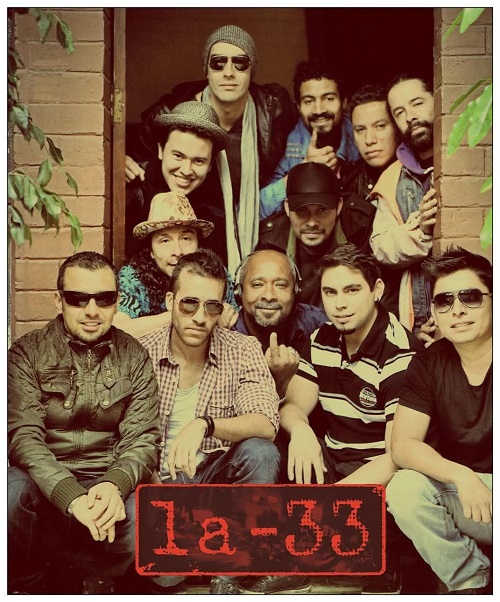
El año 2001, en el corazón del barrio Teusaquillo, nació La-33

Dynamic Evolution and Discography

Unlike the salsa romántica orchestras that dominated the commercial hit charts in the ’90s and 2000s, La-33 bet on an organic sound heavily influenced by mambo, jazz, pasodoble, and ska.Their music dispenses with excessive synthesizers, prioritizing instead the raw power of percussion, the brilliance of the horns, and lyrics that narrate daily life, urban chaos, and bohemian nightlife.

Throughout their career, they have built an impeccable musical catalog across several studio albums:

  • La-33 (2004): The debut album featuring “La Pantera Mambo” and “Qué Rico Boogaloo.”
  • Gózalo (2007): Nominated for a Latin Grammy, it solidified their success with tracks like “Bye-Bye” and “Soledad.”
  • Ten Cuidado (2009): A more mature record exploring fusions with ska and jazz.
  • Tumbando por ahí (2013): A tribute to the band’s street-smart, party-loving spirit.
  • Caliente (2016): Their fifth studio production, released to celebrate fifteen years on the scene.
  • Si tú quieres salsa (2019): A return to their roots with a powerful, mature, and refreshed sound.

Global Ambassadors of Colombian Salsa

What began as a group of friends rehearsing in a Bogotá house transformed into a global phenomenon. La-33 has toured all five continents, performing at prestigious international events such as the Sziget Festival in Budapest, the Cali Fair (Feria de Cali), and various jazz and world music festivals across Europe, Asia, Africa, and the Americas.

Their ability to get audiences who don’t even speak Spanish dancing is a testament to the universal power of their horn section and rhythmic core.
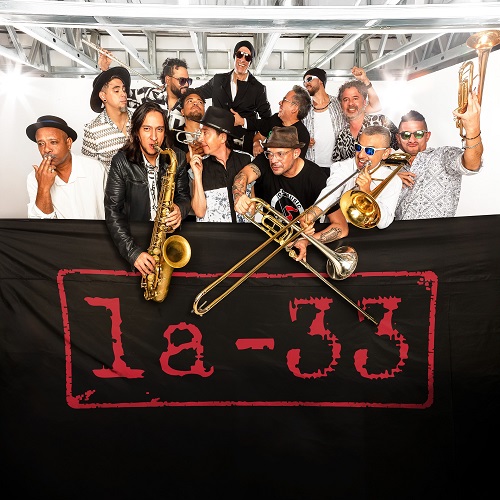
La 33 El nacimiento del swing en la fría Bogotá

Today, La-33 is not just an orchestra; it is an institution of Colombian alternative music. They proved that salsa can be played wearing leather jackets and a punk attitude while maintaining absolute respect for Afro-Latin roots making it clear that to have swing, all you really need is passion.

Band Members

  • Sergio Mejía (Bandleader and electric bass)
  • Santiago Mejía (Keyboards)
  • Guillermo Celis (Vocals)
  • David Cantillo “Malpelo” (Vocals)
  • Edison Velásquez (Vocals and flute)
  • Alejandro Pérez (Congas)
  • Juan David Fernández “Palo” (Timbales)
  • Diego Sánchez (Bongos)
  • Vladimir Romero (Trombone)
  • José Miguel Vega (Trombone)
  • Adalber Gaviria (Saxophone)
  • Roland Nieto (Trumpet)
  • Javier Galavis (Sound engineer)
  • Ray Fuquén (Field producer)

 Also Read: Colombia’s legendary Grupo Niche and its founder Jairo Varela

Héctor “Tempo” Alomar: The Scorching Voice and the Rhythm Blessed by “El Cantante de los Cantantes”

The Invaluable Legacy of an Afro-Antillean Percussion and Vocal Giant

Héctor “Tempo” Alomar was born on December 28, 1950, in Parada 19 of Santurce, Puerto Rico. A singer, percussionist, and true pedigree sonero, he became an essential figure in salsa music thanks to his outstanding contributions to world-class bands.

His resume included Orquesta La Conspiración, La Diferente, Conjunto Libre, La Charanga Afrocubana, La Charanga América, Orquesta Broadway, Charanga la Tapa, Casanova y su Montuno, Batacumbele, El Combo de Siempre, Zaperoco, Nacho Sanabria’s Orchestra, Grupo ABC, and, in a career-defining run, Roberto Roena’s Apollo Sound. He also led his own musical ensemble under the name Sexteto La 51, his last recording with the legendary and living legend of Fania All Stars Eddie Montalvo.

Héctor Tempo Alomar la Voz Candente y el Ritmo

The remembered former member of Apollo Sound passed away at the age of 70 in his native Puerto Rico on May 9, 2021, leaving a profound void in the world of music collecting and salsa culture.

A Rhythm That Ran Through His Veins

The son of Doña Isabel Román and Don Luis Alomar, young Héctor showed an innate connection with the clave from a very early age. His mother used to recall that the boy would strike the rhythm with any kitchen utensil he could get his hands on, even breaking several glass cups while trying to draw sound from them with silverware.

He made his first professional recording as a minor, at just 15 years old. It happened when producer Joe Blanco invited him to record percussion with Chacón y sus Batirrítmicos, capturing his talent on tracks like “Ahorita va a llover” and “Mi guajira.”

In 1968, he moved to New York City, and by 1970, he reunited with his great childhood friend, maestro Ángel “Cachete” Maldonado. Maldonado introduced him to the city’s music circles, providing the decisive push for him to develop as a lead singer.

Héctor Tempo Alomar nació el 28 de

Blessed by “El Cantante de los Cantantes”

“Tempo” Alomar joined Orquesta La Conspiración as a timbalero, staying with the band for about three years. Later, thanks to a recommendation from trumpeter and arranger José Febres, bandleader Rafy Val recruited him for La Diferente. This gave him his first opportunity to formally record salsa on the album Fuerza Bruta, produced by Larry Harlow.

During his time with La Conspiración, a legendary anecdote took place at New York’s El Hipocampo club, right after a Fania All-Stars concert. Héctor Lavoe, who was scheduled to sing at the club that night, was running late, and the band couldn’t start. “Cachete” Maldonado assured José Mangual Jr. that “Tempo” knew the repertoire and recommended him to step up to the stage.

Out of deep respect for Lavoe, Alomar hesitated but ultimately took the stage to perform “Juana Peña,” winning the applause of the demanding crowd. Halfway through the second song, “No me llores más,” he spotted Héctor Lavoe walking into the venue, and out of sheer awe, he stopped singing. It was Lavoe himself who, from the audience, gestured for him to keep going.

When the performance ended, “El Cantante de los Cantantes” went up to the stage, congratulated him warmly, and encouraged him to keep pursuing his singing career.

Setting the Big Apple Ablaze

Around 1973, once again recommended by “Cachete” Maldonado, he auditioned for maestro Manny Oquendo, who was looking for a lead vocalist for Conjunto Libre. He was accepted immediately. After six months of intense daily rehearsals, the group chained together memorable hits driven by “Tempo’s” voice, such as “No critiques,” “Tú no me quieres,” “Bamboleate,” and “El Changó de María.”

Tempo Alomar El legado incalculable de un gigante de la percusión y el canto afroantillano

These were five golden years with El Libre, a period during which he also recorded an album with Néstor Torres’ La Charanga Afrocubana.

As the 1980s arrived, he joined Charanga América. His versatility and high demand in the New York scene led him to collaborate and record with stellar figures, including Alfredo de la Fe, Johnny Rodríguez, Víctor Paz, Jorge Dalto, and the Latin Percussion label. He also worked with Orquesta Broadway and Casanova y su Montuno, played congas for Pete “Conde” Rodríguez, and played timbales for maestro Eddie Palmieri.

In 1985, he decided to return to Puerto Rico. On the Isla del Encanto, he contributed his talent to flagship ensembles like Batacumbele, Zaperoco, and Héctor Santos’ El Combo de Siempre, sharing the stage in the latter with Ismael Rivera Jr. (Maelito). Additionally, alongside Felo Barrios, he completed a prestigious one-month US tour with the legendary double bassist Israel López “Cachao.”

The Golden Era with Roberto Roena and Apollo Sound

In 1993, while rehearsing with Grupo ABC (where he worked alongside Nacho Sanabria and Roberto Angleró), the legendary Aníbal Vázquez Roberto Roena’s uncle invited him to participate as a vocalist in a special local television recording with Apollo Sound.

Roberto Roena y Tempo Alomar

Roena was captivated by “Tempo’s” style and cadence, even though the vocalist hadn’t fully memorized the lyrics to some of the songs for that TV show. With his characteristic wit, Roena himself wrote the lyrics on large cue cards beneath the TV cameras and instructed the cameraman to avoid close-ups of Alomar, preventing the audience from noticing he was reading.

That chemistry sparked 16 uninterrupted years of back-to-back hits with Apollo Sound and a close, lifelong friendship between Roena and Alomar.

Together, they immortalized musical gems such as “Dale como es,” “El pueblo pide que toque,” “Atrévete conmigo,” “Sr. Bongó,” “Baila y goza,” “Mi mambo pide campana,” and the international smash hit “Cómo te hago entender”—a track that became a salsa anthem and took them to massive venues across Colombia, Panama, Peru, Venezuela, and all of Europe.

During his fruitful tenure with Apollo Sound, “Tempo” also took an active role in selecting session musicians and backing various artists. One of his most remembered cross-genre collaborations was with urban music icon Tego Calderón on his landmark album El Abayarde, where Alomar joined his voice to sing the classic “Planté bandera.”

Héctor “Tempo” Alomar lives on in the memory of music lovers worldwide as a bastion of syncopation, a street-corner sonero, and a true gentleman of rhythm.

Collaboration:

Historia Salsera

Augusto Felibertt

Also Read: It is indisputable that the most popular orchestra in Puerto Rico and South America during the 1970s was Roberto Roena’s Apollo Sound

Latin America / June 2026

Héctor Tempo Alomar 6 2026Antonio Adolfoc 6 2026La33 Urban Salsa RevolutionTito Allen 6 2026Bella MartinezCalibrated maracas

DIRECTORY OF NIGHTCLUBS

Argentina flag
ARGENTINA

Aruba circular flag
ARUBA

Belize circular flag
BELIZE

Bolivia circular flag
BOLIVIA

Brazil flag
BRAZIL

Chile circular flag
CHILE

Colombia
COLOMBIA

Costa Rica circular flag
COSTA RICA

Cuba circular flag
CUBA

Dominican Republic
DOMINICAN REPUBLIC

Ecuador circular flag
ECUADOR

Guatenala circular flag
GUATEMALA

Mexico Circular flag
MEXICO

Panama circular flag
PANAMA

Peru circular flag
PERU

Puerto Rico circular flag
PUERTO RICO

Venezuela circular flag
VENEZUELA


Latin America / May 2026

The Jeque and his BandRay Pérez 05 2026Alfredo Chocolate Armenteros 05 2026Professor Joe Torres 05 02026El Calvito Reyes 05 2026Tony Vega 05 2026Choco Orta 05 2026Luis Enrique 05 2026

Bella MartinezCalibrated maracas

DIRECTORY OF NIGHTCLUBS

Argentina flag
ARGENTINA

Aruba circular flag
ARUBA

Belize circular flag
BELIZE

Bolivia circular flag
BOLIVIA

Brazil flag
BRAZIL

Chile circular flag
CHILE

Colombia
COLOMBIA

Costa Rica circular flag
COSTA RICA

Cuba circular flag
CUBA

Dominican Republic
DOMINICAN REPUBLIC

Ecuador circular flag
ECUADOR

Guatenala circular flag
GUATEMALA

Mexico Circular flag
MEXICO

Panama circular flag
PANAMA

Peru circular flag
PERU

Puerto Rico circular flag
PUERTO RICO

Venezuela circular flag
VENEZUELA


Jairo Varela Music, Identity, and Social Narrative

The BE MORE publishing house is proud to announce the release of the new book by journalist and music researcher Robert Téllez M.

The work offers a deep dive into the social and narrative dimensions of the compositions of Jairo Varela, founder of the world-renowned Grupo Niche. It illustrates how his lyrics transcend music to become chronicles that interpret Latin American reality.

More than just a repertoire of songs, Jairo Varela’s legacy serves as a testament to memory and identity, born from his profound Afro-descendant roots. From this perspective, the book develops a discourse analysis that explores the symbols and meanings structuring his lyrics within a historical and social context.

Categorized within the field of ethnomusicology, the literary work proposes a rare perspective in Salsa studies: understanding Jairo Varela as a narrator of social reality.

“Through his lyrics, Jairo Varela challenged indifference, exposing what many preferred to keep silent,” states author Robert Téllez M.

To develop this research, the author brought together an interdisciplinary team of specialists in anthropology, communication, law, education, history, linguistics, music, journalism, and poetry from across Latin America. This diversity shapes a study organized into seven chapters, where symbols, metaphors, and narrative structures within Varela’s songwriting are analyzed and deconstructed.

“With an honesty that never yielded to artifice, Jairo Varela mapped the social landscape of everyday life; he narrated the intimate without betraying the collective, all in an effort to better understand the world,” Téllez notes.

As an innovative feature, the book Jairo Varela: Music, Identity, and Social Narrative incorporates QR codes that lead directly to Maestro Varela’s compositions. Each code allows the reader to use their mobile device to access the songs analyzed via Grupo Niche’s profile on Spotify, enhancing the connection between the written word and musical creation.

The publication also includes a prologue by writer Bella Martínez, illustrations by Frank Rosado, and photographs from the Varela family archive—elements that provide essential context to the composer’s creative universe.

Jairo Varela: Music, Identity, and Social Narrative is now available to the public on Amazon, with worldwide shipping.

The Book: Jairo Varela. Music, Identity, and Social Narrative

Jairo Varela (1949–2012)

Varela was the creator and founder of the iconic Grupo Niche and one of the most influential figures in Colombian Salsa. It was Jairo Varela who built the prestige of this orchestra through his artistic vision and his talent as a composer and director. With those five letters Niche Varela changed the course of Salsa made in Colombia, elevating it to a level of international respect.


Jairo Varela. Música, Identidad y Narrativa Social

Throughout his musical career, Jairo Varela wrote hundreds of songs and produced dozens of albums for his group. His compositions including “Cali Pachanguero” (recognized by Billboard magazine as one of the 50 most important songs in the history of Latin music), “Buenaventura y Caney,” “Mi pueblo natal,” “Ana Milé,” “Un caso social,” and “Han cogido la cosa” have traveled the world and become classics. In his lyrics, Varela portrayed everyday Latin American stories and the identity of Afro-descendant communities.


When Grupo Niche’s music plays, there is something for every listener. Behind that diversity lies the creative intuition of Jairo Varela, a composer who knew how to turn local stories into universal emotions. For this reason, from its beginnings in the late seventies to its international acclaim, the group has brought the rhythmic power, joy, and character of its culture to stages worldwide.

About the Author

Robert Téllez M. is a social communicator, radio and TV broadcaster, and producer with over 20 years of experience. He is an accomplished interviewer, journalist, and music researcher.

His analyses and reflections have been published in outlets such as Revista Semana, El Espectador, El Tiempo, El País, La República, and Agencia EFE, among others. He has also contributed to the scientific journal Nómadas of the Universidad Central de Colombia.

Robert Téllez is also the author of Ray Barretto: Giant Force (2016), whose English translation won a silver medal for Best Translation (Spanish to English) at the 2021 International Latino Book Awards.

In 2019, he presented the authorized biography Willie Rosario: The King of Rhythm, with a second edition released in 2024. He served as a judge for the annual international minimalist poetry contest for the anthology titled Siglema 575: Say What You Want to Say (2024).

As a result of his extensive research, Robert Téllez serves as a consultant and lecturer on topics related to the appreciation of Salsa music.

Press Contact: [email protected]


Roberto Tellez

Also Read: Willie Rosario, El Rey del ritmo by journalist and music researcher Robert Téllez M.

  • « Go to Previous Page
  • Page 1
  • Interim pages omitted …
  • Page 5
  • Page 6
  • Page 7
  • Page 8
  • Page 9
  • Interim pages omitted …
  • Page 78
  • Go to Next Page »

International Salsa Magazine (ISM) is a monthly publication covering salsa activities around the world and has been publishing since 2007. It is a worldwide network of volunteers coordinated by ISM Magazine. Together, we work to strengthen salsa events around the world.