






That has been a very long year waiting a new edition of the biggest Latin music event in Europe! This July, fans of our music will finally be able to enjoy the 31st edition of Tempo Latino, which is one of the largest international festivals of Afro-Cuban, Afro-Caribbean, and Latin music. During the four days of the festival, the audience can enjoy the best of salsa, Latin jazz, mambo, timba, and fused rhythms every year.
This festival is usually held in the small village of Vic-Fezensac in southwestern France, since 1994, which is when its first edition took place. Nowadays, the event is typically held during the last days of July and the first days of August.
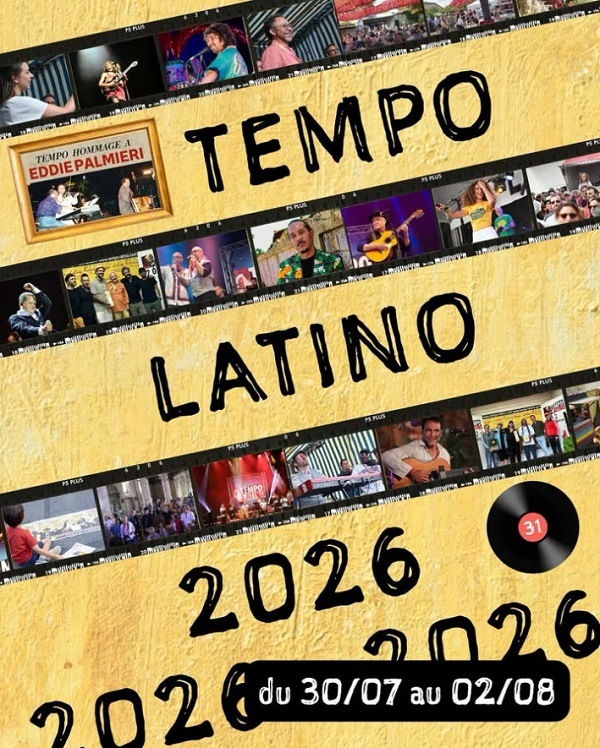
As mentioned previously, the festival began, and is still held, in Vic-Fezensac, a small village of around 3,700 inhabitants located in the Gers, which is well known for its bullfighting tradition. This association was founded in 1993 by music lover and Latin music DJ Eric Duffau, an artist who sought a different alternative to traditional commercial communities and aimed to bring traditional musical roots to the heart of Europe.
The first edition, which took place in the summer of 1994, aimed to transform the small French village into the mecca of salsa, Cuban son, and Afro-Latin jazz for four days a year.
An initiative that began as a small project has grown into one of the biggest salsa festivals of the world, which already enjoys the support of 500 local volunteers who organize into neighborhoods and homes. To this day, Tempo Latino has achieved a perfect balance between an ambitious production and a local and friendly atmosphere. It should also be stressed that it has been held on a regular basis since 1994, except for 2020 and 2021 due to the COVID-19 pandemic.
The festival expanded so much thanks to its authenticity and freshness that it has come to be known as “The One” and has established itself as a mandatory stop for the greatest Latin music glories, including Celia Cruz, Eddie Palmieri, Rubén Blades, Willie Colón, Tito Puente, Los Van Van, El Gran Combo de Puerto Rico, La Sonora Ponceña, Oscar D’León, Cheo Feliciano, Ismael Miranda, Johnny Pacheco, and many others.

Similarly, since its foundation, the festival has also served as a springboard for new musical talent, including solo artists and groups performing salsa brava, Latin hip-hop, Afro-Cuban funk, and other genres from places such as Cuba, Colombia, Venezuela, Puerto Rico, and New York.
Tempo Latino has come to a point where it is no limited only to stage performances, which are still the main attractions for attendees. They also offer dance workshops, which are designed for both amateurs and professional dancers interested in learning more about the roots and evolution of Latin rhythms.
Similarly, the festival also offers music and percussion workshops, introducing both amateur and professional musicians to important topics such as the clave, rhythm, and a bit of the history of Latin and Afro-Cuban music. In the case of percussion workshops, instructors teach students how to play the congas, timbales, bongos, and campana. As for wind instruments and musical combos, classes are given in trombone, trumpet, and saxophone.
We also cannot fail to mention the international market, where attendees can buy all sorts of things from our countries, such as instruments, clothing, traditional cuisine, handicrafts, souvenirs, and more.
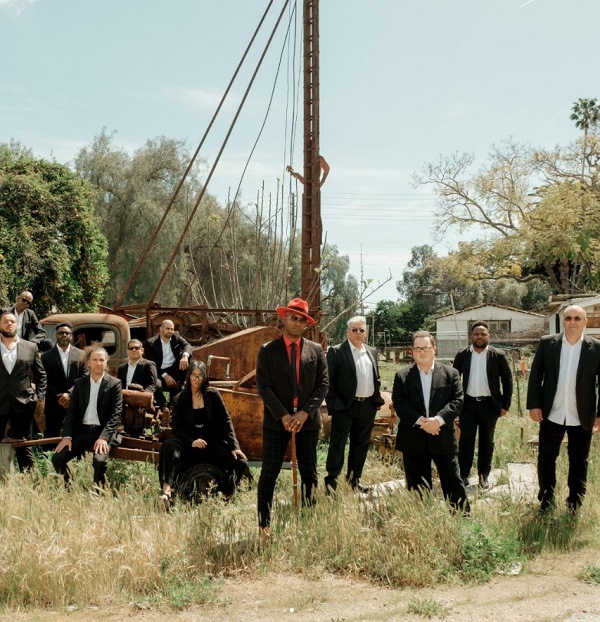
Another of the great attractions of Tempo Latino is its “geo-rhythmic” network of locations, where you can find both concerts and peripheral activities that can be enjoyed simultaneously. Below are some of those that will be available for the 2026 edition:
Read also: How Artificial Intelligence changed the music biz forever
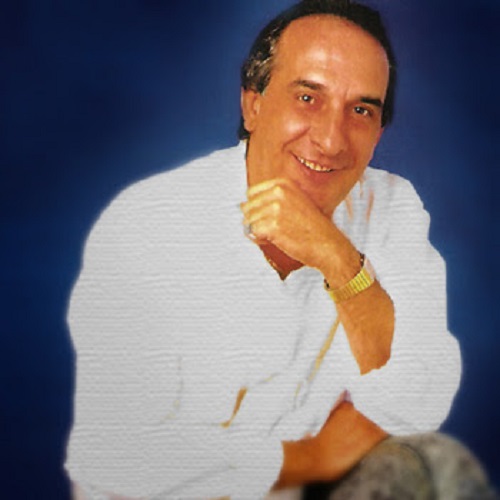
Introduction and Musical Legacy, Fernando Lavoy was one of the best-kept and most dazzling secrets of 20th-century Afro-Cuban music.
Born on May 6, 1950, in Havana, Cuba, he possessed an exceptional mastery and vocal quality that quickly caught the attention of the era’s biggest icons.
It was the legendary trumpeter Alfredo “Chocolate” Armenteros who, blown away by Lavoy’s innate gift for traditional phrasing and improvisation, affectionately dubbed him “El Montunero” (The Montuno Master).
Throughout his career, Lavoy showcased his talent as both a singer and songwriter in heavyweight ensembles, including:
The Rise in New York and the Alliance with SAR Productions
After emigrating to the United States in 1980 in search of new artistic horizons, Lavoy immediately immersed himself in New York’s effervescent Salsa and Son scene.
His first big break came courtesy of Chocolate Armenteros, contributing masterfully to the album “Y sigo con mi...” under the SAR Productions record label.
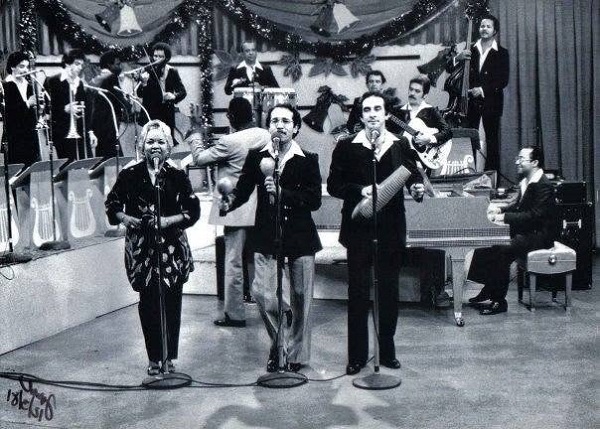
In 1981, Lavoy solidified his place as a member of the SAR All Stars, catapulting his voice into the spotlight of the most demanding music lovers.
Unlike other commercial acts of the era (such as Fania Records) that leaned heavily into crossovers with the English-speaking market, SAR Productions stood firm in direct Cuban roots. While they injected subtle nuances of jazz, they preserved that traditional, deep, and organic cadence that captivated Hispanic audiences.
Fernando Lavoy y Los Soneros: A Distinct Identity
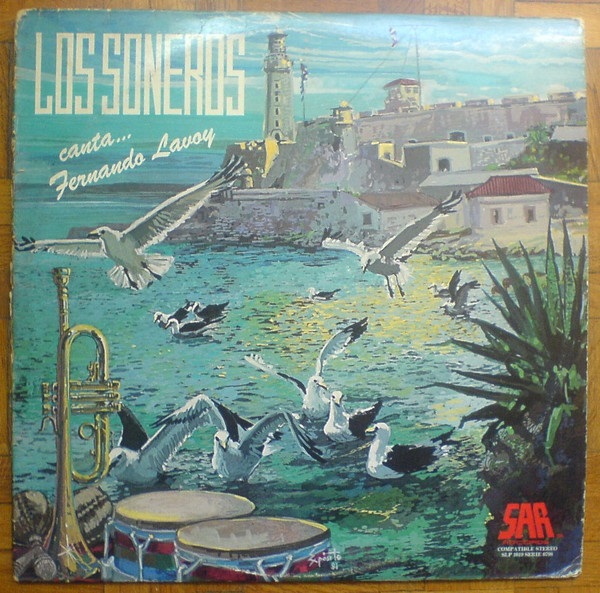
Although the norm at SAR was to use the talented house band to back soloists, Los Soneros presented themselves as an autonomous group with their own identity, produced by the infallible Roberto Torres.
The band was formally structured as a classic, old-school conjunto: four powerful trumpets, bass, conga, bongo, and three backing vocalists stylishly led by Norman Rodríguez.
Analysis of a Masterpiece: The 1982 Album
The 1982 record is absolute proof of Lavoy’s musical maturity; he composed 50% of the repertoire.
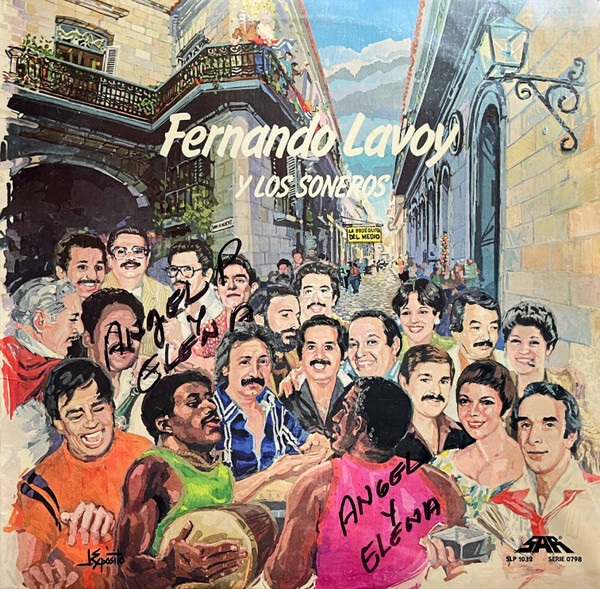
Text courtesy of Maida Lorena Lavoy.
Also Read: Alfredo “Chocolate” Armenteros: The Golden Legacy of the Cuban Trumpet
From the chords of the Puerto Rican cuatro to the eternal voice of “Los Mulatos del Sabor”
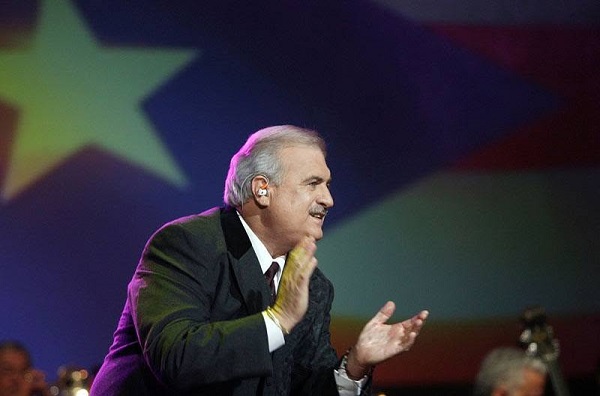
Born in Tampa, Florida, but with his soul deeply rooted in the heart of Orocovis through his parents’ heritage, Jerry Louis Rivas Díaz has carved his name in letters of gold into the history of Caribbean music.
Roots, Strings, and the Making of a Self-Taught Musician
Jerry’s history with Puerto Rico formally began in 1960, when his family moved back to the “Isla del Encanto” to settle in Bayamón.
There, the young Jerry began to breathe in the folklore and rhythms that defined the Boricua identity. What many do not know is that long before commanding microphones and international stages, Jerry was deeply passionate about string instruments.
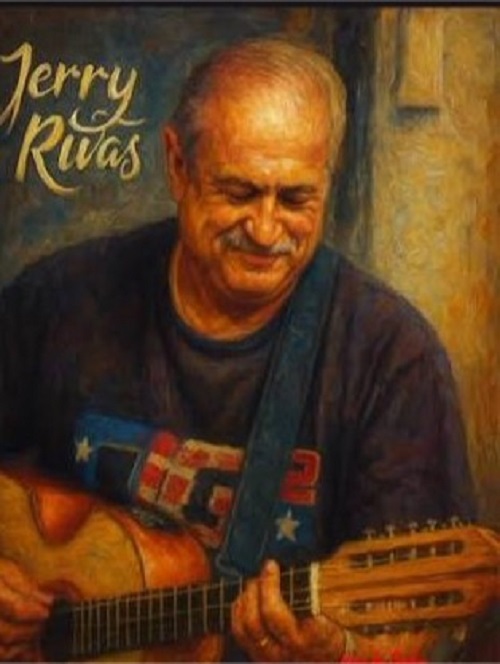
Not content with just that, he decided to delve deeper into the roots of Afro-Caribbean music, learning the secrets of the Cuban tres under the tutelage of the renowned professor Carlos Seguí.
This solid foundation as an instrumentalist not only shaped his ear but also gave him an impeccable sense of rhythm and timing that would later define his unique style for soneo (improvisational singing).
The Path to the Top: From Local Bands to a Historic Recruitment
Before the spotlight of El Gran Combo fell upon him, Jerry Rivas honed his craft throughout the island’s musical circuit, leaving his mark on every project:
It was precisely in 1976 when destiny knocked on his door. Following the shocking departure of the iconic “Niño de Trastalleres,” Andy Montañez who left the orchestra after 14 golden years to join Venezuela’s Dimensión Latina El Gran Combo found itself facing one of the most difficult transitions in its history. Replacing a legend seemed like an impossible task.
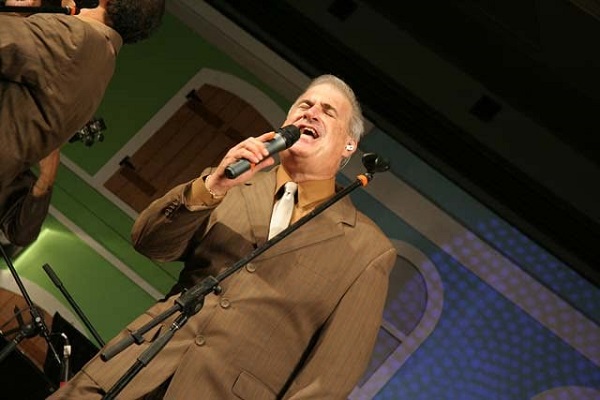
Nearly 50 Years of History at “The University of Salsa”
Joining such a demanding institution in the midst of an era-defining shift was a monumental challenge. Audiences initially viewed the new member with skepticism, but Jerry, armed with unwavering humility and immense talent, never tried to imitate his predecessor; instead, he forged his own legend.
His elegant performance style, combined with his sharp wit and deep respect for the dancer, solidified the orchestra’s golden age and ensured the transition was a resounding success.
“Joining El Gran Combo was a tremendous school and responsibility. Replacing Andy was no easy feat, but Don Rafael Ithier gave me the confidence to just be myself on stage.” Jerry Rivas, looking back on his beginnings.
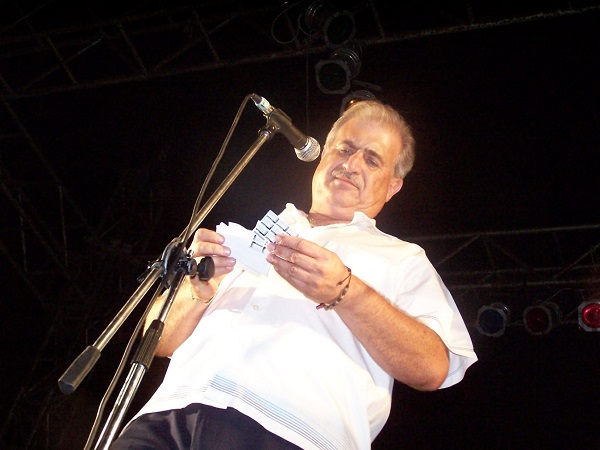
The Present and Vibrant Legacy of an Eternal Sonero
Now in 2026, the tropical music landscape has changed drastically, but El Gran Combo de Puerto Rico remains unshakeable at the top.
Jerry Rivas is not just a survivor of salsa’s golden age; he is the living bridge connecting the rich traditions of the 20th century with contemporary audiences.
From his days tuning strings in Bayamón to packed stadiums across Europe, Latin America, and the United States, his journey stands as a testament to discipline, passion, and love for his culture.
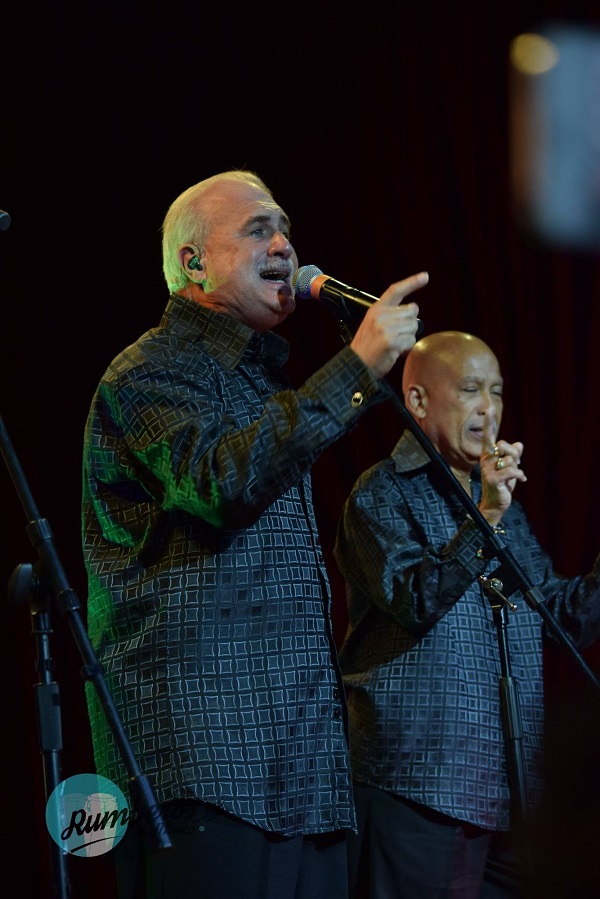
Also Read: The Gran Combo of Puerto Rico “Los Mulatos del Sabor”
Trombonist and percussionist Arturo Vazquez Jr. is joining us today to talk about his career and his current band, Projecto 7. This salsa and jazz band features an interesting mix of Latin genres and is often invited to popular local venues in Illinois, where Arturo and his bandmates live, including Two Brothers Roundhouse, Joe’s on Weed, and MCM Pub.
Here is a summary of how much we talk about his early years, the foundation of the band, and his current professional activities.
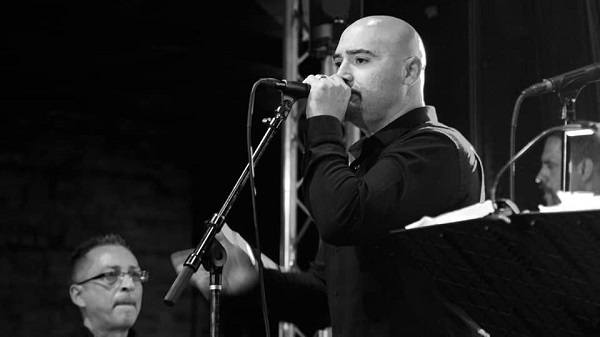
As usual, before delving into other issues, we wanted to know a little about Arturo’s beginnings in music to establish a chronology, and he told us that he expressed interest in this world when he was just a 10-year-old boy. His grandfather was a musician, and he and his colleagues often organized parties in the municipality of Patillas, Puerto Rico, where the family lived, and jíbara music was always present in everyday life.
The first instruments he learned to play were the timbales and the bongo, but after his grandfather passed away, he was given the accordion his grandfather had played, although unfortunately it did not really catch his attention. That was why he remained focused on percussion. Furthermore, knowing how important it is to get a proper academic education, he studied at the Free School of Music in Puerto Rico for a time, but due to the financial difficulties that his parents were experiencing at the time, they decided to move with their son to New York.
In the mentioned city, he continued his percussion studies at the School of Liberal Arts, being Willie Colón and Tito Puente his greatest inspirations to become a professional musician.
Years later, specifically in the 1970s, his parents found work in Chicago and moved there. That was where Arturo studied high school and met many aspiring percussionists, so the competition was brutal. Therefore, the orchestra’s conductor offered him the trombone spot and gave him a large bass trombone.
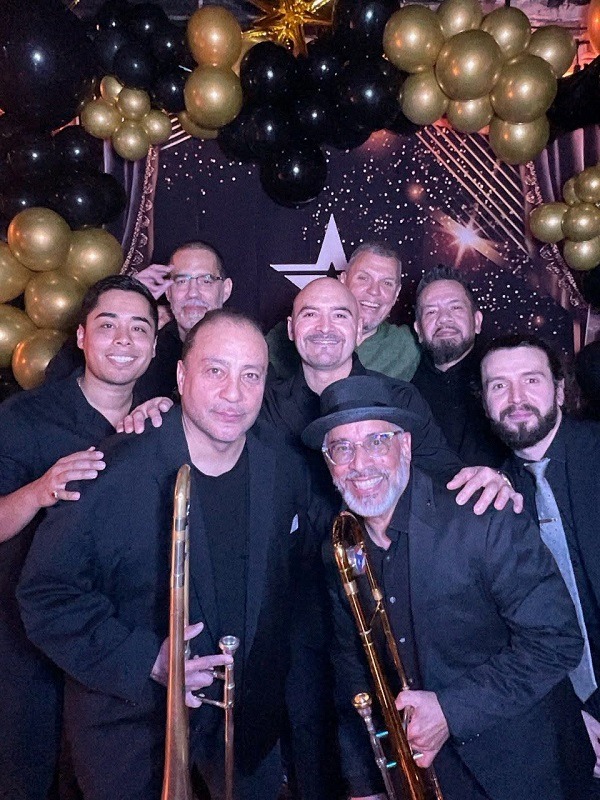
After he graduated, he began studying at the University of Illinois in Chicago, where he learned to read music and improvise with Professor J.J. Johnson during symphony orchestra concerts. Once he had gained a more or less acceptable experience in trombone practice, he remembered why or who inspired him to play in the first place, so he began playing in way Willie Colón would. That was not very common in his time, since most trombonists were classical musicians, but he did not care at all, so he started to entirely focus on salsa.
At the same time, he also specialized as a bomba and plena percussionist, so he trained at the Segundo Ruíz Belvis Cultural Center with maestro Rafael Cepeda, better known as “The Patriarch of Bomba and Plena” in Puerto Rico, who traveled to Chicago to teach percussion alongside AfriCaribe, a nonprofit cultural organization led by bandleader and singer Evaristo “Tito” Rodriguez. That was how Arturo also learned to play the pandereta and the barril, but with a focus on bomba and plena.
Before creating his own group, Arturo gained considerable musical proficiency. In the area where he lived in Chicago, there were many gangs recruiting young people to sell drugs, resulting in the emergence of numerous initiatives that sought to keep kids off the streets such as El Congreso Puertorriqueño, whose main goal was to introduce them to Latin music. It was then that the artist met a record label called Caribe, thanks to which he made his first recording as a trombonist with the Orquesta La Unión. This was essentially one of several orchestras that served as a warm up for major groups and artists such as Hector Lavoe, Willie Colón, Ismael Miranda, Ray Barretto, and many others.

Before becoming a soloist, he put aside his career as a musician for more than 10 years because it was not enough to support his family, which already included two daughters. During those years, he studied psychology at the University of Chicago, studied therapy and rehabilitation at the University of Puerto Rico, and taught psychology and therapy at the Elgin Community College.
He worked in Puerto Rico from 1981 to 1988, when he moved to Miami to test the atmosphere in the city, but competition among Latino, especially Cubans, made it impossible for him to make a name for himself there, so he went to try his luck in Elgin, located about 31 miles from Chicago, where he eventually worked as a professional therapist and psychology professor.
His group, Projecto 7, started at a parranda in which Arturo and Los Hnos Rodriguez in Elgin. The artists invited him to join them and propose new things for the project. When the brothers’ orchestra disbanded, Arturo received a call from a former member of Orquesta La Selecta, Joe González, who moved to Elgin to care for his sick father. González proposed Arturo and other musicians to form a new group called Projecto 7, since there would be seven artists in the group.
Since then, they have made efforts to keep the same lineup of musicians, including musical director, pianist, and bassist Juan Rivera; trombonist Tony Morales; singer Ricky Rodríguez; and bongo player Luis Angel Palermo.
Read also: Steel pan percussionist Brad Shores shows us the best of Caribbean music in Florida