
| DIRECTORY OF NIGHTCLUBS | ||
|
|
|
|
|
|
|
|
|
|
|
|
|
|
|
|
|
|
|
|
|
|
|
|



| DIRECTORY OF NIGHTCLUBS | ||
|
|
|
|
|
|
|
|
|
|
|
|
|
|
|
|
|
|
|
|
|
|
|
|









Directory of North American nightclubs |
||
|
|
||
|
|
|
|
|
|
||

CALIFORNIA |
|

ILLINOIS |

MICHIGAN |

NEW JERSEY |

NEW YORK |
|
|
|
|
|
|
|
|


| Karina Bernales present | August 2026 | FESTIVALS |
|
|
 |
Latin Heat KlagenfurtAug 1 / 2, 2026 Der Sandwirth € 89 |
|
|
 |
Latina Istriana FestivalAug 6 / 11, 2026 Dom Hrvatskih Branitelja € 140 |
|
|
 |
Salsa Festival PragueAug 21 / 24, 2026 Hotel Olympik € 249 |
|
|
 |
Musicality Summer
|
 |
SBK Festival HamburgAug 7 / 9, 2026 GINN Hotel Hamburg Elbspeicher € 165 |
|
 |
Berlin Salsacongress
|
|
 |
Festival Timba Paradise 9Aug 27 / 31, 2026 Congresshalle Saarbrücken € 199 |
|
|
|
 |
Dance Casa FestivalAug 28 / 31, 2026 Europa Event Center € 170 |
|
|
 |
Bachaturo FestivalAug 14 / 16, 2026 MCK – International € 173 |
|
|
 |
GOZADERO LATIN FESTAug 6 / 10, 2026 Hotel Dorna € 160 |
|
|
 |
Timbatonazo Summer FestivalAug 20 / 23, 2026 Hotel Don Angel € 115 |
|
|
 |
World Dance
|
Directory of European nightclubs |
||
|
|
||
|
|
||
|
|
||
|
|
|
|
|
|
|
|
|
|
|
|
|
|
||
|
|
|
 Adenauerallee 3 20097 Hamburg, Germany |
|
|
|
|
|
|
||
|
|
||
|
|
||
|
|
||
|
|
||
|
|
|
|
|
|
|
|
|
|
|
|
 Av. del Vallès, 117 08223 Terrassa, Barcelona, Spain |
 C/ Olvido 15 28026 Madrid, Spain |
 Carrer del Perill 10 08012 Barcelona, Spain |
|
|
||
|
|
||
|
|
|
|
|
|
|
|
A Romantic Music Phenomenon
Justifiably known as “El Bolerista de América” (“The Bolero Singer of the Americas”), the Venezuelan performer not only transformed the bolero genre during the 1960s, but also became a cultural icon whose vocal legacy remains an undeniable benchmark for generations to come.

During his early years, he performed on amateur radio shows in his hometown and joined local groups such as the Orquesta San José and Los Peniques.
It didn’t take long for his extraordinary vocal timbrea lyrical tenor with velvety undertones and flawless pitchto catch the attention of the leading musical directors of the era.

At just 19 years old, Pirela became the star crooner for the most popular orchestra in Venezuela. During his tenure with Billo’s, his voice immortalized essential classics of the Latin American songbook, including:
The synergy between Frómeta’s orchestral arrangements and Pirela’s dramatic expression sparked a true wave of “Pirelamania” across the country.
It was precisely abroad where he was officially dubbed “El Bolerista de América.” Albums like Un solo camino: México solidified his international success.
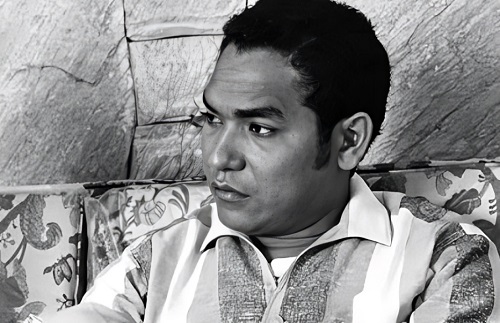
“Pirela packed venues in Santo Domingo, San Juan, New York, Bogotá, and Lima, reaching a level of popularity that rivaled legends like Lucho Gatica, Daniel Santos, and Javier Solís.” His ability to bring drama and elegance to songs by iconic composers such as Rafael Hernández, Pedro Flores, and Mario de Jesús turned him into a record-breaking phenomenon.
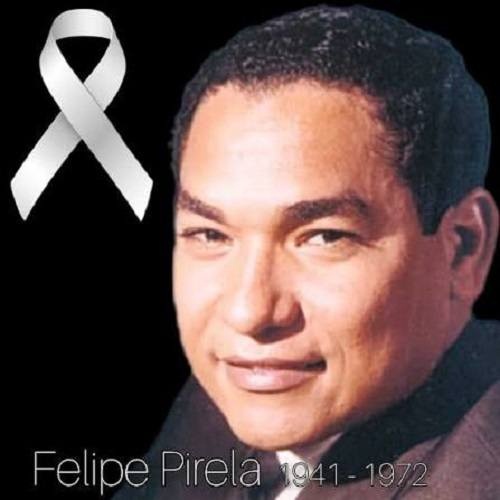
The Immortal Legacy of an Unforgettable Voice
More than five decades after his passing, Felipe Pirela remains vibrant in the collective memory. His discography continues to be reissued, honored, and studied by musicologists and music lovers alike.
Read Also: Vicentico Valdés: “The Elastic Voice” of Bolero in Cuba and the Caribbean
After several attempts, we finally managed to meet with bandleader and saxophonist Héctor Rivera, known in the industry as Riverita, and ask him all kinds of questions about his artistic career and his current group, Riverita y Su Orquesta Noche Caliente.
Here are some of the most important issues we touch with the artist during our pleasant conversation:

Despite not having musicians in his family, Riverita remembers growing up in an environment where music was always very present. He was born in New York, but spent long periods living with his grandparents in Puerto Rico while his parents settled down and eventually moved to the “Island of Enchantment” to give their son greater stability.
At his grandparents’ house, he used to listen to great artists of the time performing their unforgettable hits on the radio and one of them was Mon Rivera Y Su Orquesta performing “Karakatis-ki,” a song he never forgot, along with so many other musical pieces that gradually got him interested in this world. When his parents returned to Puerto Rico and he returned to live with them, he started listening to Cheo Feliciano, Pete “El Conde” Rodríguez, Felipe Rodríguez, and many others.
All these rhythms led the boy to play a sort of percussion on the table, a biscuit tin, or anything else that served as an instrument for him at the time.
His passion for music grew to the point that he began studying music education at the Escuela Libre de Música in Ponce and, subsequently at the Inter-American University of Puerto Rico in San Germán, where he studied for only about two years. Although he did not complete his studies, this helped him to understand even more the profession and apply what he learned during those years.

Being in Puerto Rico, he played with a merengue orchestra whose name he does not remember, but with which he learned to play alto saxophone professionally. After that, he moved to the United States permanently.
As he moved to Virginia, he took a long break from music until 2013, which is when his cousin, Michael Valladares, asked Riverita to found an orchestra, which was not in his plans. However, he accepted the challenge and carried forward the project.
Back then, the artist worked as a mailman at a post office, making it difficult for him to reconcile his previous professional activities with the direction of an orchestra. Still, he did not allow that to discourage him and chose to give priority to this new ensemble.
It all started when Michael was looking for an orchestra to perform at a gala event to celebrate 500 years of the city of Melbourne, Florida, so he contacted Riverita and proposed him to create an orchestra in which he would serve as musical director for the sole purpose of performing there. That was when the saxophonist set about finding musicians and producing a repertoire, which was not easy, since he did not know any professional musicians and did not have any arrangements he could use.
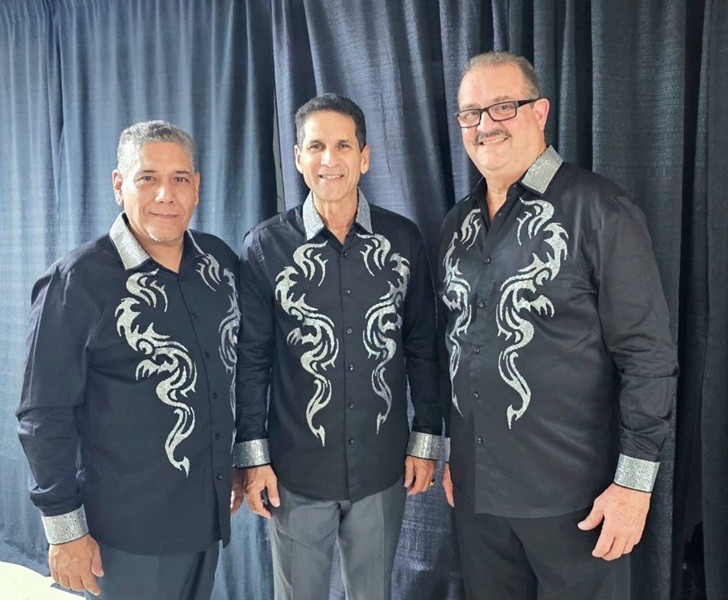
He was so distressed that he spent sleepless nights thinking about how to proceed to complete the mission entrusted to him. With three months to go, he had no time to spare. That is when he managed to make contact with a group of musicians of different nationalities, of whom only the singer, José Reyes, continues to work with him.
Finally, he relaunched the project with a new group of musicians—since the previous ones had left and called it Orquesta Noche Caliente, a name that it still bears today.
Among the most frequently recurring members, we can mention singer José Reyes, singer Danny Rivera Jr., pianist Kevin Figueroa, and trombonist Derick Harris.
To date, they have recorded three CDs and 26 songs. Some of them are “Noche Caliente,” “En Tiempos de Bolero,” and “Mi Linda Música.” They are also preparing their Christmas song several months in advance and will name it “Rabito de Lechón.”