






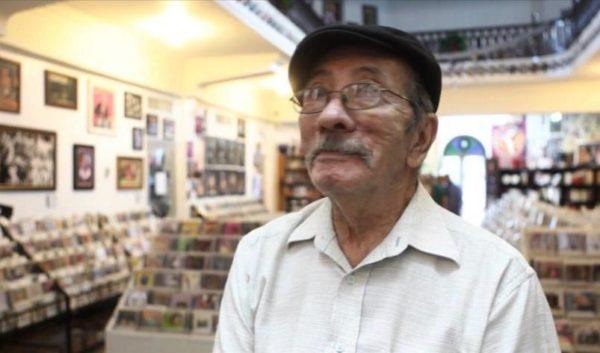
Excellent Music Promoter. Remembered for promoting the LP Siembra by W Colón and R Blades. He founded Viera Discos, “Cathedral of Latin Music”.
He was considered one of the main disseminators of salsa in Puerto Rico, Rafael Viera, also creator of Viera Discos, one of the most important points of the movement until 2016, year in which it was closed.
Viera Figueroa was, from the late sixties to the eighties, Fania’s representative on the island. Why? He was the one who brought the music of the label founded by Pacheco and Masucci to the land of Ismael Rivera, when it was mainly distributed in the United States.
He was the promoter of the first Fania All Stars concert in Puerto Rico in 1973 and was in charge of bringing to Puerto Rico the films ‘Our Latin Thing’ and ‘Salsa’, which packed the local theaters in the seventies. According to Primera Hora, he was the one who inaugurated the Roberto Clemente Coliseum in San Juan.
In 2014 Viera suffered a stroke that kept him in intensive care. On that occasion his son, Richie Viera, gave these words to the aforementioned media: “I am a man of faith, and in God I trust that Dad will recover and will be able to continue with us for many more years, offering us his wisdom, his anecdotes and promoting and collaborating so that new talents will have a place in Latin music”.
Viera was known for the famous Casa del Coleccionista store, which he ran for more than 60 years in Santurce, for Viera Discos and for the Catedral de la Música.

He was also one of the driving forces behind the salsa boom at the time of Fania Records, where he worked as producer and promotion manager of the conglomerate of record labels; Fania Records, Vaya Records, Tico Records, Alegre Records, Cotique Records, Éxito Records, International Records and Música Latina, among others.
He was also involved in the success of the careers of artists such as Willie Colón, Larry Harlow, Cheo Feliciano, Richie Ray and Bobby Cruz, Celia Cruz, Ismael Miranda, Sandro, Sabú, Willie Rosario, Miki Vimari, Sonora Ponceña, Tommy Olivencia, La Lupe, Tito Puente, Eddie Palmieri, Ismael Quintana, Justo Betancourt, Héctor Lavoe, Tito Rojas, Frankie Ruiz, Corporación Latina, Junior Toledo, Viti Ruiz, Guillo Rivera, Ray Barreto, Willie Rosario, Orquesta La Terrífica, Roberto Roena y su Apollo Sound, Johnny Pacheco, Pete “El Conde” Rodríguez, Impacto Crea, Ismael Rivera, Raphael, Wilkins, Trio Los Condes, Joan Manuel Serrat and the most important conglomerate of musicians in the history of Latin music known as Fania All Stars, among others. In 1973, he was the promoter of the first Fania All Stars concert in Puerto Rico, which inaugurated the Roberto Clemente Coliseum in San Juan.

In the field of cinema, Viera brought to Puerto Rico the film “Our Latin Thing” and Salsa, films that crowded the local movie theaters.
He passed away on January 13, 2019 in Puerto Rico, may he rest in peace and eternal glory to Rafael Viera!
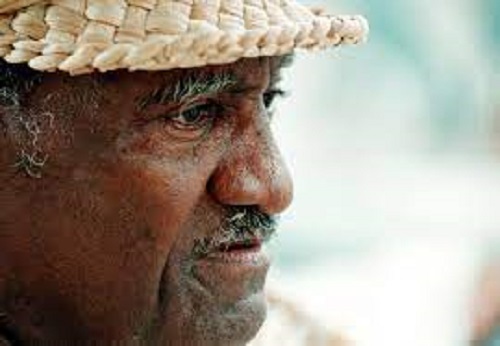
(Guayama, 1927 – Baltimore, United States, 2003) Puerto Rican composer considered the most important author of salsa music in his country and one of the most outstanding Latin American composers of the second half of the 20th century.
His songs, produced throughout a fertile creative career that gave birth to more than two thousand pieces, were brought to fame by the most famous interpreters of the genre (Rubén Blades, Tito Rodríguez, Celia Cruz, Cheo Feliciano or Willie Colón, among others).
The son of an orchestra musician and a seamstress, Tite grew up in a working class neighborhood in Santurce, where he remained after his parents separated.
He studied music theory and solfeggio with professor Jorge Rubián, and in 1965 he wrote his first melodies for Joe Quijano, one of the best pachangueros of the time.
Are the 100 most listened to songs by Catalino “Tite Curet” Alonso in alphabetical order.
1.Adelante siempre voy :Ray Barreto con Adalberto Santiago
2.Anacaona :Cheo Feliciano
3.Adios Adiós :Pedro Arroyo
4.Apelo:(tema brasilero adaptado al Español por Tite para Roberto Roena)
5.Aquella mujer: Bobby Valentín y Marvin Santiago
6.Aqui estoy yo con mi son: Frankie Hernández
7.Aqui se puede :Airto Moreira /versión Ray Barreto
8.Babaila :Pete Conde Rodríguez
9.Barra limpia: Sonora Ponceña y Tonito Ledee
10.Barrunto: Willie Colon y Héctor Lavoe
11.Bandolera :Héctor Lavoe
12.Boca mentirosa(Andy Montañez)
13.Buen Corazón:(adaptación de Tite para Bobby Valentín/Cano Estremera
14.Cha cha ri cha :Willie Rosario/Guillo Rivera
15.CAONABO:(canta TITE CURET/arreglo Jorge Millet)
16.Candilejas:(Versión en Español de Tite para Wilkins/o Graciela)
17.Cabellos Blancos: Orquesta Mulenze y Pedro Brull
18.Callejon :Arabella (para la película Retén de Catia/Venezuela)
19.Camaron :Justo Betancourt /& versión Marvin Santiago
20.Cenizas:Milly Quezada con Perico Ortiz
21.Con los Pobres Estoy :Roberto Roena y Apollo Sound
22.Con mi viejo amigo: Larry Harlow e Ismael Miranda
23.De todas maneras rosas :Ismael Rivera y Los Cachimbos
24.Distinto y Diferente: Justo Betancourt y Borincuba
25.Don Fulano: Tito Rodríguez
26.Efectivamente: Joe Quijano
27.El eco de un tambor Dimensión Latina con Andy Montañez
28.El hijo de Obátala :Ray Barreto con Tito Allen
29.Ella está en otra rumba ;Justo Betancourt
30.Ellos se juntan: Cortijo y su combo con Maelo
31.Escucha una voz latina: Conexión Latina de Alemania
32.Estaca de guayacán: Marvin Santiago
33.Estampa Marina :Cheo Feliciano
34.El antifaz:Willie Rosario con Gilberto Santa Rosa
35.El cantar de los pinales: Pacheco y Pete Conde
36.El verdadero aniversario :El combo del ayer
37.Felicitaciones: Cheo Feliciano
38.Flor de los lindos campos Ray Barreto y Adalberto Santiago
39.Galera 3:Ismael Miranda
40.Guaguanco del Adiós :Roberto Roena y Apollo Sound
41.Hace furo: Cheo Feliciano
42.Hermano Héctor: La 2013 canta: Van Lester
43.Huracan:Bobby Valentín con Frankie Hernández
44.Isadora: Celia Cruz y Estrellas de Fania
45.Juan Albañil: Cheo Feliciano
46.Juanito Alimaña: Héctor Lavoe y Willie Colon
47.La Cura: Frankie Ruiz
48.La esencia del guaguancó (Pacheco/Pete Conde/primer versión Willie Rosario con Meñique)
49.La Oportunidad :Ismael Miranda con Larry Harlow
50.La Oportunidad: Ismael Rivera
51.La palabra Adiós: Ruben Blades con Estrellas de Fania
52.La Perla: Ismael Rivera
53.La Tirana: La Lupe
54.Lamento de Concepción: Roberto Roena y Apollo Sound
55.Las Caras Lindas: Ismael Rivera
56.Las mujeres son de Azúcar: Sonora Ponceña y Luigui Texidor
57.Los Entierros: Cheo Feliciano
58.Luz Negra: Sonora Ponceña y Miguel Ortiz
59.Llevame: Adalberto Santiago
60.Marejada feliz: Roberto Roena y Apollo Sound
61.Me pongo yo: La Descarga Boricua de Frank Ferrer
62.Morejon: Frankie Hernández
63.Mi música: Ismael Rivera
64.Mi triste problema: Cheo Feliciano
65:Nabori:Cheo Feliciano
66.Noche como boca ‘e lobo: Sonora Ponceña y Luigui Texidor
67.Pa’ Colombia: Willie Colon y Héctor Lavoe
68.Pa’ los ponceños: Sonora Ponceña y Tito Gómez
69.Pa’ que afinquen: Cheo Feliciano
70.Part time lover:(tema de Stevie Wonder traducido al español por Tite para Bobby Valentín)
71.Pase la noche fumando: Willie Colon y Héctor Lavoe
72.Pedregal:Justo Betancourt
73.Penas de amor: Bobby Rodríguez y la Compañía
74.Periodico de Ayer: Héctor Lavoe
75.Piano Man: Ismael Quintana y Estrellas de Fania
76.Pirana:Willie Colon y Hector Lavoe
77.Plantacion Adentro: Willie Colon y Rubén Blades
78.Por que adore :Markolino y Chivirico Dávila/Versión Truco &
Zaperoko
79.Plante bandera: Tommy Olivencia canta: Chamaco Ramirez
80:Presencia:Justo Betancourt y Borincuba
81.Primoroso cantar: Pacheco y Pete Conde
82.Profesion esperanza: Ismael Rivera
83.Pueblo latino: Pete Conde con las Estrellas de Fania
84.Punto Bare: Pete Conde Rodríguez
85.Primer Montuno: Andy Harlow con Johnny Vásquez
86.Puro teatro: La Lupe
87.Que me lo den en vida: Roberto Roena y Apollo Sound
88.Reunion en la cima: Andy Montanez con la Puerto Rico All Stars
89.Sali porque sali: Cheo Feliciano
90.Salome:Cheo Feliciano
91.Salsaludando:Cheo Feliciano
92.Saborea:Los Hermanos Lebrón
93.Sobre una tumba humilde: Cheo Feliciano
94.Susana:Jose Feliciano
95.temes:Vitin Avilés
96.Tiemblas:Tito Rodríguez
97.Tomatero: Kim de los Santos
98.tu loco, loco y yo tranquilo: Roberto Roena y Apollo Sound
99.Vale más un guaguancó: Ray Barreto y Rubén Blades
100.Vete y Pregona: Justo Betancourt
Curet Alonso, the most important composer in the history of Latin music.








Music often requires characters who are always backstage and support with their talent the work of singers and performers, who are eventually the ones who “come forward” and assume the popularity. Sometimes, though, these anonymous characters shot to fame in order to be able to perform their own work and even become more popular than any fashion singer.

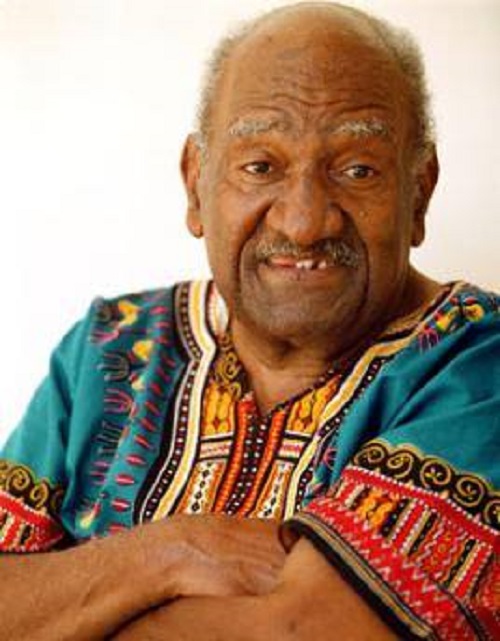
In the case of Pop, this character is named Quincy Jones, who was said to be the arranger for Frank Sinatra and the producer for Michael Jackson. A “nonentity”. In the case of Salsa, these characters have been symbolized by the emulator of Jones, a guy named Louie Ramirez who has done everything with everyone.
An afternoon in 1994, Ramirez was driving his car on the highway that took him to Variety Studios in New York. It was going to be a quick session because he only lacked one track to complete his 20th album as a bandleader. Perhaps this is why he was nervous and full of anxiety. Minutes later, he could not resist the feeling and had to stop the car. He had not finished doing it when a heart attack ended his life.

Louie Ramirez was a genius. The one to whom all run for advice and solutions to their problems. It did not matter if they were young or old musicians. The fact was that Louie had the answer and visiting him was like rubbing Aladdin’s lamp. That was a characteristic that always accompanied him, from the first recording “Meet Louie Ramirez” in 1963.
He was 20 years old back then and had a good record with regard to composing some pachangas and arranging for the orchestras of Pete and Tito Rodriguez. Commentator Dick Sugar introduced him like this: Ramirez breaks through the image of a bandleader who uses the talents of other composers and becomes a follower of a rhythm. No, Louie Ramirez is a creator in his genre.

That talent did not go unnoticed by the new Czar of Latin music in New York, Jerry Masucci, who hired him as a star of Fania Records and at the same time, as an arranger for the orchestras and ensembles that belonged to the record company. Ramirez was soon wrapped up in work and could only record two albums during the 1960s, “Good news” and “Alí Babá”.
The last album included the hit that allowed him to be a famous artist, El Títere, a true Salsa classic. The song was performed by Rudy Calzado, the third of the soneros Louie had used without finding the right one. It was a ballast that stayed with him as a director during the 1970s, when he used singers such as Pete Bonet, Tito Allen, Jimmy Sabater, “Azuquita” Rodríguez, Adalberto Santiago, and even Rubén Blades.

It was precisely Blades that he made an anthological album with, “Louie Ramirez y sus amigos”, which included the song Paula C, with an arrangement of those that deserve to be admired. By then, Ramirez was already considered as the most progressive arranger of Salsa in New York, thanks to the brilliant works done for the Fania All Stars. An excellent work had been the instrumental arrangement for Juan Pachanga, to be performed by Blades, from Canta for a performance by Cheo Feliciano, and of the entire album “Algo nuevo” performed by Tito Rodriguez with Louie’s orchestra.

The peak of Ramírez’s career was in 1980 when Joni Figueras, a representative of the K-Tel International label, hired him to maka arrangements for the ballads Todo se derrumbó and Estar enamorado by Manuel Alejandro. The album, which included these and other songs, was released two years later under the title “Noche caliente” and was recorded by Louie’s orchestra.
Ballad-salsa or romantic salsa was born as a result of a work Ramírez did until his death, making occasional attempts in Latin Jazz, which he loved. That is why he recorded a tribute album to Cal Tjader in which Louie was the director, producer, composer and arranger. Apart from that, he played the timbales and his favorite instrument: the vibraphone.
Louie Ramirez was a genius of arrangements, in a career that included Guantanamera and Isadora for Celia Cruz, El Guiro de Macorina for Johnny Pacheco and El Caminante for Roberto Torres.

Further to that, there are his works for La Alegre and the Cesta All-Stars. Regarding this Ramírez’s profile, critic Eleazar López defined it very well.
“It is not easy to arrange for a dance orchestra, especially when it is a group that cultivates the hot tropical genre. Many musicians feel influenced by Jazz and the result of their orchestrations leaves a vacuum in the dancer”.
Others arrange in a simple way, but it is so simple that they repeat and copy themselves, and the result is tired music, without any degree of creativity: music that says nothing, that leaves nothing. Louie Ramirez has found the perfect balance… that’s why he always stays relevant.

Article of Interest: Bobby Valentin, the King of Bass at the Fania All-Stars Machinery